Clinical Pain Points & Technical Solutions Of Meniscus Repair Needles
Oct 10, 2026
1. Clinical Pain Points in Traditional Meniscus Repair Surgery
Knee meniscus injury is one of the most common orthopedic sports injuries worldwide, and arthroscopic meniscus repair has become the mainstream minimally invasive treatment. However, traditional surgical instruments and ordinary suture needles have long plagued clinical surgeons with multiple practical problems, restricting the improvement of surgical accuracy and postoperative recovery effect. First, conventional needles have poor anatomical adaptability. The knee joint has a narrow and complex internal space, especially the posteromedial and posterolateral corners of the meniscus. Straight ordinary needles are difficult to penetrate the torn meniscus tissue at a suitable angle, easily leading to incomplete suture fixation and residual un repaired tear lesions, which is a key cause of postoperative recurrent joint pain and mechanical snapping symptoms. Second, traditional needle bodies have poor precision control. Most universal surgical needles have fixed specifications and single dimensions, which cannot match the different tear types including longitudinal tears, bucket-handle tears, and partial degenerative tears. Excessively thick needles easily cause secondary damage to normal meniscus cartilage and surrounding synovial tissue, while overly thin needles are prone to bending and fracture during suturing, affecting surgical efficiency.
In addition, traditional repair instruments lack biocompatibility optimization. Some ordinary metal needles are prone to cause local tissue irritation and foreign body reactions after long-term intraoperative contact, leading to postoperative joint inflammation and swelling that lasts for a long time. Clinically data shows that nearly 14% of patients undergoing traditional meniscus repair suffer from persistent soft tissue irritation symptoms within one year after surgery, and improper needle placement and suture tension control caused by unprofessional needles are important factors leading to surgical repair failure and secondary reoperation. Moreover, traditional needle tools cannot realize minimally invasive fine operation stably, requiring repeated adjustment of surgical perspective and instrument position, which prolongs operation time, increases the risk of intraoperative chondral injury, and brings greater rehabilitation pressure to patients.
2. Working Principle of Meniscus Repair System Needles
Meniscus repair system needles are specially customized minimally invasive surgical instruments developed for the structural characteristics of human knee meniscus and the technical requirements of arthroscopic repair surgery. Its core working principle is to rely on high-precision customized needle body structure, excellent material mechanical properties and adaptive angle design to complete the precise penetration, suture threading and fixation guidance of torn meniscus tissue under arthroscopic monitoring, while minimizing intraoperative tissue damage. Different from ordinary surgical needles, this professional needle system takes the physiological curvature and tissue toughness of the meniscus as the core design basis. The needle tip adopts a fine polishing blunt or semi-blunt structure, which can effectively pierce the fibrous cartilage tissue of the torn meniscus without scratching the adjacent articular cartilage and neurovascular tissues.
The overall structural design of the needle body focuses on surgical stability and controllability. The precise diameter and length specifications ensure stable penetration in the narrow knee joint space, avoiding needle body shaking and displacement during operation. For bent-angle customized models, the optimized bending radian can perfectly fit the anatomical dead angle of the knee joint, helping surgeons reach the posterior and marginal tear areas that are difficult to access with straight needles. In terms of functional principle, the needle body is matched with professional suture systems and repair accessories, which can efficiently complete suture traversal, tension adjustment and knot fixation, realizing anatomical reduction and stable fixation of torn meniscus tissue, and fundamentally solving the problems of incomplete repair and unstable fixation caused by traditional instrument limitations.
3. Classification and Functional Characteristics of Repair Needles
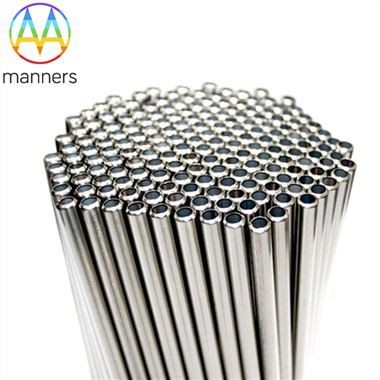
According to core materials and structural forms, meniscus repair system needles can be divided into two mainstream categories with distinct functional characteristics. The first category is stainless steel meniscus repair needles, which are the most widely used basic type in clinical practice. Made of medical-grade stainless steel, this type of needle has outstanding corrosion resistance and structural durability, can withstand high-temperature and high-pressure disinfection and repeated clinical use, and has stable mechanical properties without deformation or fracture during long-term surgical operation. The diameter of stainless steel needles ranges from 0.5mm to 2mm, and the length covers 20mm to 100mm, which can meet the surgical needs of most common meniscus tears, and is suitable for primary traumatic meniscus repair and routine degenerative meniscus suture fixation.
The second category is titanium alloy meniscus repair needles, which belong to high-end optimized models. Titanium alloy materials have ultra-high biocompatibility, low tissue irritation and lightweight characteristics, which can effectively reduce intraoperative foreign body reaction and postoperative inflammatory symptoms. Compared with stainless steel needles, titanium alloy needles have higher toughness and lower density, with more flexible needle body operation, suitable for complex and difficult meniscus repair surgeries, such as posterior root tear repair, multi-fragment meniscus tear fixation and adolescent meniscus injury treatment. In addition, according to structural design, it can be divided into straight needles and bent-angle needles. Straight needles are suitable for superficial and anterior meniscus tears with open operating space, while bent-angle needles are customized for deep and corner tears, realizing full coverage of knee joint repair positions.
4. Standard Operational Guidelines for Clinical Use
The clinical operation of meniscus repair system needles follows standardized minimally invasive surgical procedures to ensure surgical safety and repair accuracy. First, preoperative specification matching is required. Surgeons need to select needles with corresponding diameter, length and bending angle according to the patient's meniscus tear position, tear range and joint space size. For small partial tears, 0.5mm-1mm thin-diameter short needles are selected to reduce tissue damage; for large-area bucket-handle tears and posterior root tears, 1.5mm-2mm thick-diameter long needles or bent-angle needles are matched to ensure stable suture penetration. Before operation, all needles must be strictly disinfected and inspected for needle tip integrity and needle body smoothness to avoid burrs causing secondary tissue damage.
Intraoperative operation follows the principle of fine minimally invasive. Under arthroscopic visualization, the needle body is slowly inserted along the gap of joint soft tissue, and the angle is adjusted according to the tear morphology to make the needle tip vertically penetrate the meniscus tear edge, ensuring accurate suture threading at the effective repair position. During the operation, excessive force and violent shaking of the needle body are prohibited to prevent needle bending, fracture and accidental injury to articular cartilage. After completing suture traversal, the needle body is stably withdrawn, and the suture tension is adjusted to realize tight fitting of torn tissues. After operation, the used needles are classified and cleaned, and high-standard disinfection and sterilization are carried out according to medical device specifications to meet the requirements of repeated clinical use.
5. Practical Clinical Application Experience
Long-term clinical application data shows that standardized use of meniscus repair system needles can significantly improve the success rate of meniscus repair surgery and reduce postoperative complications. In the repair of common traumatic meniscus tears, professional repair needles can improve the accuracy of suture positioning by more than 30% compared with traditional ordinary needles, effectively avoiding repair failure caused by deviation of suture position and insufficient fixation tension. For complex posterior meniscus root tears that are difficult to operate, bent-angle titanium alloy needles can successfully reach the deep lesion area of the knee joint, solving the clinical dilemma of difficult exposure and incomplete repair of posterior tears, and the postoperative meniscus anatomical reduction rate is significantly improved.
In terms of postoperative recovery, the minimally invasive characteristics of professional repair needles greatly reduce intraoperative soft tissue trauma and chondral injury risk. Clinical follow-up data shows that patients treated with professional repair needles have shorter postoperative swelling and inflammation duration, lower incidence of persistent joint pain and arthrofibrosis, and faster recovery of knee joint mobility. In pediatric and adolescent meniscus repair surgery with delicate joint tissues, the high-precision thin-diameter repair needles can protect immature cartilage tissues to the greatest extent, reduce surgical trauma, and create better conditions for the growth and healing of young patients' meniscus tissues. In addition, customized needle specifications based on patient individual differences can adapt to different knee joint sizes and tear degrees, realizing personalized precise treatment.
6. Summary and Value Sublimation
Meniscus repair system needles are essential core precision instruments for modern minimally invasive meniscus repair surgery, solving many technical bottlenecks of traditional surgical tools in terms of operational accuracy, anatomical adaptability and tissue protection. Its material optimization, dimensional customization and structural innovation effectively make up for the defects of ordinary needles such as single specification, poor precision and large intraoperative trauma, providing reliable instrument support for high-quality meniscus repair surgery. Different types of repair needles form a complete product system, covering routine and complex clinical surgical scenarios, realizing full-scene precise treatment of meniscus injuries.
The clinical value of professional repair needles is not only reflected in improving the success rate of a single operation, but also in reducing the incidence of postoperative complications and reoperation rate, shortening patient rehabilitation cycle, and improving long-term knee joint function recovery effect. By protecting normal joint tissues and realizing anatomical stable fixation of torn meniscus, it effectively avoids the progression of meniscus injury to knee osteoarthritis, reduces the long-term medical burden of patients, and provides strong technical support for the popularization of minimally invasive and precise orthopedic sports medicine surgery.
7. Industry Development Prospects and Optimization Suggestions
With the continuous increase in the incidence of sports injuries and degenerative knee diseases, the market demand for high-precision meniscus repair instruments continues to expand, and meniscus repair system needles have broad industry development prospects. At present, the industry is developing towards precision customization, material upgrading and intelligent matching. In the future, enterprises can further optimize product performance from three dimensions. First, strengthen personalized customization services, develop exclusive specifications for special groups such as children, the elderly and athletes, and realize one-to-one matching of needles according to tear types and joint anatomical differences.
Second, accelerate material technology iteration, develop new composite medical materials on the basis of existing stainless steel and titanium alloy, further improve biocompatibility and mechanical stability, and reduce postoperative foreign body reaction. Third, combine digital medical technology to build a needle specification intelligent matching system, realize automatic recommendation of needle models according to preoperative imaging data, reduce manual selection errors, and improve surgical standardization. In addition, it is necessary to strengthen clinical technical training, standardize the operational specifications of repair needles, and give full play to the technical advantages of precision instruments to promote the overall upgrading of meniscus repair surgery level in the orthopedic industry.