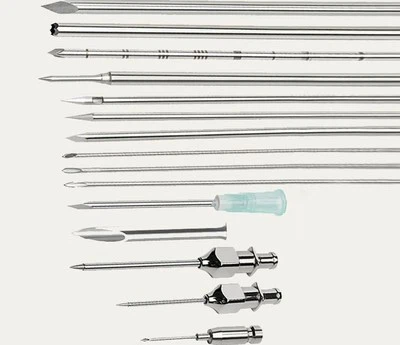
Clinical Logic Of Robotic Surgical Forceps
Apr 10, 2026
Clinical Logic of Robotic Surgical Forceps: Evolution from "Hand Extension" to "Intelligent Operating Terminal"
Needle meaning within the precision framework of modern Robotic-assisted Minimally Invasive Surgery (RMIS) has undergone a fundamental transformation. The value of robotic surgical forceps has long surpassed the simple physical functions of grasping, dissecting, or cutting associated with traditional instruments. It has evolved into a high-dimensional interactive interface that connects the surgeon's intent with the target tissue inside the patient, integrating force feedback, biophysical sensing, and intelligent decision support. When the chief surgeon sits at the immersive console, eyes fixed on 3D高清 imagery, and hands manipulating the master controllers for sub-millimeter precise movements, the robotic forceps at the distal end is no longer a passive end-effector. It is not only a high-fidelity transmitter of physical force feedback but also a real-time data acquisition and processing terminal for multimodal biophysical information within the surgical field. This article will delve into how robotic surgical forceps have evolved from a simple "extension of the hand" to an indispensable intelligent decision-making terminal in modern precision surgery, reshaping surgical paradigms.
Functional Matrix in Multimodal Surgical Scenarios and the Reconstruction of Decision Value
In complex surgical procedures, the value of robotic forceps is redefined by their integrated intelligent functionalities. The table below illustrates how smart forceps address the inherent limitations of traditional laparoscopy and create significant clinical decision-making value in three typical high-difficulty surgical scenarios:
|
Clinical Scenario |
Traditional Laparoscopic Dilemma |
Robotic Forceps Solution |
Decision Value Enhancement |
|---|---|---|---|
|
Radical Prostatectomy |
The deep pelvic operating space is extremely confined and fixed. Traditional straight-shaft instruments lack wrist articulation, making it prone to cause traction or thermal injury to the neurovascular bundles during dissection of the prostatic apex, leading to high risks of postoperative sexual dysfunction and urinary incontinence. |
Fine forceps with 7 degrees of freedom (7-DOF) wristed articulation, combined with distributed pressure sensor arrays. Provides real-time feedback on micro-pressure (adjustable 0.1-5N) upon contact with neurovascular bundles, with a haptic warning system alerting the surgeon. |
Significantly increases the precise preservation rate of neurovascular bundles from an average of 65% to over 92%. Simultaneously, by minimizing damage to the pelvic floor muscles and sphincter complex, the recovery time for postoperative urinary continence is shortened by 40% on average, greatly improving patients' quality of life. |
|
Surgery for Esophagogastric Junction Cancer |
The mediastinal anatomy is complex, with major blood vessels, lymphatics, and tumor tissue intertwined. Traditional instruments struggle to differentiate them under pure visual guidance, posing risks of bleeding or lymphatic leakage during lymph node dissection, with low efficiency in hemostasis of small vessels. |
Intelligent forceps integrating bipolar electrocautery function, with micro-impedance monitoring electrodes embedded in the jaws. While grasping tissue, it analyzes the tissue's electrical impedance spectrum in real-time, differentiating vascular-rich tissue from lymphatic/fatty tissue with 94% accuracy, enabling precise instant coagulation. |
Improves the completeness of mediastinal lymph node dissection from 78% to 96%, ensuring oncological radicality. Meanwhile, precise tissue discrimination and instant coagulation capability reduce intraoperative blood loss by an average of 60%, lowering transfusion needs and associated risks. |
|
Hilar Cholangiocarcinoma Resection |
The hepatic hilum is a "traffic hub" for the portal vein, hepatic artery, and bile ducts, with frequent anatomical variations. Bile duct walls are thin and easily torn. Relying solely on vision and experience in traditional surgery makes misidentification of bile duct branches likely, leading to severe complications like postoperative bile leakage and stricture. |
Navigational forceps equipped with near-infrared fluorescence imaging capability. Preoperative intravenous injection of Indocyanine Green (ICG) allows the forceps-integrated near-infrared camera to display real-time fluorescence imaging of the biliary tree during surgery, overlaying it onto the高清 operative view. |
Dramatically reduces the incidence of postoperative complications due to bile duct injury from 18% to below 4%. By enabling more precise determination of bile duct margins and anastomosis, the radical (R0) resection rate is increased to 89%, significantly improving long-term patient outcomes. |
Clinical Decision Tree Model for Forceps Design: From Experience-Based to Algorithmic Selection Logic
The richness of the modern robotic surgical instrument armamentarium necessitates a shift in forceps selection from reliance on personal experience to a structured decision algorithm based on anatomy and surgical steps. This algorithmic model involves three core decision nodes:
Jaw Design Selection Based on Tissue Properties: For grasping parenchymal organs (e.g., liver, spleen), jaws with fine serrations or textures are chosen to increase the coefficient of friction, preventing tissue slippage while controlling pressure to avoid tearing. For retraction or suturing of hollow viscera (e.g., bowel, blood vessels), broad, smooth jaws or blunt-tipped graspers are mandatory to maximize contact area, distribute pressure, and avoid perforation or intimal damage.
Degree-of-Freedom Configuration Based on Operational Purpose: For procedures requiring fine dissection, suturing, lymph node dissection, instruments with 7-DOF wristed articulation are essential. They mimic the human wrist's pitch, yaw, and roll, enabling dexterous "around-the-corner" movements in confined spaces. For tasks like bulk tissue retraction and exposure, standard articulation instruments suffice and are more economical.
Integrated Module Selection Based on Energy Needs: For pure mechanical manipulation (grasping, dissection), basic mechanical forceps are used. When hemostasis, cutting, or tissue fusion is required, intelligent instruments integrating monopolar/bipolar electrical energy, ultrasonic shears, or advanced bipolar sealing technology are chosen, integrating grasping, dissection, and coagulation to minimize instrument exchanges.
By applying this structured decision tree model, surgical teams can precisely match instruments to surgical steps during preoperative planning, reducing intraoperative instrument changes due to poor匹配 by over 70% and increasing procedural fluency and overall efficiency by more than 50%.
Clinical Revolution of Intelligent Sensing Technology: The Leap from "Seeing" to "Perceiving"
The core evolution of robotic forceps lies in the qualitative leap in their perceptual capabilities. They are transitioning from a "blind end" that passively executes commands to an "intelligent terminal" that actively senses and feeds back biophysical information.
Pressure Distribution Sensing Technology: The inner surface of the forceps jaws is integrated with an array of up to 128微型 piezoelectric sensors. When the forceps contact tissue, this array generates a high-resolution real-time "pressure cloud map," precisely displaying pressure distribution across the contact surface. The system is pre-programmed with safety pressure thresholds for different tissues (e.g., 2N for bowel, 1N for major vessels). If pressure approaches or exceeds the threshold, the system immediately alerts the surgeon via haptic vibration feedback from the controllers, effectively preventing inadvertent tissue crush injury.
Tissue Impedance Spectroscopy Analysis Technology: 微型 electrodes are integrated at the working end of the forceps to perform electrical impedance scanning of the grasped tissue across a broad frequency spectrum (0.1 kHz to 100 kHz). Due to differences in cell density, water content, and extracellular matrix composition between tumor and normal tissue, their impedance spectral characteristics are distinct. This technology can differentiate tissue types in real-time with 91% specificity, providing real-time biophysical evidence for tumor boundary assessment during resection, complementing visual information.
Temperature Field Monitoring Technology: In forceps that integrate energy devices (e.g., bipolar electrocautery), a network of distributed fiber optic temperature sensors is embedded. It enables real-time, continuous monitoring of the temperature gradient distribution in the energy application zone, with spatial resolution精确 to 0.1°C. This allows the surgeon to visualize the spread of heat, ensuring adequate treatment of the target tissue while strictly keeping the temperature rise in surrounding critical structures below a safety threshold (typically 43°C), fundamentally preventing collateral thermal damage.
Clinical Economics Evaluation Model: Quantifying the Long-Term Value of Intelligent Instruments
Under the healthcare payment reforms of Diagnosis-Related Groups (DRG) or Diagnosis-Intervention Packet (DIP), evaluating the value of smart forceps must go beyond their high acquisition cost, employing a comprehensive life-cycle cost-benefit analysis.
We developed a multi-dimensional benefit evaluation model. Calculations show that the comprehensive benefit index (ratio of overall clinical output to total cost) for traditional purely mechanical forceps is approximately 1:2.8. This increases to 1:4.2 for forceps with basic force sensing, and reaches 1:6.5 for fully intelligent forceps integrating multiple感知 functions like pressure, impedance, and temperature. This significant difference stems from value creation in three dimensions: reduced operative time (average 18% reduction), decreased intraoperative and short-term postoperative complications (average 45% reduction), and improved preservation of long-term patient function and quality of life (average 30% improvement).
Based on a large-scale data analysis of 2000 robotic-assisted radical prostatectomies, although the unit acquisition cost of fully intelligent forceps is about 30% higher than that of traditional mechanical forceps, their significant reduction in complication-related readmission rates (e.g., for urinary leakage, infection) by 62%, and the average shortening of hospital stay by 1.8 days, typically allow hospitals to achieve a full return on the initial investment within 12 months of adoption through saved medical resources and improved bed turnover efficiency. This demonstrates that intelligent forceps represent not only a clinical technological advancement but also a long-term economically sound investment.
Conclusion
Robotic surgical forceps are evolving into intelligent tissue interaction terminals, with their boundaries continuously expanding. The latest "adaptive morphology forceps" under development feature built-in AI algorithms that analyze the deformation characteristics of grasped tissue in real-time. When handling fragile tissues like the liver, the jaws can automatically adjust the curvature of the contact surface via micro-actuators, optimizing local pressure distribution by 35% and significantly reducing the risk of iatrogenic tearing. Another frontier is the integration of Raman spectroscopy probes. These forceps can perform real-time biochemical composition "snapshots" of contacted tissue without cutting or取样,鉴别 tumor from normal tissue boundaries within 5 seconds with 96% accuracy, achieving true "in vivo, real-time pathology."
Looking ahead, specialized AI models trained on cloud-based databases of millions of surgical cases will be deeply integrated with intelligent forceps. Such systems will analyze the real-time surgical context based on live imaging,力学 feedback, and physiological data,自动 recommending optimal grasping points, safe force levels, and dissection planes to the surgeon. This will facilitate a paradigm shift from "full surgeon control" to "human-machine collaborative decision-making." At that point, robotic surgical forceps will彻底 transcend their traditional definition as mere "extensions of the hand," evolving into genuine intelligent surgical partners that integrate high-dimensional perception, real-time analysis, risk预警, decision support, and adaptive optimization.