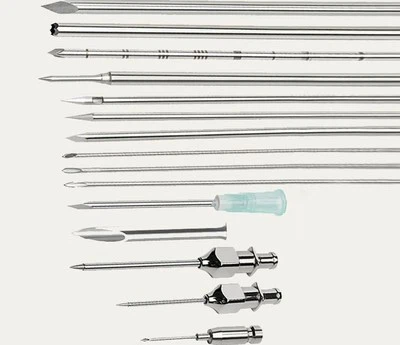
Clinical Application Scenarios Of Soft Tissue Biopsy Needles And The Product Matrices Of Manufacturers
Apr 21, 2026
Clinical Application Scenarios of Soft Tissue Biopsy Needles and the Product Matrices of Manufacturers
Introduction: The Diagnostic Imperative
The soft tissue biopsy needle is an indispensable instrument in modern medicine, serving as the linchpin for diagnosing neoplasms, inflammatory conditions, and musculoskeletal diseases. Its clinical utility spans multiple organs and diverse scenarios, prompting manufacturers to develop intricate product matrices tailored to specific subspecialties. This strategic diversification allows different vendors to address distinct clinical pain points, optimizing diagnostic yield and patient safety.
Section 1: Oncology-The Core Battlefield
Cancer diagnosis represents the most critical application for soft tissue biopsy needles. Covering malignancies such as lung, liver, thyroid, and breast cancers, the choice of needle specification is dictated by tumor location, size, and consistency.
Bard (BD Interventional): Bard's needles are engineered specifically for solid tumor optimization. Their 18-gauge coarse needles, designed for synergy with high-speed biopsy guns, are capable of extracting substantial tissue cores. This is vital for molecular pathology testing, including genomics and proteomics, thereby guiding targeted therapy. With a global penetration rate exceeding 60% in specialized cancer hospitals, Bard sets the benchmark for oncological biopsy.
Jiangsu Huaxing Medical: Addressing the high prevalence of liver and lung cancers in the domestic market, Huaxing has developed dedicated biopsy needles (16G-18G). Clinically validated in over 300 tertiary Grade-A hospitals, these needles demonstrate a diagnostic accuracy rate of 92%, making them a reliable choice for high-volume visceral biopsies.
Mermaid Medical: Focusing on usability, Mermaid Medical's oncology series emphasizes fully automated systems. These systems are designed for image-guided precise sampling, significantly lowering the operational difficulty for clinicians and standardizing the biopsy procedure.
Section 2: Inflammatory and Benign Lesion Diagnosis
In the diagnosis of inflammatory diseases and benign tumors, the primary objective shifts from sheer sample size to minimal trauma and accurate characterization of the lesion.
TSK Laboratory (Japan): TSK's semi-automatic fine needles (20G-22G) are the preferred choice for inflammatory biopsies. The smaller gauge minimizes trauma, reduces patient recovery time, and is ideal for sampling chronic inflammation and benign nodules.
Demeter Medical: Specializing in delicate tissues, Demeter Medical utilizes Nitinol (Nickel-Titanium alloy) for its inflammation-specific needle series. The superelasticity of Nitinol reduces irritation to surrounding tissues, making it exceptionally suitable for fragile soft tissue sampling in organs like the pancreas and spleen.
Section 3: Musculoskeletal Diagnostics
Sampling muscle and tendon tissue presents unique challenges, demanding needles with exceptional flexibility and tensile strength to navigate fibrous and elastic tissues.
Huaxing Medical: Their musculoskeletal-specific needles, crafted from titanium alloys, offer the perfect balance of strength and flexibility. The 18G-20G specifications are compatible with most muscle biopsies and have been incorporated into the standard orthopedic instrumentation lists of numerous hospitals.
Mermaid Medical: Catering to complex anatomical structures, Mermaid offers a series of malleable (flexible) needles. These allow clinicians to adjust the needle's trajectory post-insertion, ensuring accurate sampling from awkward locations.
Section 4: Research and Therapeutic Monitoring
In the realms of clinical research and longitudinal treatment monitoring, the consistency of the biopsy instrument is paramount.
Bard: Bard's research-grade biopsy needles are subject to stringent batch-to-batch consistency controls. This ensures that serial biopsies taken over time provide reliable data for clinical trials and long-term therapeutic efficacy tracking.
Shanghai Meidi Biotech: A rising star in the domestic market, Meidi integrates digital positioning technology into its smart biopsy systems. This provides researchers with precise spatial data, supporting the growth of evidence-based medicine and capturing an increasing market share.
Conclusion: Strategic Selection
A manufacturer's product matrix must comprehensively cover the four pillars of oncology, inflammation, musculoskeletal, and research. Differentiation through material science, gauge/size specifications, and automation levels is key to meeting diverse clinical demands. When selecting a vendor, priority should be given to manufacturers with mature, scenario-specific product lines and robust clinical validation. Leaders such as Bard, TSK, Huaxing, and Demeter exemplify this principle, ensuring that products are adept across the entire spectrum of soft tissue biopsy diagnostics.