Breaking Through A Century-Old Technical Ceiling: The Future Of Subcutaneous Injection Needle Manufacturers In An Innovation-Driven Era
May 21, 2026
Focus: Perspectives on Cutting-Edge Technologies and Future Trends
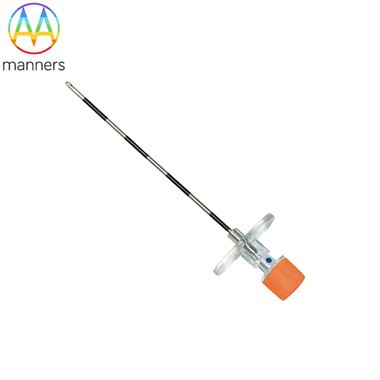
Since the invention of the first modern hollow needle in the 17th century, subcutaneous injection needles have seemingly remained technologically stagnant for over a century. However, with the explosive development of nanotechnology, biomaterials, and digital healthcare, this age-old device is now undergoing a transformative revolution. Future manufacturers of subcutaneous injection needles will no longer be traditional metal processors, but rather high-tech companies integrating across disciplines. They are reshaping humanity's perception of "injection," rapidly advancing toward painless, intelligent, and safer solutions.
Ending the Pain Nightmare: The Rise of Microneedle Arrays and Transdermal Drug Delivery Systems
Needle phobia is one of the most common physiological reactions in humans. To completely eliminate patients' psychological fear, microneedle technology has emerged. This innovative device, manufactured by subcutaneous injection needle producers using semiconductor lithography or micro-injection molding techniques, consists of hundreds of tiny needles each only a few hundred micrometers long. These needles are shorter than the depth at which pain-sensing nerve endings are distributed in the skin, allowing them to create microscopic channels in the stratum corneum without touching nerves, thus enabling painless transdermal drug delivery. Currently, this technology has been initially applied in influenza vaccines and glucose monitoring for diabetic patients, and is expected to eventually replace traditional intramuscular or subcutaneous injections.
The Ultimate Form of Safety Protection: Passive Intelligent Retraction Device
The risk of needlestick injuries for healthcare workers has long been a serious workplace safety concern. Traditional needle caps are highly prone to causing accidental punctures. To address this, next-generation safety needles are now being widely adopted, featuring integrated passive protection mechanisms. For instance, as soon as the needle is withdrawn from the skin, an internal spring mechanism automatically retracts the needle tip into the protective sheath or deploys a physical barrier to seal off the tip. Future subcutaneous injection needle manufacturers will incorporate these safety features as standard, and may even use RFID chips to track needle usage-once activated, the chip updates its status to prevent reuse and malicious tampering, thereby establishing a digital defense against the misuse of medical waste.
Farewell to Cold, Rigid Metals: Applications of Biodegradable and Smart Materials
Environmental pressures are driving the medical device industry toward green transformation. Traditional plastic needle hubs are difficult to degrade, causing serious medical waste pollution. Today, forward-thinking subcutaneous injection needle manufacturers are developing biodegradable needle hubs made from bio-based polymers such as polylactic acid (PLA), which can break down into carbon dioxide and water under industrial composting conditions after fulfilling their purpose.
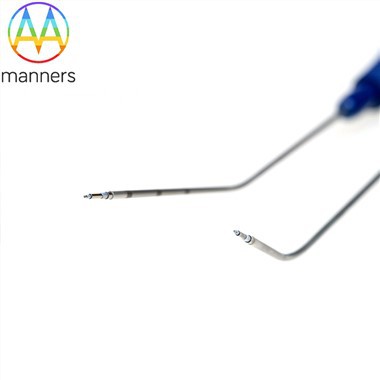
Meanwhile, shape-memory polymers are also beginning to emerge. Scientists are developing a special needle that remains soft at room temperature but hardens upon contact with body heat. This material can be used to create extremely fine, painless catheters, significantly expanding the application of injection needles in minimally invasive procedures.
Connecting Everything: IoT Empowers Precision Medicine
In the field of chronic disease management, patients commonly forget to administer injections or accidentally give themselves multiple doses. To address this issue, some pioneering companies are exploring the integration of miniature IoT sensors directly into injection needle components. When the needle pierces the skin and delivers medication, the sensor automatically activates, recording the time, depth, and dosage of the injection, then wirelessly syncs this data via Bluetooth to the patient's smartphone or a doctor's cloud-based management system. This "smart needle" not only improves patient medication adherence but also provides doctors with valuable real-time data for adjusting treatment plans.
From simple metal tubes to high-tech platforms integrating multiple disciplines, the subcutaneous injection needle industry is undergoing a profound paradigm shift. In this transformation, only manufacturers bold enough to break conventions and heavily invest in research and development will emerge at the forefront, redefining human health and well-being with disruptive products.