Biopsy Needles: The Unsung Heroes Of Precision Medicine And The Path To Domestic Substitution
Apr 18, 2026
Biopsy Needles: The "Unsung Heroes" of Precision Medicine and the Path to Domestic Substitution
Core Product Terms: Biopsy Needle, Core Needle Biopsy (CNB), Fine Needle Aspiration (FNA)
Representative Manufacturers: Medtronic, Argon Medical Devices, Cook Medical, Shanghai Sa Medical
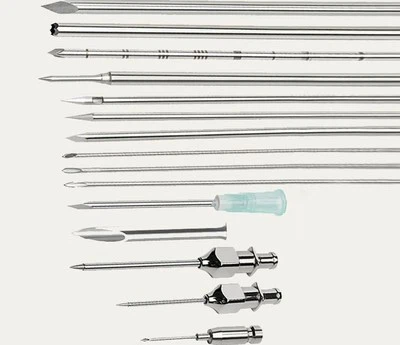
The Biopsy Needle is the "gold standard" tool for tumor diagnosis, and its precision directly impacts the accuracy of pathological results. In the nearly hundred-billion-dollar global biopsy market, high-end products remain monopolized by European and American giants, yet domestic manufacturers are making breakthroughs through cost-performance advantages and customized services.
I. Product Matrix and Technological Evolution
Based on sampling mechanisms, biopsy needles are primarily categorized into three types:
Fine Needle Aspiration (FNA): Small caliber (typically 22G–25G), used for aspirating cytological samples (e.g., thyroid nodules). Representative manufacturers like BD are renowned for their echo-enhancing needle tip designs, which facilitate ultrasound guidance.
Core Needle Biopsy (CNB): Larger caliber (14G–18G) with an inner core notch, capable of obtaining intact tissue cores for pathological diagnosis (e.g., breast cancer). Medtronic's Tru-Cut series is a market staple.
Vacuum-Assisted Biopsy (VAB): Utilizes vacuum negative pressure to continuously acquire multiple samples. Representative equipment like Hologic's Mammotome is widely used in minimally invasive breast lumpectomy surgeries.
The direction of technological evolution is "greater precision and enhanced safety." For example, Argon Medical's coaxial biopsy needles allow for multiple samplings through a single puncture channel, minimizing damage to surrounding tissues. Cook Medical's Chiba needles feature optimized bevel angles to increase success rates in puncturing deep-seated lesions.
II. Market Competitive Landscape: Western Dominance and Rising Domestic Players
The global market is led by multinationals such as Medtronic, BD, and Boston Scientific, which collectively hold over 60% of the market share. Leveraging decades of accumulated clinical data and global distribution networks, these companies have built extremely high barriers to entry in the high-end tertiary hospital market.
Domestic manufacturers (e.g., Shanghai Sa Medical, EikoMed) compete using "differentiation and cost advantages." Shanghai Sa Medical focuses on orthopedic and anesthesia puncture devices (like bone marrow biopsy needles), leveraging local supply chain cost advantages to penetrate the primary healthcare market. EikoMed provides flexible OEM/ODM services, offering customized biopsy needle solutions for small and medium-sized device distributors and exporting to emerging markets.
III. Challenges and Paths for Domestic Substitution
Domestic biopsy needles still lag behind in material science (e.g., toughness of medical-grade stainless steel), needle tip geometric precision (which affects puncture resistance and tissue trauma), and reliability of single-use systems (e.g., anti-needlestick design). The substitution path typically begins in low-risk areas (e.g., superficial lymph node biopsy) before gradually penetrating high-difficulty fields (e.g., percutaneous lung puncture, targeted prostate biopsy).
IV. Future Trends: Intelligence and Visualization
Future biopsy needles will deeply integrate with image navigation (e.g., real-time MRI guidance) and robotic assistance systems. "Smart Needles" equipped with micro-sensors can provide real-time feedback on tissue impedance during puncture, assisting physicians in avoiding blood vessels and nerves. If domestic manufacturers can make early layouts in such interdisciplinary fields, they stand a chance to achieve弯道超车 (overtaking on the curve/bypass competition).
4. Aesthetic Microneedles: From "Nanochips" to "Dissolvables"-Technological Iteration and Compliance Waves in Mesotherapy
Core Product Terms: Derma Roller, Nanochip, Dissolving Microneedle Patch
Representative Manufacturers: Naton Biotech (Najing®), Raphas, YOUWE Biotech, Qinglan Biotechnology
Medical aesthetic microneedles represent the most mature commercial field for microneedle technology, having undergone three generations of evolution-from "mechanical derma rollers" to "nanochips" to "dissolvable microneedle patches." The core logic driving this evolution is the pursuit of being "more painless, more effective, and more suitable for home use."
I. History of Technological Iteration
Generation 1: Derma Roller: Metal needles that create micro-channels on the skin surface via physical rolling to stimulate collagen regeneration. Pain points: High pain sensitivity, risk of infection, and requirement for professional operation.
Generation 2: Nanochip: Represented by Naton Biotech (Najing®). Utilizing single-crystal silicon nanotechnology, the needle tip diameter is less than 80nm, penetrating only the stratum corneum without touching nerves, thus achieving "painless infusion." Its core value lies in increasing the transdermal absorption rate of functional skincare products (e.g., growth factors, hyaluronic acid) by dozens of times.
Generation 3: Dissolvable Microneedle Patches: The current mainstream trend. Led by YOUWE Biotech and Qinglan Biotechnology, these patches use biodegradable materials like hyaluronic acid loaded with whitening and anti-aging ingredients. After insertion, the needles dissolve completely, eliminating sharps disposal and perfectly suiting home-care scenarios.
II. Manufacturer Landscape: Tech-Oriented vs. Capacity-Oriented
Tech-Oriented: Raphas (South Korea) focuses on combining high-value-added raw materials with microneedles, such as its "Microneedle + Peptide" solution, which enhances the transdermal efficiency of large-molecule peptides. Naton Biotech has built a closed-loop of "devices + consumables," where its Najing importation devices require proprietary solutions for use.
Capacity-Oriented: The core competitiveness of Qinglan Biotechnology and YOUWE Biotech lies in mass manufacturing capabilities. Qinglan operates fully automated production lines in Shenzhen with a monthly output of 4 million pieces, primarily offering ODM services for international brands. YOUWE boasts an annual capacity of over 50 million pieces, exporting products to more than 30 countries.
III. Compliance Challenges: Device or Cosmetic?
The regulatory boundaries for aesthetic microneedles are blurred. Nanochip products are typically managed as Class II medical devices (as permeation aids). Conversely, dissolvable microneedle patches may be classified as Class III devices (similar to embedding threads) if claiming medical effects like "wrinkle removal" or "filling." If used merely as carriers for cosmetic importation, they might be registered as cosmetics. The amendment to the Regulations on the Supervision and Administration of Medical Devicesimplemented in 2025 strengthened oversight of "medical device-labeled" microneedles, cracking down on non-compliant "black market" aesthetic clinics and creating market space for legitimate manufacturers with GMP certifications (e.g., YOUWE Biotech).
IV. Future Trend: Personalized Customization
Future aesthetic microneedles will develop towards "customized skin solutions." Through AI skin analysis, personalized microneedle array densities and formulations (e.g., salicylic acid microneedles for acne-prone skin, repair microneedles for sensitive skin) will be generated, delivered directly to consumers via DTC (Direct-to-Consumer) brand models.