Beyond The Sharp Point: Safety Economics Of Blunt Filter Needles
Oct 30, 2026
The Pain Point
Every year, hospitals count the cost of a single moment of carelessness: a used needle, a crowded tray, an overfull sharps container, and a hand that moves faster than judgment. Needle-stick injuries remain one of the most persistent occupational hazards in clinical medicine, and the irony is that many of them happen during the least dangerous-looking step of all - drawing medication from a vial. A nurse reaching across a tray, a pharmacy technician wiping a vial top, a junior doctor recapping out of habit - these are the moments when contaminated sharp tips enter skin, and each event triggers a cascade of blood tests, prophylactic regimens, counseling sessions, and weeks of psychological dread. The blunt filter needle exists to interrupt that cascade at its source, yet adoption still lags because purchasing departments price the needle, not the injury it prevents. The pain point is not technical; it is economic and behavioral. A facility that calculates the true cost of one occupationally acquired infection - testing, treatment, lost productivity, litigation, staff turnover - usually finds that prevention was the cheaper option all along, and that the blunt needle should have been ordered years ago.
The Principle
A blunt filter needle is a deliberately engineered compromise between two conflicting requirements: it must deliver medication safely, and it must not behave like a weapon when the job is done. The blunt tip is created by a controlled grinding or laser treatment that removes the cutting edge geometry, leaving a rounded, radiused profile that cannot easily penetrate skin. The filter component is a micro-mesh integrated into the hub or shaft, typically rated to remove particles in the range that matters for injection safety - glass shards from ampoules, rubber coring from vial stoppers, and precipitates that form during reconstitution. The governing principle is layered defense: the blunt tip reduces the probability of injury, while the filter removes the particulate hazard that would otherwise travel with the drug. Neither layer is sufficient alone. A sharp filtered needle still injures; a blunt unfiltered needle still delivers glass and rubber fragments into a vein or muscle. The engineering task is to hold both functions inside a single stainless steel component whose outer diameter, inner flow path, and filter retention are all controlled to the same tight tolerance, because in a filter needle the geometry of the tip, the mesh of the filter, and the gauge of the cannula are one interdependent system.
Classifying the Equipment
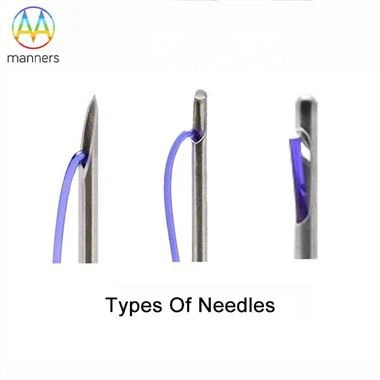
Blunt filter needles sort into families defined by their filtration task and their delivery context. Ampoule-drawing needles carry a large filtration area and a wide bore, because the primary hazard is glass shards created when the ampoule neck is snapped; these needles favor coarser mesh and higher flow. Vial-access needles target rubber coring - the little plugs punched out of stoppers by repeated puncture - and therefore use finer mesh with careful attention to flow reduction, since the same filter that catches a rubber plug also resists the flow of viscous medication. Reconstitution needles are built for the double duty of injecting diluent into a powder vial and drawing the resulting solution back out; they need a filter that survives both directions and a blunt tip that protects the user during repeated transfers. Within each family, gauge selection spans the range from 18 to 29, where the 18G sits at the high-flow end for large-volume transfers and the finer gauges trade flow for precision in pediatric and low-volume dosing. There is also a distinction in manufacturing origin: mechanical grinding produces a predictable, repeatable radius with a characteristic surface finish, while laser blunting melts and reflows the tip edge into a smooth contour that is often more uniform but requires strict control of heat-affected zone depth so the cannula does not soften near the tip.
Practical Guide
Start with a blunt tip inspection before every use, because a properly manufactured blunt needle still depends on the user confirming the radius visually and by fingertip. Hold the needle horizontally and pass a gloved finger across the tip - a true blunt tip offers no resistance, while a chipped or improperly ground tip catches slightly; any catch means discard and replace. When drawing from an ampoule, tilt the ampoule to pool the liquid away from the broken neck, insert the needle only far enough to reach the liquid, and use a low angle so the cannula does not scrape glass from the rim. When accessing a vial, puncture the stopper at a slight angle and withdraw the needle in the same plane to minimize coring; do not rock the needle in the stopper. For reconstitution, inject the diluent slowly along the vial wall, allow the powder to wet completely, swirl rather than shake to avoid foaming and shear-induced precipitation, and draw the solution back through the same filter with the vial inverted so the needle tip stays below the liquid surface. After the procedure, do not recap - the blunt tip makes recapping unnecessary, and the filter needle should be disposed of directly into the sharps container with the filter side facing up so contaminated liquid does not drip from the hub. Document the gauge and filter rating in the medication log, because a filter that clogs mid-draw is a signal, not a nuisance: it tells you the medication was not fully dissolved or the vial was damaged.
Field Experience
A regional oncology center switched its entire cytoprotective medication process to blunt filter needles after a pharmacy technician sustained a contaminated stick while recapping a needle used to draw a hazardous drug. The direct costs - blood draws, prophylaxis, a month of anxiety - were minor compared with the indirect costs: the technician took leave, the pharmacy rescheduled compounding, and the incident triggered a full review that consumed two weeks of management time. After the switch, the center logged three unexpected findings. First, the perceived "slower draw" of the filter needle mostly disappeared in practice because staff stopped recapping and stopped changing needles between draw and administration. Second, particulate contamination dropped measurably: the pharmacy found fewer complaints of injection-site reactions and less visible debris in finished syringes. Third, the real problem revealed itself over time - occasional filter clogs during reconstitution of lyophilized drugs were traced not to the filter but to incomplete dissolution caused by hasty swirling; the filter was doing its job by telling the staff the drug was not ready. The lesson from the field is that a blunt filter needle is not a passive consumable; it is a process instrument that rewards facilities willing to treat it as part of the medication workflow rather than as an accessory.
Summary and Elevation
The blunt filter needle elevates the humble act of drawing medication into a discipline of layered protection. It protects the clinician from injury, the patient from particulate, and the institution from the hidden cost of occupational exposure. When a facility adopts the blunt filter needle systematically, it stops treating safety as a personal habit and starts treating it as an engineered property of the tool - and that shift in perspective is worth more than any single needle. The economics are simple once the full cost of injury is counted: prevention is not a luxury line item; it is the cheapest intervention available.
Outlook and Advice
The future of blunt filter needles points toward integrated safety systems - needles with self-blunting mechanisms after use, color-coded filtration ratings, and traceability through unit-level barcoding that links each needle to its lot and medication event. Healthcare institutions should standardize on a blunt filter needle for every vial and ampoule draw, publish a visible cost-of-injury calculation to justify the purchase, and train staff on the inspection and technique protocols rather than assuming the needle makes the user safe by itself. Suppliers should invest in laser blunting capability, finer filter mesh without flow loss, and documentation that proves filter integrity under real-world draw conditions. The facilities that adopt early will not only prevent injuries; they will set the benchmark that regulators and competitors will follow.
< img alt="news-1-1" src="/uploads/24240/news/202604241539186d0ff.png " />