Basic Definition And Core Value Of Microneedle Injection Perioperative Application
Aug 14, 2026
https://en.wikipedia.org/wiki/Microneedles
Microneedle injection refers to the standardized minimally invasive aesthetic and clinical treatment that combines physical microneedle channeling with targeted liquid injection delivery. Different from simple superficial microneedle skin rolling, microneedle injection precisely sends functional essence, medicinal liquids and nutritional ingredients into the epidermis and superficial dermis through micro-needle arrays, realizing integrated physical skin stimulation and transdermal ingredient delivery. Perioperative microneedle injection applications cover complete pre-operation preparation and post-operation repair scenarios, serving as a core auxiliary system for mainstream light medical procedures such as hyaluronic acid filling, photorejuvenation, laser peeling and scar repair. With the upgrading of minimally invasive aesthetic standards, perioperative microneedle injection has evolved from a single auxiliary project to a standardized procedural system, effectively solving common clinical pain points such as unstable preoperative skin condition, insufficient treatment absorption and slow postoperative recovery.
The core working principle of perioperative microneedle injection is staged skin conditioning and procedural effect optimization. In the pre-operation stage, low-density and shallow-depth microneedle injection is adopted to gently activate skin metabolism, repair subtle hidden damage of the skin barrier, and improve skin blood circulation and ingredient absorption capacity, laying a stable skin foundation for subsequent formal medical aesthetic treatment. In the post-operation stage, targeted repair-type microneedle injection is used to deliver anti-inflammatory, moisturizing and barrier-repairing ingredients through artificial microchannels, accelerate the closure of procedural micro-wounds, reduce postoperative redness, swelling and sensitivity, and lock the curative effect of medical aesthetic operations. The whole perioperative system forms a closed-loop logic of pre-conditioning, intra-treatment and post-repair, which significantly improves the safety and sustainability of aesthetic treatment.
Core Advantages of Perioperative Microneedle Injection
First, it standardizes preoperative skin preparation and reduces procedural risks. Traditional medical aesthetic operations lack standardized preoperative conditioning, and problems such as oily skin, hidden inflammation and fragile barriers easily lead to postoperative sensitivity and poor efficacy. Preoperative microneedle injection can regulate skin oil balance, eliminate subclinical inflammation and improve skin tolerance, greatly reducing the incidence of adverse reactions. Second, it amplifies postoperative repair efficiency and shortens recovery cycle. Postoperative microneedle injection precisely delivers high-molecular repair ingredients that are difficult to absorb by external application, accelerates micro-wound healing, and shortens the redness and swelling period by 30% to 50% compared with conventional nursing. Third, it optimizes overall procedural efficacy and prolongs maintenance time. Preoperative skin activation improves the skin's receptive capacity to therapeutic ingredients, while postoperative locking repair avoids ingredient loss, making the aesthetic effect more uniform and long-lasting. Fourth, minimally invasive and highly compatible with low threshold. The perioperative microneedle injection adopts ultra-short needle design with low trauma and no scar, which can be matched with almost all light medical projects without conflicting with the main treatment effect. Fifth, it realizes personalized perioperative management. According to different skin types, procedural trauma degrees and skin problems, adjustable needle depth and targeted injection ingredients can be adopted to form exclusive conditioning schemes.
Main Perioperative Application Scenarios
In preoperative conditioning scenarios, it is widely used for skin stabilization before laser, picosecond, photorejuvenation, filling injection and acne treatment. It is suitable for problematic skin such as sensitive skin with fragile barriers, oily inflammatory skin and dull tired skin to unify preoperative skin state. In postoperative repair scenarios, it targets micro-wound repair after various minimally invasive aesthetics, improves postoperative redness, dryness, tightness and pigmentation risk, and repairs damaged skin barriers. In procedural interval maintenance, it serves as regular nursing between multiple courses of treatment to stabilize skin metabolism and avoid skin tolerance decline. In clinical auxiliary treatment, it assists in preoperative inflammation control and postoperative tissue repair of dermatological treatments, improving the safety of medical intervention. This staged application mode makes microneedle injection an indispensable standardized link in the modern light medical industry.
Manufacturing Process of Perioperative Microneedle Injection Devices
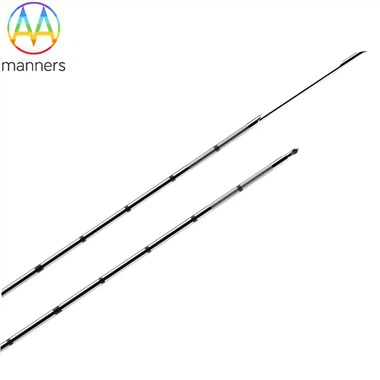
Perioperative dedicated microneedle injection devices have higher requirements for safety and mildness than conventional microneedle products, with standardized and refined production procedures. The first step is material selection, prioritizing medical-grade stainless steel and high-toughness biodegradable polymers with ultra-low irritation to adapt to fragile preoperative and postoperative skin. The second step is material preparation, including high-precision purification, degreasing and sterile purification to eliminate residual impurities and ensure zero skin irritation. The third step is molding and etching, adopting photolithography and micro-mold molding technology to prepare uniform and orderly micro-needle arrays, with controllable needle spacing and needle length to avoid excessive skin trauma. The fourth step is needle tip sharpening, using laser precision polishing to form smooth conical needle tips, ensuring smooth puncture while reducing tissue tearing damage. The fifth step is special surface treatment, adopting plasma hydrophilic modification and antibacterial coating to improve biocompatibility and avoid bacterial residue during perioperative use. The sixth step is rigorous quality inspection, including dimensional accuracy detection, mechanical toughness test, sterile test and skin compatibility test. The seventh step is assembly and molding, matching with professional injection base and adjustable control components. The eighth step is vacuum packaging and gamma ray sterilization to ensure single-use sterility for perioperative clinical use.