Atraumatic Design Of Tubing Kit Distal Caps: Improve Minimally Invasive Surgery Safety
Aug 25, 2026
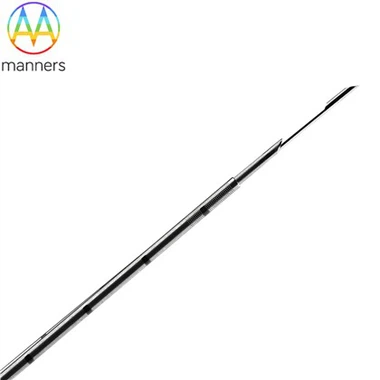
Atraumatic design is the core functional advantage of polymer distal caps for modern suction irrigation tubing kits, and also a key indicator to distinguish high-end medical tubing kits from ordinary products. In endoscopic minimally invasive surgery and abdominal lavage treatment, the front-end distal cap of the suction irrigation tubing kit directly contacts human mucosal tissues, visceral cavities, and lesion areas. The burr-free ultra-smooth surface and humanized structural design of precision polymer distal caps can effectively reduce surgical trauma, lower postoperative complication rates, and greatly improve the safety and professionalism of clinical diagnosis and treatment.
The atraumatic performance of suction irrigation tubing kit distal caps is firstly reflected in the ultra-smooth burr-free surface formed by precision micro-machining. Traditional metal and ordinary plastic tubing front ends inevitably have tiny burrs, sharp edges, and tool marks during processing. When penetrating delicate tissues such as gastrointestinal mucosa, bronchial lining, and abdominal visceral gaps, these defects are prone to scratch tissues, cause local bleeding, mucosal edema, and inflammatory reactions. PEEK and PPS polymer distal caps are processed by five-axis longitudinal lathes and finely polished to form a mirror-smooth surface with extremely low friction coefficient, realizing zero-resistance and zero-damage atraumatic insertion.
The flexible and tough polymer material property further optimizes the atraumatic effect of the distal cap. Compared with rigid metal front ends, medical PEEK and PPS polymers have tissue-matching flexibility, which can produce slight adaptive deformation when contacting human tissues, avoiding hard extrusion and compression damage to delicate mucosal structures. This unique performance is particularly critical in complex curved cavity operations such as intestinal tract and bronchus. The flexible and smooth distal cap can safely navigate through tortuous anatomical structures, effectively reducing the risk of tissue tearing and vascular injury caused by rigid propulsion, and improving the controllability of surgical operation.
The structural optimization design of the distal cap ensures stable protection of the endoscopic optical system while ensuring atraumatic performance. As the leading-edge structure of the suction irrigation tubing kit, the polymer distal cap can effectively protect the internal optical housings and objective lens, avoiding lens abrasion, contamination, and collision damage during tissue penetration and cavity irrigation. It maintains a constant and clear surgical field of view throughout the operation, preventing blurred imaging caused by lens friction and contamination, which helps doctors accurately locate lesions and complete precise irrigation and suction operations.
The atraumatic polymer distal cap design greatly shortens patient postoperative recovery time and improves clinical treatment efficiency. Minimized surgical trauma reduces postoperative pain, inflammatory exudation, and adhesion risks, lowering the incidence of postoperative complications. For repeated endoscopic examinations and multiple lavage treatments, the atraumatic tubing kit can avoid cumulative tissue damage, ensuring the safety of long-term follow-up treatment. With dual advantages of safe tissue adaptation and stable equipment protection, the atraumatic polymer distal cap has become the standard configuration of high-quality suction irrigation tubing kits for modern minimally invasive surgery.