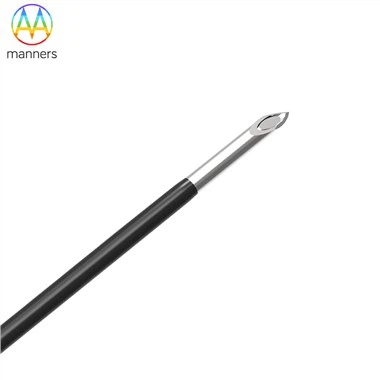
Application Of Disposable Hypodermic Veterinary Needles In Livestock Vaccination
Nov 05, 2026
1. Pain Points of Vaccination in Intensive Livestock Farms
Vaccination is the core work of livestock disease prevention, and needle problems are easily ignored root causes of poor immune effect. Many farms reuse needles for cost saving. After repeated piercing, the tip becomes blunt, the wound becomes larger, vaccine liquid flows out from the puncture hole, and the actual intake dose is insufficient. Blood cross-contamination between animals spreads infectious diseases, and the whole herd immune effect fluctuates greatly. During batch vaccination, mismatched gauge causes frequent troubles: thick needles for piglets lead to stress and bleeding, thin needles for oily vaccines cause blockage and slow injection. Rust is another hidden trouble. When needles are stored on iron material, even qualified stainless steel will produce rust spots after contacting iron for a period of time. Rust particles enter subcutaneous or muscle tissue, inducing granuloma and abscess, and the injection site suppurates, affecting animal growth. In addition, scattered needle waste after vaccination brings environmental pollution and staff puncture injury risks. Farm technicians often cannot distinguish whether low antibody titer comes from vaccine cold chain failure or needle contamination and leakage. Batch vaccination with high work intensity also makes operators tend to rush and skip needle replacement between animals.
2. Stainless Steel Anti-Rust and Sterilization Principle
Disposable hypodermic veterinary needles adopt medical stainless steel as raw material. The chromium oxide passive film on the surface is the key to anti-rust. In sealed, dry packaging isolated from air and moisture, the passive film keeps stable and effectively prevents oxidation, just like household stainless steel tableware. However, stainless steel cannot resist galvanic corrosion. Contact with iron metal will form a primary cell, iron corrodes preferentially and drives rust to attach to the stainless steel needle surface. The product is sterilized before delivery and sealed to maintain sterile state until opening. It is certified by ISO9001:2015 quality management system and SGS material testing, controlling burr, tip sharpness and harmful metal precipitation. It belongs to injection and puncture instrument designed for single use. Once opened, after touching animal skin, body fluid and vaccine adjuvant, the surface passive film is damaged, and corrosion risk rises rapidly. The factory provides complete gauge range from 12G to 32G, and accepts custom drawing or sample development, as well as flexible packaging according to farm demand.
3. Classification and Matching for Vaccination Scenarios
According to livestock species and vaccine type, the 12G–32G gauge series can be divided into targeted vaccination groups. 12G,14G,16G: for adult cattle, buffalo and horses, suitable for oily adjuvant vaccines and large-volume intramuscular injection. Thick tube wall resists bending when piercing thick hide. 18G,19G,20G,21G,22G: mainstream vaccination gauges for pigs, sheep and goats. 18G for finishing pigs and adult sheep; 21G for piglets and lambs, which balances penetration efficiency and wound damage. 23G,25G,26G: for subcutaneous vaccination of young animals, poultry and small ruminants, reduce bleeding and stress reaction. 30G,31G,32G: ultra-fine needles for neonatal livestock and laboratory animal vaccination, minimal trauma. Packaging can be standard export cartons, or customized into portable small packs for mobile vaccination teams, with quantity marked per pack for convenient counting. Custom service supports special hub structure matching continuous automatic vaccinators widely used in modern farms.
4. Practical Operation Guide for Vaccination
First, pre-work preparation: select the gauge according to animal age and vaccine property. Oily suspension vaccines need thicker gauge than aqueous vaccines. Check all packaging before unpacking, discard any package with water stain, breakage or long-term contact with iron storage tools. Second, assemble the needle and syringe tightly, test the vaccine liquid flow, and confirm no blockage. Third, standard injection: for intramuscular vaccination, choose neck muscle, insert vertically to the target layer; for subcutaneous vaccination, lift the skin fold and insert at low angle. Push the plunger steadily, and keep the needle for 1–2 seconds before withdrawal to reduce liquid backflow and leakage. Fourth, strictly replace needles according to regulation: replace a new needle for each animal in high-pathogen farms; for low-risk areas, follow farm SOP, but never reuse after obvious contamination, bending or rust. Fifth, waste management: put all used needles into puncture-proof sharps container immediately, no random discard. After vaccination, collect sharps and hand over to professional medical waste disposal. Sixth, record vaccination batch and needle batch number, convenient for traceability when antibody test is abnormal.
5. Frontline Experience from Livestock Veterinarians
After popularizing disposable needles in pig farms, many veterinarians have summarized practical rules. For swine fever and foot-and-mouth disease oily vaccines, 18G needles are the most stable for finishing pigs. If 21G is used, the injection speed will be too slow and leakage is easy to happen. Piglet subcutaneous vaccination adopts 21G or 23G, which can reduce screaming stress. Storage experience: mobile vaccination boxes should be plastic, not iron boxes. Even if the needles are sealed, long-term placement in iron boxes will bring rust risk once the package is slightly damaged. Many farms once cut cost by reusing needles, and the abscess rate at injection site reached above 8%. After switching to full disposable needles, the abscess rate dropped below 1%. Another experience: do not open a large number of needle packages in advance. Once unpacked, the anti-rust protection fails, and the needles must be used within the same shift. For large-scale automatic vaccination lines, custom needles matching the machine can greatly improve work efficiency and reduce downtime caused by needle falling.
6. Summary
In livestock vaccination, disposable hypodermic veterinary needles are the last mile guarantee of vaccine efficacy. The complete gauge matrix adapts to different livestock and vaccine types. The stainless steel anti-corrosion mechanism and sterile packaging solve cross infection, rust pollution and leakage pain points caused by reused needles. Standardized injection operation and waste management stabilize herd immune level and reduce growth loss caused by injection inflammation. Supported by ISO9001 and SGS certification, it becomes the basic consumable for standardized epidemic prevention.
7. Prospect and Suggestions
With the upgrading of livestock epidemic prevention and food safety supervision, disposable needles will become a mandatory requirement in more breeding areas. It is suggested that farms integrate needle management into epidemic prevention SOP, make gauge matching tables for different vaccines. Suppliers can develop anti-slip hub and thin-wall models for vaccination scenarios. For export farms, reserve complete SGS and ISO9001 documents for inspection. Mobile vaccination teams can adopt customized small portable packaging. In the long run, safety retractable needles will further reduce occupational puncture injury risk for veterinarians. Breeders should calculate comprehensive cost: the loss caused by vaccine failure and abscess is far greater than the procurement cost of disposable needles.