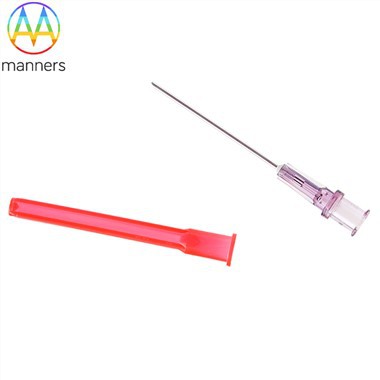
Angle Classification And Scenario Matching Of Huber Point Needles
Oct 09, 2026
1. Scenario Mismatch Pain Points of Single-Angle Puncture Needles
Traditional medical port puncture needles mostly adopt single fixed-angle design, which cannot adapt to diversified clinical treatment scenarios and patient physical differences, resulting in many practical application pain points. Single vertical straight needles are prone to excessive subcutaneous extrusion and poor comfort during long-term indwelling, and are easy to shift and fall off when patients move slightly. Ordinary right-angle needles have poor adaptability to patients with thin subcutaneous fat, easy to cause excessive puncture depth and tissue damage. The lack of 45-degree transition angle products leads to difficult operation for special body type patients, low one-time puncture success rate and repeated puncture trauma. In addition, non-customizable angle structure makes it impossible to match special surgical and individualized treatment scenarios, resulting in poor equipment adaptability, increased intraoperative operation difficulty and postoperative discomfort. Single-angle product homogenization seriously restricts the refined and comfortable development of long-term venous access treatment.
2. Angle Adaptation Working Principle of Huber Point Needles
The differentiated angle design of Huber Point Needles is based on human subcutaneous anatomical structure and biomechanical principles, realizing precise matching of puncture posture, stress distribution and indwelling stability. Straight needles adopt linear force transmission structure, with direct puncture path and small tissue resistance, suitable for rapid vertical access and short-term infusion, realizing efficient and convenient operation. 45-degree angled needles form a transition stress structure, which can disperse subcutaneous tissue pressure, balance puncture accuracy and operation flexibility, and adapt to most conventional patient body types and routine treatment scenarios. 90-degree right-angle needles adopt parallel skin force balance design, which can fit the subcutaneous tissue plane, eliminate vertical extrusion pressure, avoid needle body pulling displacement caused by patient activity, and maximize the stability and comfort of long-term indwelling. All angle models retain the core non-coring tip and 304 stainless steel material performance, ensuring consistent safety while realizing scenario differentiation.
3. Detailed Classification and Characteristic Analysis of Angles
Huber Point Needles form a complete angle product matrix including straight, 45-degree, 90-degree and customized special angles. Straight Huber Needles feature linear integrated structure, simple and rapid operation, high puncture efficiency, suitable for emergency infusion, short-term single treatment and blood sampling scenarios, with low operation difficulty and wide basic applicability. 45-degree angled Huber Needles are the most versatile universal models, with moderate puncture angle, strong adaptability to different subcutaneous fat thicknesses, balancing operation convenience and indwelling stability, suitable for most inpatient routine chemotherapy and intermediate-term infusion treatment. 90-degree right-angle Huber Needles are professional long-term indwelling models, with flat and close-fitting structure, minimal skin extrusion and high fixation stability, specially used for long-cycle tumor chemotherapy and chronic disease continuous infusion. In addition, special angle customized products can be developed according to 2D/3D drawings and samples to meet the needs of special posture treatment and personalized medical scenarios.
4. Angle-Based Scenario Matching Operation Guidelines
Standardized angle selection and matching operation are the key to improving clinical treatment effect and patient comfort. For emergency treatment and short-term single infusion, select straight Huber needles, complete vertical rapid puncture after port positioning, and withdraw the needle immediately after treatment to improve operation efficiency. For routine intermediate-term infusion of ordinary patients, select 45-degree angled needles, adjust the puncture angle according to subcutaneous thickness, stabilize the needle body after successful puncture, and complete standardized infusion treatment. For long-term indwelling chemotherapy patients, obese patients and patients with frequent daily activities, prefer 90-degree right-angle needles, fully fit the skin plane, fix the needle body with professional dressing to avoid displacement and extravasation. For special patients and special treatment scenarios, adopt customized angle products, adjust operation posture and force according to personalized structural characteristics to ensure accurate and stable puncture.
5. Clinical Practical Experience of Angle Differentiated Application
Mass clinical application data verifies that differentiated angle matching can significantly improve the comprehensive effect of port access treatment. Straight needles increase the efficiency of emergency port puncture by more than 30%, effectively shortening patient treatment waiting time. 45-degree universal needles have a one-time puncture success rate of up to 99% in conventional clinical scenarios, with low operation difficulty and suitable for popularization in primary medical institutions. 90-degree long-term indwelling needles reduce the incidence of needle displacement, liquid extravasation and local pain by more than 95%, greatly improving the quality of life and treatment compliance of long-term treatment patients. Custom special angle products solve the adaptation problems of special body types and special treatment postures, filling the gap of personalized clinical treatment. Reasonable angle selection can effectively reduce operation risks and postoperative discomfort, and maximize the clinical value of Huber needles.
6. Angle Classification Application Value Summary
The diversified angle classification system of Huber Point Needles breaks through the limitation of single-angle traditional puncture instruments, realizing full coverage of short-term, intermediate-term and long-term infusion scenarios. Through anatomical biomechanical optimization of different angles, it solves the pain points of poor stability, low comfort and low matching degree of traditional products. The combination of standard angle models and customized angle services meets the standardized and personalized dual needs of clinical treatment, improves the accuracy and refinement of port access operation. It provides targeted and professional instrument support for different treatment cycles and patient groups, and is an important symbol of the upgrading of minimally invasive intravenous treatment equipment.
7. Angle Product Iteration Prospects and Industry Suggestions
In the future, the angle series products of Huber Point Needles will develop towards refined differentiation and intelligent matching. It is suggested to further enrich special angle customized products, develop multi-angle transition models for special groups such as children and the elderly, and improve full-group coverage capability. Optimize the structural design of each angle model, further improve the stress balance performance and indwelling comfort. Compile clinical scenario matching guidelines for angle classification to standardize medical staff's selection and operation standards. Strengthen customized service capabilities, realize rapid development and production of special angle products according to customer drawings and samples, and expand the application scope of personalized products, promoting the high-quality development of the industry's differentiated product system.