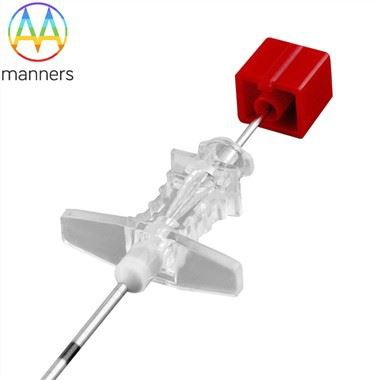
An Industry Analysis Of Bone Marrow Biopsy Needles
Jun 19, 2026
https://www.chamfondbiotech.com/4-types-of-bone-marrow-biopsy-needles/
As a critical medical device, the bone marrow biopsy needle is subject to stringent regulatory oversight and standardization globally. Concurrently, driven by population aging and the rising incidence of hematological diseases, market demand for needles of varying dimensions is undergoing profound shifts. This article analyzes the current landscape and future trends of bone marrow biopsy needle dimensions from an industrial and market-oriented perspective.
I. Dimensional Standards and Regulations in Major Global Markets
Classified as Class II or III medical devices, bone marrow biopsy needles require rigorous approval and registration across major global markets. While no single mandatory global standard governs dimensions, widely accepted industry practices and regional standards prevail.
United States Market (FDA): The FDA mandates the submission of a 510(k) Premarket Notification, requiring manufacturers to demonstrate that their device is substantially equivalent in safety and effectiveness to a legally marketed predicate device. Regarding dimensions, the FDA recognizes ISO standards and relevant ASTM (American Society for Testing and Materials) specifications. Mainstream sizes prevalent in the market-such as the 8G, 11G, and 13G Jamshidi needles, as well as 14G and 16G powered needles-are broadly accepted as "standard dimensions."
European Market (CE Marking): The European Union adheres to the Medical Device Regulation (MDR). Manufacturers must comply with the ISO 13485 Quality Management System and reference documents such as ISO 7864 (for injection needles) and ISO 9626 (for stainless steel needle tubing wall thickness). While European dimensional requirements mirror those in the U.S., the market imposes stricter scrutiny on biocompatibility and sterilization validation.
Chinese Market (NMPA): The National Medical Products Administration (NMPA) has increasingly standardized the registration management of bone marrow biopsy needles. In addition to referencing international standards, China has issued specific industry standards (such as the YY/T series). Notably, given China's vast population and expansive geography, clinical practices vary significantly across regions and hospital tiers. Consequently, dimensional demand is highly diversified. There exists both a strong preference for the refined dimensional offerings of imported premium brands (e.g., BD, Argon Medical) and a massive demand for domestic, high-cost-performance products in classic sizes.
II. Market Trends: Three Engines Driving Dimensional Change
The Minimally Invasive Wave: This is the most potent force driving the trend toward finer dimensions. Both patients and clinicians increasingly favor procedures with less trauma and faster recovery times. This has fueled continuous growth in the market share of powered biopsy needles, particularly those in the 14G–16G range. Concurrently, coaxial trocar systems compatible with these finer needles are highly sought after.
Demands of Precision Medicine: The rise of targeted therapy and immunotherapy has imposed unprecedented demands on biopsy sample quality. Beyond requiring cells for genetic sequencing, there is a critical need for intact tissue for immunohistochemistry (IHC) and in situhybridization (ISH). This, in turn, challenges the integrity of the sample. Ensuring sample adequacy with finer needles has become a key R&D focus for manufacturers. Several companies have improved tip cutting technology to enable 16G powered needles to acquire samples of comparable quality to traditional 13G manual needles.
Challenges of an Aging Society: The elderly often present with osteoporotic bones and thinner cortical layers, yet exhibit poorer tolerance for surgery due to comorbidities. This necessitates needles that are sharp enough to minimize bone fragment generation while being fine enough to avoid fracture risks. Specialized dimensions tailored for geriatric patients (e.g., slightly longer or finer models) are emerging as a distinct market segment.
III. Future Outlook: Customization and Smart Sizing
Looking ahead, the dimensions of bone marrow biopsy needles will transcend fixed physical parameters to become dynamic, personalized solutions.
3D-Printed Customization: As 3D printing technology matures in the medical device sector, it will soon be possible to print biopsy needles based on pre-operative imaging data. These needles will feature unique dimensions perfectly matched to the patient's bone curvature and cortical thickness, resolving the inherent limitations of "standard sizes" in accommodating individual anatomical variations.
Smart Dimensional Feedback: Future biopsy needles may integrate micro-sensors to monitor resistance, depth, and torque in real-time during insertion, transmitting this data to a display interface. When the needle tip contacts a lesion or encounters abnormally hard tissue, the system will alert the clinician, assisting in real-time strategy adjustment or even automatically locking in the optimal sampling depth and length.
In conclusion, the dimensions of bone marrow biopsy needle represent both the culmination of decades of technological development and the frontier of future medical innovation. For industry professionals, a deep understanding of the clinical significance and market logic behind these dimensions is the key to maintaining a competitive edge in this demanding field.