A Minimally Invasive Tool For Chronic Nasal Mucus And Turbinate Hypertrophy
Nov 10, 2026
Pain Points
Persistent posterior nasal mucus, bilateral inferior turbinate hypertrophy combined with nasal septum deviation is one of the most refractory chronic rhinitis conditions in ENT clinics. Traditional treatment paths carry obvious drawbacks: partial turbinate resection causes heavy intraoperative bleeding, large mucosal trauma, long postoperative edema, dry nose and atrophic rhinitis risk; simple drug therapy only relieves surface inflammation and cannot shrink hyperplastic submucosal fibrous tissue, so patients repeatedly suffer from postnasal drip, stuffiness and sleep disturbance. Many clinicians also face tool bottlenecks: generic radiofrequency probes have poor tip control, excessive lateral thermal spread, and cannot adapt to narrow nasal cavity anatomical variation. Standardized probes cannot match personalized surgical routes, while unqualified electrode needles suffer from unstable conductivity, rough surface burrs and poor corrosion resistance, raising hidden dangers of mucosal adhesion and secondary bleeding. The clinical gap lies in a low-temperature, submucosal, customizable ablation needle that preserves normal mucosal epithelium while reducing hypertrophic turbinate tissue.
Working Principle
Plasma ablation electrode needle relies on low-temperature coblation plasma technology, different from high-temperature thermal cautery. When conductive saline medium is filled around the tungsten and stainless steel electrode tip, high-frequency electric field excites saline molecules into a thin plasma layer of charged particles at 40–70°C. These charged particles break tissue molecular bonds at submucosal level, decomposing and dissolving hyperplastic fibrous tissue without burning the surface mucosa. The tungsten tip delivers stable current, while the stainless steel shaft provides mechanical support and conductive transmission. The core advantage is localized energy release: thermal injury radius is controlled within a tiny range, so the ciliary epithelium of nasal mucosa remains intact, retaining normal mucus clearance function. This mechanism perfectly matches the clinical requirement for turbinate reduction: shrinking submucosal volume while avoiding permanent mucosal damage, laying a foundation for subsequent TCM syndrome differentiation conditioning to clear heat and detoxify.
Device Classification
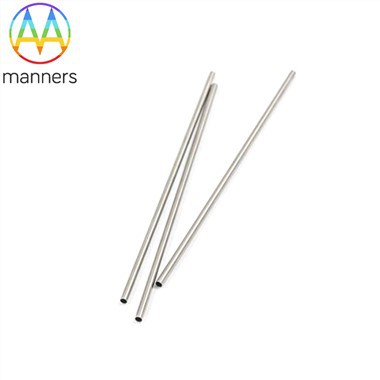
Plasma ablation electrode needles are classified by tip design, circuit structure and application scene. First, unipolar ablation needles: simple structure, low cost, suitable for large-area submucosal shrinking, but thermal diffusion range is relatively wide, mostly used for outpatient conservative turbinate reduction. Second, bipolar plasma ablation needles: dual tungsten electrode tips form closed local circuit, energy confinement is stronger, thermal damage is minimized, which is the mainstream type for nasal septum deviation combined turbinate surgery. Third, customized shaped electrode needles: processed according to 2D/3D drawings or customer samples, including angled tip, blunt fill tip and fine straight tip. From the manufacturing dimension, raw material variants include stainless steel main shaft with tungsten active tip, all-stainless steel electrode and tungsten alloy reinforced tip. The processing route determines grade: basic version only has grinding and cutting; high-precision medical grade integrates necking, swaging, fine grinding, laser cutting, laser marking and electropolishing to eliminate surface burrs and reduce tissue friction stimulation. Packaging types are divided into standard carton bulk packaging and sterile individual blister packaging for single-use clinical supply.
Practical Operation Guide
The whole procedure is performed under nasal endoscope with local anesthesia. Before operation, evaluate the hypertrophy degree of bilateral inferior turbinate and the deviation direction of nasal septum, mark the submucosal entry point at the anterior-middle 1/3 of inferior turbinate lower edge. Prepare the plasma host, test the electrode needle circuit continuity, confirm ablation and coagulation power gears. Insert the electrode needle tip into submucosa, keep the tip close to turbinate bone surface, avoid piercing mucosal surface. Advance slowly along the bone surface for multi-point tunnel ablation, stop ablation once the tissue is visibly shrunk, activate coagulation mode for minor oozing. After ablation, withdraw the electrode needle, no suture is required. Key operation specifications: do not stay at one spot for more than 3 seconds to prevent over-ablation; keep the tip submucosal all the time; match needle diameter according to nasal cavity space. After the minimally invasive ablation phase, clinicians can combine TCM heat-clearing and detoxification conditioning to reduce postoperative inflammatory exudation and mucus secretion, forming a complete treatment chain.
Real-World Experience
From clinical feedback, the biggest failure cause of poor curative effect is improper electrode needle selection rather than parameter setting. For patients with severe septum deviation and narrow unilateral nasal passage, standard straight needles are hard to reach posterior turbinate, so custom angled electrode needles significantly improve surgical accessibility. From manufacturing experience, electropolishing is a non-negotiable process for ENT electrode needles. Unpolished metal surface will cause mucosal friction injury and postoperative crusting. Swaging and necking control the transition between shaft and tip, preventing stress fracture under repeated bending. Tungsten tip has higher melting point and stable conductivity, better than pure stainless steel tip under long continuous ablation. Many small clinics blindly adopt low-cost generic probes and encounter high postoperative dryness rate; premium customized plasma ablation electrode needles reduce reoperation rate effectively. Manufacturers should also verify drawing dimensional tolerance before mass production, and perform penetration test for each batch of finished needles.
Summary & Value
Plasma ablation electrode needle is not merely a consumable accessory of plasma surgical host, but the core carrier to realize low-temperature submucosal turbinate reduction. Its value is reflected in balancing three core clinical demands: effective reduction of hypertrophic tissue, protection of nasal mucosal ciliary function, and controllable intraoperative bleeding. Compared with traditional resection and ordinary radiofrequency tools, it reduces surgical trauma, shortens recovery cycle and reserves the possibility of integrated treatment combining minimally invasive surgery and traditional Chinese medicine conditioning. The combination of stainless steel mechanical stability and tungsten conductive performance, plus precision machining processes, supports personalized clinical solutions for different turbinate anatomical variations.
Future Outlook & Suggestions
In the next stage, the industry will move toward miniaturized tip design, embedded temperature sensing electrode and traceability laser marking. Manufacturers should strengthen ISO13485 medical quality control, optimize batch consistency of swaging and electropolishing. For clinical users, it is suggested to build a matching electrode needle selection library according to nasal anatomical classification, and standardize the coordination between plasma ablation and postoperative TCM conditioning. Suppliers need to improve fast custom sample turnaround cycle for hospital R&D and clinical trial projects. For global market, MDR and FDA material biocompatibility verification should be completed in advance to expand overseas ENT minimally invasive market.
Meta description: Plasma ablation electrode needle for inferior turbinate hypertrophy & nasal septum deviation. Learn pain points, low-temperature coblation principle, needle classification, operation steps, manufacturing experience and ENT market outlook.
< img alt="news-1-1" src="/uploads/24240/news/202604241539186d0ff.png " />