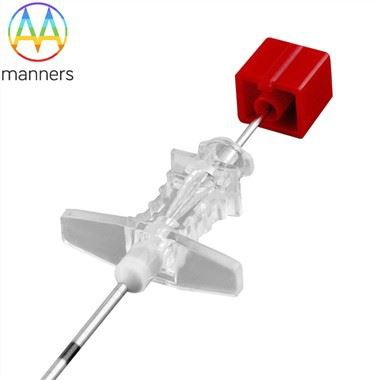
A Comparative Analysis Of The 14G Core Biopsy Needle And Other Biopsy Modalities
Jun 16, 2026
In the intersection of interventional radiology and pathological diagnosis, the choice of biopsy modality directly impacts diagnostic efficacy and patient experience. As the representative of "core needle biopsy," the 14G needle exhibits a unique profile of strengths and weaknesses when compared to Fine Needle Aspiration (FNA), incisional biopsy, and other core needle gauges.
I. 14G Core Biopsy Needle vs. Fine Needle Aspiration (FNA)
FNA typically employs 22G to 25G needles to obtain cellular samples via negative pressure suction. While its advantages include minimal trauma, no requirement for local anesthesia, and low cost-making it suitable for rapid screening-its limitations are significant:
- Limited Diagnostic Scope: FNA primarily provides a "cytological" diagnosis. It can determine benignancy or malignancy but is often incapable of subtyping or grading soft tissue tumors. For instance, distinguishing well-differentiated liposarcoma from benign lipoma is virtually impossible with FNA.
- High Rate of Insufficient Samples: For tumors with abundant fibrous components or dense consistency, FNA often yields only scant blood or stromal cells, resulting in "non-diagnostic" outcomes.
In contrast, the 14G core needle provides a "histological" diagnosis. It clarifies critical information such as tumor origin, differentiation, and capsular invasion. In studies focusing on extremity sarcomas, the diagnostic accuracy of the 14G core needle exceeds 95%, significantly higher than the 70%–80% range for FNA. Consequently, international guidelines strongly recommend core needle biopsy over FNA for all cases suspected of soft tissue sarcoma.
II. 14G Core Biopsy Needle vs. Incisional Biopsy
Incisional biopsy is a traditional surgical method involving skin incision to expose and excise a portion of the tumor. While it yields the largest sample, the costs are high:
- Significant Trauma: Requires sutures and a lengthy post-operative recovery, potentially complicating subsequent curative-intent surgery.
- Higher Complication Risks: Includes wound infection, hematoma formation, and even the risk of tumor seeding along the incision tract.
- High Costs: Consumes operating room resources and increases anesthesia risks and hospital stay durations.
The 14G core needle biopsy can be performed in an outpatient clinic or interventional suite under local anesthesia, leaving only a single puncture mark. Extensive research confirms that as long as standardized puncture pathways are followed (e.g., aligning with the future surgical incision), the risk of tumor dissemination from core biopsy is extremely low (<0.01%). Therefore, except for a few extremely superficial or uniquely located tumors, incisional biopsy has largely been supplanted by the 14G core needle.
III. 14G Core Biopsy Needle vs. Other Core Needle Gauges
Other core needle gauges, such as 16G and 18G, are also clinically available. The choice between 14G and finer gauges depends on the specific scenario:
- Target Organ: For solid parenchymal organs like the liver and kidney, both 14G and 16G are common, though 14G provides more reliable tissue for genetic testing. For lung biopsies, 18G is often prioritized to minimize pneumothorax risk.
- Lesion Size: For lesions smaller than 1.5 cm, the 14G needle tip may extend beyond the lesion boundary, leading to impure sampling or injury to surrounding structures. In such cases, 16G or 18G needles offer a distinct advantage.
- Patient Tolerance: Theoretically, larger needles induce more pain. However, in practice, the 14G needle's rapid, single-pass technique often results in less patient discomfort compared to the prolonged manipulation associated with finer needles.
Conclusion
The 14G core biopsy needle holds a "Gold Standard" position in soft tissue tumor diagnosis, perfectly balancing sample quality, diagnostic accuracy, safety, and cost-effectiveness. Clinical decision-making should comprehensively evaluate lesion characteristics, patient condition, and diagnostic requirements to select the optimal gauge among 14G and other alternatives.