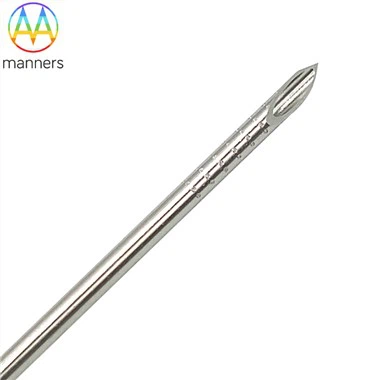
Why do injections have intravenous and intramuscular injection points?
Sep 23, 2022
What is commonly known as an injection is what is known in medical terms as an injection, which can be divided into five categories: intradermal, subcutaneous, intramuscular, intravenous, and intravenous fluids. So, what are the differences between these five types of injections, and what should patients pay attention to? Here's what you need to know.
Intravenously, you have to see the blood.
Intravenous injection is the injection of a drug into a vein. It is the fastest way to get the drug to the whole body. Broadly speaking, it also includes intravenous infusion by hanging infusion bottle. It only says IV with a needle. Intravenous injection is mainly used for drugs that need to be transported by blood, diagnostic treatments such as X-ray angiography, and intravenous nutrition therapy. It is usually done in the veins of the extremities, using the largest needle, and a tourniquet is applied before the injection. After the needle is inserted into the skin, blood must return before the drug can be pushed in. "Cutaneous injection" and "intramuscular injection" on the contrary, only when no blood return can be seen before injection.
In the process of intravenous injection, if the liquid leaked into the subcutaneous tissue, causing local swelling and pain, should immediately stop the injection. Long-term intravenous injection may cause phlebitis, such as pain, swelling and redness at the injection site. In serious cases, cord-like hard objects can be felt along the vein. The application of medicine and external ointment can be applied.
There are three small intradermal needles
As the name implies, intradermal injection is the injection of liquid medicine into the skin between the epidermis and the dermis. It is mainly used for three purposes: ① in order to prevent allergy and drug tests, such as penicillin skin test; ② Preparation before local anesthesia, such as procaine skin test; ③ Vaccination, such as BCG vaccine. If you pay attention, there are three small intradermal injections: the needle is small, the syringe is small, and the entry Angle is small. In addition, the injection of liquid medicine is generally small. Because of the abundance of nerve endings in the skin, intradermal injections can be painful. In fact, they can be a little more painful than some of the other injections. Intradermal injections are often given on the inside of the forearm, where the skin is thin and the local reaction to the injection is easily recognized. After intradermal injection, a bulge will form on the surface of the skin, which is a normal phenomenon and most will disappear within half an hour.
Intradermal injection needle, the main problems that may occur are allergic reactions caused by drug trials, such as rash, pale complexion, cold sweat, dyspnea and coma and shock, which occur relatively quickly, so after injection should stay for a while before leaving the hospital, in case of problems, medical staff can quickly deal with and solve. If you are allergic, tell your health care provider in advance. In addition, it should be noted that the injection site can not be knocked or wiped after injection, so as not to affect the observation.
1. How does COVID-19 cause nerve cell death?
Using the mature human brain organoid system, the team found that SARS-CoV-2 can rapidly replicate in the organoid system, where it can infect not only MAP2-positive mature neurons but also SOX2-positive neural stem cells and induce neural apoptosis.
Interestingly, although the proportion of apoptotic cells was positively correlated with the proportion of SARS-CoV-infected cells, only 15% of apoptotic cells (TUNEL-positive) were SARS-CoV-infected cells, and more than 80% of apoptotic cells were not infected with SARS-CoV-infected cells.
Therefore, the authors hypothesized that some nerve cells are more susceptible to COVID-19 infection, while others are more susceptible to apoptosis, and that cells infected with COVID-19 promote apoptosis in surrounding uninfected cells.
To test this hypothesis, the team used single-cell sequencing to analyze gene expression in organoids before and after COVID-19 infection. The team took 96,205 cells and divided them into 31 groups. They found that SARS-CoV-2 can infect all cell groups, but the efficiency of infection varies widely among different cell groups.
Genes related to viral replication, electron transport chain, and response to hyperoxia were significantly up-regulated in COVID-19 positive cells, while genes related to response to hypoxia and hypoxia were significantly down-regulated in COVID-19 negative cells.
Staining for HIF-1A (hypoxia-inducible factor-1) further indicated that SARS-CoV-induced hypoxia in the nervous system. Therefore, the team believes that while the virus hijacks some cells to promote their own replication, it also induces hypoxia in the nervous system, which leads to apoptosis.
If you have any questions, please contact us. Our company can produce various customized needles, medical needles, puncture needles, hypodermic needles, biopsy needles, vaccine needles, injection needles, syringe needles, veterinary needles, pencil point needle, ovum pick up needles, spinal needles, etc. If you need customized needle products, please contact us. We look forward to your inquiry! The quality of the products manufactured in our factory will surely satisfy you!
Please contact us if you need: zhang@sz-manners.com