


When does liver cancer intervene in radiofrequency ablation
Feb 04, 2023
What Is Radiofrequency Ablation?
Primary liver cancer is one of the common malignant tumors.
The liver is also the second most frequently metastasized organ for tumors in other parts of the body, therefore, metastatic liver cancer is also common. For a long time, surgical resection has been the mainstay of liver tumor treatment, but in recent years, local ablation methods represented by radiofrequency ablation have been rapidly developing, and at the same time, with the development and advancement of imaging technologies such as ultrasound, CT, MRI, etc., as well as the enhancement of the concept of minimally invasive, how to treat liver tumors with local ablation technology has become one of the hotspots.

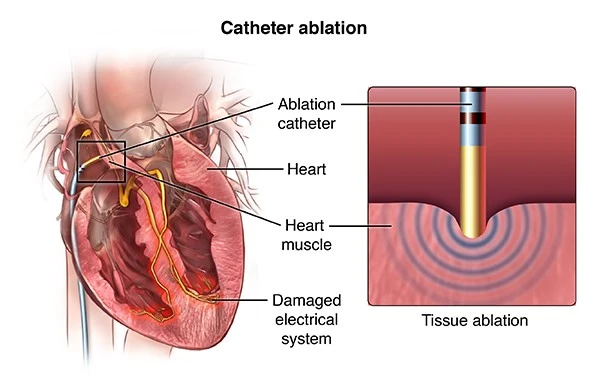
Basic principle of radiofrequency ablation (RFA) for liver cancer
Radiofrequency ablation of liver cancer is to send out the high-frequency radiofrequency current through a radiofrequency electrode (the frequency reaches 150,000 times per second), and under the high-frequency oscillation, the ions in the tumor cells will vibrate at high speed and generate heat by mutual collision and friction (the temperature of the ablation area reaches more than 90C without the ablation electrode itself generating heat, which will cause the tissue to be dehydrated, proteins to be denatured, the cell membrane to be disintegrated, and the tissue cells to be subjected to thermo-coagulable necrosis and denaturation, so that to achieve the purpose of ablation).
Radiofrequency ablation is an alternative treatment for solid malignant tumors, especially for patients with non-surgical indications, and is most widely used in the treatment of HCC.
Radiofrequency ablation has a wide range of applicability, low complication, and mortality rates in the immediate post-treatment period, and low treatment costs. Radical ablation is mostly available for small hepatocellular carcinomas with single tumors <3 cm in diameter, and may become the first-line treatment for small hepatocellular carcinomas.
When does liver cancer intervene in radiofrequency ablation?
After interventional therapy for patients with liver cancer, if the lesions are significantly reduced to less than 5 cm, interventional ablation or microwave ablation can also be performed for a single placeholder, with an interval of 2-4 weeks. However, for multiple intrahepatic lesions, especially metastatic malignant tumors of the liver, the lesions are less than 3 cm, which is very suitable for radiofrequency ablation, and relatively less traumatic. However, attention should be paid to monitoring the changes in coagulation index and liver function to avoid secondary bleeding or abnormal liver function.


