What is the IVF procedure?
Feb 15, 2022
The specific process of IVF 1. Ovulation induction treatment
When couples who are trying to conceive are planning to have IVF, women need to undergo ovulation induction treatment first. This is because not every egg can be fertilized, and not every fertilized egg can develop into a viable embryo. Therefore, it is necessary to obtain multiple eggs from a woman to ensure that there are embryos that can be transferred, which requires women to be stimulated Ovulation treatment.
The specific method is that on the second day of the menstrual cycle, or when the results of reproductive hormones and uterine and ovarian ultrasound examinations meet the requirements, the woman starts to apply ovulation-stimulating drugs. The doctor judges the follicle growth according to the results of ultrasound monitoring and serum hormone determination, and decides whether to adjust the dosage of ovulation induction drugs. When the follicles mature, hCG injections are given to promote the final maturation of the eggs. Eggs are usually retrieved 36-38 hours after the hCG injection.
The specific process of IVF 2. Egg retrieval
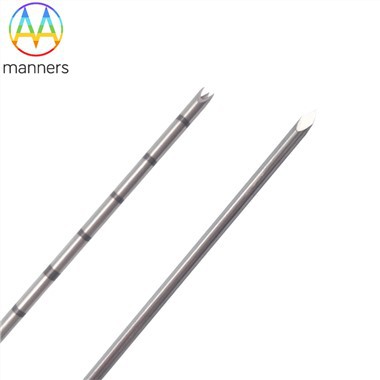
Under the guidance of B-ultrasound, the doctor uses a special egg retrieval needle to puncture the mature follicle through the vagina and aspirate the egg. Egg retrieval is usually performed under intravenous anesthesia, so the woman does not feel the pain of the puncture procedure.
The specific process of test tube baby three, in vitro fertilization
Sperm retrieval: While the female retrieves the eggs, the male retrieves the sperm. After the semen goes through a special washing process, the sperm and eggs are placed in a special medium in order to combine naturally. This is called conventional fertilization.
The specific process of IVF IV. Embryo transfer
A few days after fertilization, a very thin embryo transfer tube is used to transfer the best embryos into the mother's uterus through the cervix. The number of transferred embryos is determined according to age, embryo quality and previous IVF outcomes, usually 2-3 embryos are transferred. embryo. In recent years, in order to reduce the multiple pregnancy rate, some centers choose single embryo transfer, or transfer up to 2 embryos. Because the embryo transfer tube is thin and the doctor moves gently, the patient usually does not experience any pain.
The specific process of IVF Five, luteal support
Women often have luteal insufficiency during the oocyte retrieval cycle due to the use of GnRH agonists/antagonists and ovulation-inducing drugs, as well as the loss of granulosa cells from oocyte retrieval, requiring progesterone and/or chorionic gonadotropin for luteal insufficiency Supplement/support. If not pregnant, stop progesterone and wait for menstruation. If pregnant, continue to use progesterone, usually until 3 weeks after the fetal heart rate is seen on ultrasound.
The specific process of IVF 6. Determination of pregnancy
Serum HCG was determined 14 days after embryo transfer to determine pregnancy. Serum HCG was measured again 21 days after embryo transfer to understand the status of embryo development. Transvaginal ultrasonography was performed 30 days after embryo transfer to determine whether there was an intrauterine pregnancy and the presence or absence of fetal heartbeat.
The above is an introduction to the specific process of IVF. IVF requires the above six steps from the initial stimulation to the final pregnancy determination.
If you have any questions, please contact us. Our company can produce various customized needles, medical needles, puncture needles, hypodermic needles, biopsy needles, vaccine needles, injection needles, syringe needles, veterinary needles, pencil point needle, ovum pick up needles, spinal needles, etc. If you need customized needle products, please contact us. We look forward to your inquiry! The quality of the products manufactured in our factory will surely satisfy you!
Please contact us if you need: zhang@sz-manners.com