What are the dishes for embryos
Feb 28, 2022
The detailed first step in the egg retrieval stage of the IVF process is controlled superovulation: because the natural menstrual cycle is different from person to person, and there are differences in different cycles of the same patient, it is not easy to arrange the egg retrieval time, and there is only one superior follicle in the natural cycle. Development, only one embryo can be formed after fertilization, and the pregnancy rate of transferring one embryo is very low. Therefore, it is necessary to use controlled superovulation to enhance and improve ovarian function, in order to achieve the purpose of obtaining multiple healthy eggs without being restricted by the natural cycle, providing multiple embryo transfers, and synchronizing corpus luteum development with endometrial function as much as possible. Controlled ovarian hyperstimulation is generally first to use GNRHA to down-regulate FSH and LH in the body, and then administer HMG or FSH ovulation drugs to stimulate the growth of follicles in the ovary. The number of eggs obtained differs depending on the dose used. The second step, monitoring the follicles: In order to evaluate the effect of ovarian stimulation and determine the time of egg retrieval, the size of the follicles must be monitored by vaginal B-ultrasound, and the E2 value (estrogen) should be checked with blood to adjust the dosage. When the diameter of two to three or more follicles is greater than 1.8cm, and the number of follicles above 1.4cm is equivalent to the E2 value, human chorionic gonadotropin (HCG) can be injected to promote follicle maturation. Egg retrieval was performed 34 to 36 hours after the injection of HCG. The third step, egg retrieval: the most commonly used method of egg retrieval is under the local anesthesia, guided by transvaginal B-ultrasound, the oocyte retrieval needle is passed through the vaginal fornix, directly to the ovary to extract the eggs, and the eggs are immediately moved to the containing chamber under the microscope. In a petri dish of embryo culture medium, place it in an incubator at 37°C. The process of embryo transfer in IVF First, choose an appropriate embryo transfer time. Under normal physiological conditions, the embryo will enter the uterus when it develops from the morula to the blastocyst stage 4–5 days after ovulation. Embryos at this stage typically have 60 cells. However, in IVF, due to the limitation of culture conditions, the time of embryo transfer varies greatly. Some are transferred in the pronuclear stage, but more are transferred in the second or third day. In recent years, some centers have begun to transfer embryos in the fifth and fifth , 6-day blastocyst transfer. Then, is to determine the number of embryos to transfer. The dangers of multiple pregnancies to mothers and babies are well known. In 1998, the American Society of Reproductive Medicine reported that the success rate per cycle in conventional IVF was 23%, of which 63.4% were singletons, 29.6% were twins, 6.4% were triplet, and 0.6% were high-risk multiple pregnancies. In 1999, singletons accounted for 60.8%, twins accounted for 27.5%, triplet 8.3%, and fourth and above accounted for 1.7%, which were consistent with the statistical results of the American Society of Reproductive Medicine. In the field of assisted reproductive technology, how to choose the number of embryos to transfer and reduce the multiple pregnancy rate on the basis of ensuring the success rate has always been controversial. The British Fertility Society recommends transferring a maximum of 2 embryos to avoid multiple pregnancies. In 1998, Coetsier et al. reported that transferring a good quality embryo in patients with good prognosis reduced the pregnancy rate by only 5%. Lieberman also reported that reducing the number of embryos transferred from 3 to 2 did not reduce the success rate, but the multiple pregnancy rate decreased by 3%. Finally, the embryos were formally transferred: l. In the embryo transfer dish (Falcon 3037) Add 1ml of fresh CO2:equilibrated medium; 2. After the embryo transfer dish is re-equilibrated in the incubator for at least 20 minutes, transfer the selected embryos to a human ET dish under a dissecting microscope, and then put the ET dish back into the culture 3. Connect the embryo transfer tube to a 1ml syringe, blow out the gas in the syringe, and the interface should not leak; 4. Use the syringe to repeatedly suck and dispense fresh CO2, and the balanced culture medium is about 1ml to discharge air bubbles and To lubricate the lumen, it is necessary to ensure that the lumen is unobstructed and free of resistance; 5. Suck back about 10u1 of liquid, and then suck about 1cm of gas; 6. Take out the embryo transfer dish from the incubator, and place the embryo transfer tube away from the embryo. The place first sucks a little liquid to break the tension of the liquid surface, and then sucks all the embryos into the embryo transfer tube. The amount of liquid absorbed should be controlled within the amount of the embryo transfer tube of 1 cm; 7. The embryo transfer tube mouth leaves the liquid surface and then sucks in sequence 1cm of gas and liquid; 8. After checking the patient's name again, hand over the embryo transfer tube containing the embryos to the doctor for transfer; 9. After the transfer, take back the embryo transfer tube, suck back the liquid and then pour out all the liquid, and observe whether there is any Embryos remain. If there are embryos left, the transfer must be carried out.
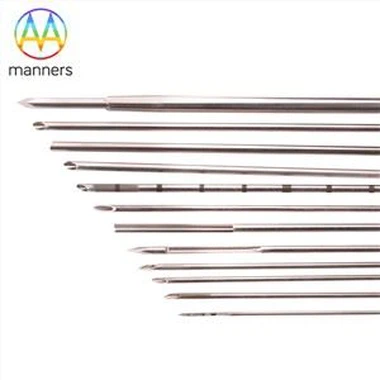
If you have any questions, please contact us. Our company can produce various customized needles, medical needles, puncture needles, hypodermic needles, biopsy needles, vaccine needles, injection needles, syringe needles, veterinary needles, pencil point needle, ovum pick up needles, spinal needles, etc. If you need customized needle products, please contact us. We look forward to your inquiry! The quality of the products manufactured in our factory will surely satisfy you!
Please contact us if you need: zhang@sz-manners.com