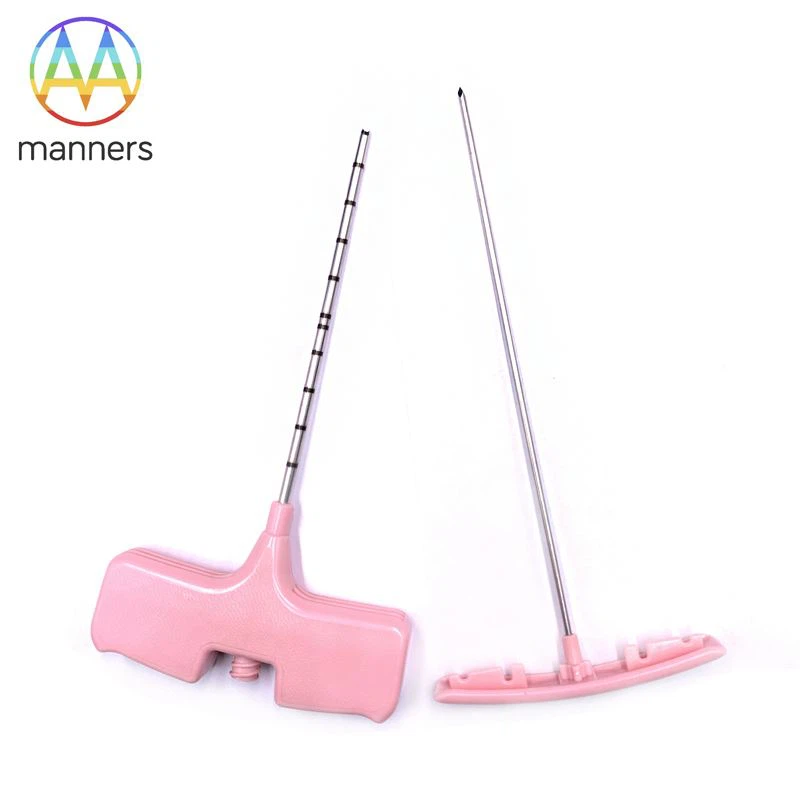
The truth about bone marrow puncture: how do you wear bone marrow puncture?
Jan 03, 2022
Bone marrow puncture is abbreviated as bone puncture, but its purpose is to take the marrow, not just to penetrate the bone. Inpatients' bone penetration examinations are usually performed on their own beds, while outpatient bone penetration examinations are often performed in special bone penetration rooms. Before starting the bone puncture, the doctor will ask the family members to wait outside in accordance with the requirements of aseptic operation to reduce the chance of cross infection. The other is to prevent family members from interfering with the examination. I have a deep understanding of this. About ten years ago, the process of performing bone puncture on a patient was very smooth. I chatted with the patient and the family members watched with concern. In a very relaxed atmosphere, the bone piercing went on smoothly. I didn't expect this family member to faint and fainted. As soon as I took out the bone marrow, the family fainted and hurriedly called for someone to come and rescue the family member.
1. Choose a puncture point
Where there is bone marrow, where the bone marrow is easy to extract, you can choose this part as the puncture point. Within a few months after birth, the bones of the whole body are full of red bone marrow, which has hematopoietic function. Therefore, when newborns and small babies need to extract bone marrow for examination, there are still many puncture sites to choose from. Most Pediatricians are accustomed to puncture from the squamous or tibial tuberosity (below the knee joint and in front of the upper leg bone). With age, the hematopoietic tissue gradually decreases, showing a centripetal atrophy. The bone marrow of the tubular bones of the limbs (the tibia and fibula of the lower leg, the femur of the thigh, the flexible ulna and the humerus of the arm) gradually turn into yellow bone marrow, temporarily losing the hematopoietic function. In some patients, the bone marrow extracted from the iliac bone in old age also contains a lot of fat and little hematopoietic tissue. At this time, the bone marrow of the sternum will still maintain hematopoietic function. If the hematopoietic tissue of the bone marrow of the sternum is reduced and the proliferation is not good, it is often aplastic anemia. When a certain part of puncture finds myelodysplasia and it is difficult to confirm the diagnosis, multiple punctures may be required to understand the bone marrow hematopoiesis of the whole body. The selectable parts are mainly bilateral posterior superior iliac crest, anterior superior iliac crest, lumbar spinous process, sternum and so on.
2. Put the puncture position
The patient’s position during puncture depends on which part is selected as the puncture point. The supine position is taken from the anterior superior iliac crest and sternum puncture. If the posterior superior iliac crest is used as the puncture point, the posture that can be adopted varies from hospital to hospital. Some let the patient lie on his stomach, and some let the patient sit on a chair and then lie on the back of the chair. We are accustomed to letting the patient lie on his side on the bed with his legs bent to the abdomen. This position will make the puncture point closer to the skin, the skin will be tighter, and the puncture will be easier.
Therefore, if the doctor tells you before the puncture: "Please go to bed, lie down on your side, curl up your legs, untie your belt, and fade your pants down!", don't think too much.
3. Disinfection
No matter which part is chosen as the puncture point, it must be disinfected before puncture.
The disinfection liquids are not uniform. Some use iodophor, some use iodine tincture, and some use Gil's iodine. If the patient is allergic to iodine or alcohol, you need to tell the doctor in advance. When disinfecting, the doctor will first put on sterile latex gloves, use a cotton ball dipped in disinfectant, and evenly apply 2-3 times from the inside to the outside of the puncture point. The diameter of the disinfection range is about 15 cm. After a while, use alcohol to deiodine (when disinfecting with iodine tincture), and wipe off the excess disinfectant with gauze. Put on a sterile hole towel.
4. Local anesthesia
Anesthesia at the puncture point is a technical task. If the anesthesia is good, there is basically no pain when puncturing the needle. Generally, 2% lidocaine is used for anesthesia without skin test. In the past, some units used procaine for local anesthesia. Because of the high incidence of allergic reactions, skin tests were needed, and one more injection was required, and they were gradually eliminated. Some doctors are accustomed to inserting the needle obliquely into the skin of the puncture site during anesthesia. First, a skin is raised, and then the needle is continued to be inserted, pierced in different directions and injected with lidocaine for local anesthesia. I think there is no need for such anesthesia Because bone marrow puncture is different from surgical operation, during the process of bone puncture, the skin of the puncture point and the periosteum of the puncture point may be bowed | Department
The subcutaneous and subperiosteal areas not only require less anesthetic drugs, but the anesthesia effect is also very good!
5. Bone marrow puncture
After the anesthetic is injected, wait for about half a minute to achieve the best anesthetic effect. During the half-minute waiting for the effect of the anesthetic, you can take the bone piercing needle, take out the needle core, and check whether the needle core is broken or cracked, and whether the needle core is blocked. After checking, insert the needle core. Separate the thumb and forefinger of the left hand, fix the skin of the puncture point, and hold the bone marrow puncture needle in the right hand. From the puncture point perpendicular to the bone surface, the needle is inserted and rotated back and forth to penetrate the skin, subcutaneous tissue, fat and muscle layer, periosteum, and bone cortex in turn. Reach the cancellous bone full of bone marrow, fix the puncture needle, pull out the needle core, and use a 20ml grape-free syringe to draw a small amount of bone marrow fluid for examination. The puncture process should be "steady, accurate, and ruthless": the hand should be "steady", not trembling, and not rushed; the puncture point should be "accurate" and the advanced "accurate", refer to where to hit where, not to puncture indiscriminately; "The needle is inserted quickly so that the patient does not feel pain. There are two main parts of the fast process. It is to pierce the skin quickly. You must know that cutting a person with a blunt knife is the most painful. The second is when the bone is pierced The puncture needle probes into the hard bone, and pierces it quickly while rotating the puncture needle back and forth. However, sternal puncture needs to determine the depth of puncture before puncture, rotate slowly during puncture, and do not rush into it in a hurry.
6. Withdraw the needle
After the bone marrow is extracted, insert the needle core, rotate it back and forth, and pull out the bone piercing needle.
After pulling out, press the needle hole with sterile gauze for a few seconds to a few minutes to prevent bleeding from the needle hole, and then cover the needle hole with sterile gauze or an applicator. If the platelets are low, you can press the needle hole for a few minutes to avoid bleeding. If the platelet is not too low, you can get up and move immediately after the bone puncture, but make sure to keep the puncture site dry within three days after the bone puncture, and do not wet the pinhole to avoid infection. The above puncture process is written in sufficient detail, and the main purpose is to guide medical students who are about to enter the clinic. After they have learned well, many patients can benefit. After starting the bone penetration, it will not hurt soon. From then on, there is no need to be afraid of bones. wore. This process is a bit cumbersome and complicated to write. In fact, the bone piercing is quite fast. If you are proficient, it can be done in an average of five minutes...for example.
During my studies in the Peking University Blood Research Institute, I was sent to the outpatient bone puncture room for bone puncture every Wednesday. With the cooperation of the bone puncture room nurse, I could do 30 in the afternoon. Only prepare thirty bone piercing bags.
If you have any questions, please contact us. Our company can produce various customized needles, medical needles, puncture needles, hypodermic needles, biopsy needles, vaccine needles, injection needles, syringe needles, veterinary needles, pencil point needle, ovum pick up needles, spinal needles, etc. If you need customized needle products, please contact us. We look forward to your inquiry! The quality of the products manufactured in our factory will surely satisfy you!
Please contact us if you need: zhang@sz-manners.com