


Stainless Steel Tubing Alloys
Aug 28, 2021
Stainless Steel Tubing Alloy Information
In the stainless steel pipe series, Manners offers a variety of alloys. The alloy is defined by the composition of the various elements that make up the metal, measured as a percentage of weight. Iron is the main alloy of stainless steel tube alloys, and many other elements are added, so this alloy can provide certain performance characteristics required by end users. For example, 304 stainless steel pipe products contain about 18% chromium and 8% nickel (subject to the minimum and maximum allowable values) together with other alloy elements to provide bright, tough and durable products that all users are familiar with, whether tubular Still kitchen utensils. From basic austenitic alloys like 304, you can add other elements and change the percentage of each alloy to produce other alloys with enhanced tube performance characteristics, such as improved corrosion resistance, better high temperature performance, Higher tensile strength values, etc. The trade-off with alloys with improved properties is that they are generally more expensive because the base metal is available in a smaller range, and a greater proportion of the composition of these other alloys comes from expensive and rare elements such as titanium and molybdenum.
Not surprisingly, due to its relative cost-effectiveness and widely accepted use, most of the stainless steel pipes and wires sold by Manners are in the Alloy 300 series stainless steel series. The key element in all stainless steel is chromium. When it forms an alloy with other elements, it can form a very thin passivation layer on the metal surface, which can resist oxidation (rust). This invisible layer consistently repairs itself under normal conditions-in other words, if the surface of the tubing is damaged, the layer will re-form to protect the tubing below from atomic-level oxidation. The condition of this layer on the pipe surface can be enhanced by a process called passivation, which removes free iron and contaminants from the pipe surface, which might otherwise limit or reduce the formation of the passivation layer. Certain alloys, such as 316, increase the percentage of selected elements that increase the elasticity of the passivation layer. However, when exposed to a corrosive oxidizing environment, the self-healing properties of the passivation layer will be reduced, and the degree of degradation depends in part on the alloy selection.
The main advantages of using stainless steel in piping applications include:
1. Compared to other pipe alloys, it is cost-effective. Stainless steel tubes are widely recognized and accepted in applications ranging from industry to medical equipment.
2. It is relatively easy to clean the pipes and maintain acceptable sanitary conditions for medical, dental, and food applications.
3. The appearance of the stainless steel tube is beautiful, consistent with other medical devices of similar structure.
4. Stainless steel tubes can be manufactured by a variety of methods, from traditional machining/grinding methods to conductive machining methods such as electrochemical grinding (ECG) or electrical discharge machining (EDM).
5. Hard tempered tubes have good toughness and weight strength characteristics during cold working.
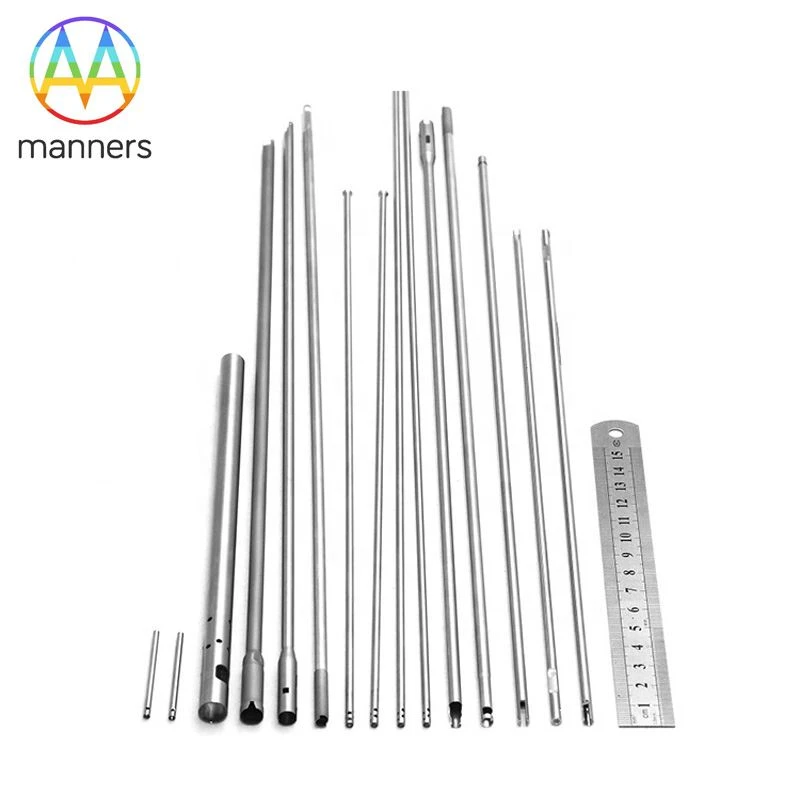
Shenzhen Manners Technology Co.,Ltd is the supplier of some of the world’s famous international companies like Blum Novotest, Komet, Geneva Lab, BTL, etc... We specialize in telescoping parts, needle manufacturing, multi-axis CNC machining, Die casting mold, plastic injection mold, stamping mold, Swiss-type turning, laser cut tubing, tube processing, laser welding and automated assemblies for the medical, endoscopic, arthroscopic, orthopedic, firearms, defense, automotive, and specialty industrial markets.
Please contact us if you need: zhang@sz-manners.com.


