Key Design Considerations For Minimally Invasive Egg Retrieval Needles
Dec 05, 2024
Key Design Considerations for Minimally Invasive Egg Retrieval Needles
In recent years, minimally invasive egg retrieval procedures have significantly advanced, driven by both technological progress and increasing demand for precision. As the medical market for fertility treatments continues to expand, the focus is now on developing more efficient, comfortable, and reliable egg retrieval needles. The design of these needles plays a central role in ensuring the success of the procedure. So, what exactly makes a good egg retrieval needle? Several important factors must be considered during the design phase to ensure that the needle performs optimally.
Material Selection: A Key Factor in Needle Design
When designing an egg retrieval needle, the choice of material is paramount. Why is material so important? Well, the material's strength, smoothness, and internal surface characteristics can affect not only the needle's effectiveness but also the overall experience for the patient. Let's break it down.
1. Strength of the Material
For egg retrieval needles, the material must be strong enough to withstand the forces applied during the procedure. The needle needs to penetrate the ovaries without bending or breaking, which is crucial to ensure a smooth process and to avoid complications. Stainless steel is commonly used because it offers both durability and resistance to bending.
2. Smoothness of the Material
The smoother the surface of the needle, the better the procedure will be for the patient. A rough needle can cause unnecessary friction, leading to increased discomfort and even tissue damage. By ensuring that the needle surface is as smooth as possible, you can significantly reduce the pain associated with the procedure. For optimal comfort, the surface roughness should be set to Ra0.6, which is considered ideal for these kinds of procedures.
3. Internal Surface Roughness
Another critical consideration is the smoothness of the internal surface of the needle. A needle with a smoother internal surface ensures that the retrieved egg is not damaged due to unnecessary friction. When collecting eggs, minimizing roughness is crucial to prevent contamination or damage to the specimens.

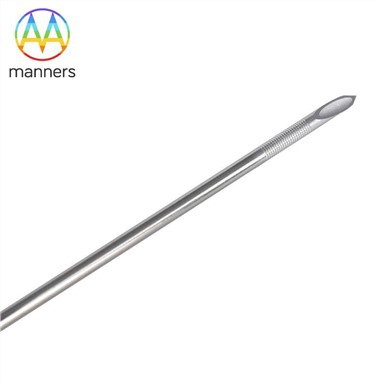
▲ egg retrieval needle
Needle Cavity Design: Flow and Efficiency
Once the material is selected, attention should turn to the needle cavity design. The cavity plays a huge role in ensuring the success of egg retrieval. But how exactly does the cavity affect the process?
1. Cavity Flow Rate
A needle's cavity flow rate determines how quickly and efficiently the collected eggs are retrieved. If the flow rate is too slow, it could lead to delays in sample collection, potentially causing damage to the eggs. Therefore, an optimal cavity flow rate is essential to ensure smooth, timely retrieval of the sample.
2. Sealing and Leak Prevention
Another important factor is the sealing of the needle cavity. It is imperative to ensure that the cavity is well-sealed during the procedure. If there is any leakage, the collected sample could be contaminated or lost. A good design should focus on ensuring that the cavity remains sealed during the entire procedure.
3. Cleanliness of the Cavity
The cleanliness of the cavity is another factor that directly impacts the procedure's success. A clean needle cavity ensures that the retrieved eggs are not contaminated by residual materials or external debris. This is especially important since any contamination could compromise the results and make the procedure less effective.
The Needle Tip: Precision is Everything
The needle tip is arguably the most critical component of the egg retrieval needle. This is where precision becomes crucial. A well-designed needle tip can make all the difference when it comes to retrieving eggs successfully and safely.
1. Penetration Force
The force required for the needle to penetrate the ovary should be as minimal as possible. Why? Because excessive force could cause damage to both the ovarian tissue and the egg itself. By designing a needle tip that minimizes penetration force, we can ensure a safer, more comfortable procedure for the patient.
2. Smoothness of the Tip
Much like the rest of the needle, the tip must be smooth. A rough or jagged tip can create unnecessary friction, increasing the chances of complications or discomfort. A smooth, sharp tip helps ensure that the needle can smoothly penetrate the ovarian tissue, collecting the egg without causing any additional trauma.
3. Back-Bladed Design for Targeted Precision
A unique feature of some egg retrieval needles is the back-bladed design. This feature allows the needle to advance along the correct path, reducing the risk of the needle veering off course. This ensures that the needle remains precisely on target, leading to fewer complications and greater success in retrieving healthy eggs.
Ergonomics Matter Too
While the technical aspects of the egg retrieval needle are important, we can't overlook the ergonomics of the design. After all, healthcare providers are the ones handling the needle during the procedure.
Ergonomically designed handles make the needle easier to control and maneuver. This can reduce fatigue for the medical professional and increase the overall precision of the procedure. A comfortable, non-slip handle is key to performing successful, minimally invasive egg retrievals.
FAQs About Egg Retrieval Needles
1. Why is material selection so important in egg retrieval needles?
The material's strength ensures durability, while its smoothness minimizes discomfort and risk of tissue damage. High-quality materials contribute to a more efficient and comfortable egg retrieval procedure.
2. How does the flow rate of the needle cavity affect egg retrieval?
The flow rate determines how efficiently the eggs can be collected. An optimized flow rate ensures that the retrieval process is fast and effective, without compromising the quality of the sample.
3. What role does the needle tip design play?
The needle tip must be precise and smooth, reducing the penetration force required to collect eggs. A well-designed tip helps avoid damage to both the egg and surrounding ovarian tissue.
4. Why is cleanliness crucial in egg retrieval needles?
Cleanliness prevents contamination of the egg samples, which could negatively impact the success of the procedure and the viability of the eggs.
5. What is the back-bladed design?
This design ensures that the needle remains on track during insertion, preventing it from veering off course and potentially causing injury to surrounding tissues.
6. How does ergonomic design impact the procedure?
Ergonomics ensures that the needle is comfortable and easy for healthcare professionals to use, which ultimately improves the precision and success of the procedure.
Conclusion: The Future of Egg Retrieval Needle Design
The design of egg retrieval needles is a complex but crucial aspect of minimally invasive fertility treatments. Material strength, smoothness, tip design, and ergonomic considerations all play important roles in ensuring a successful and comfortable procedure. As the field of assisted reproduction continues to evolve, focusing on these design factors will lead to better outcomes for both patients and healthcare providers.