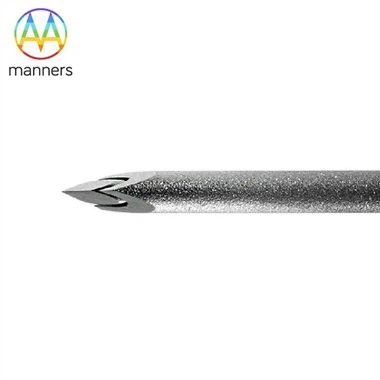
How to use thoracentesis needle
Dec 04, 2021
1. Patient position assist the patient to sit on a chair with a backrest and face the back of the chair, with the two forearms placed on the back of the chair, and the forehead on the forearm. If the patient is unable to get up, he can take a semi-recumbent position, lift the affected forearm on the pillow, and expose the chest or back completely.
2. The puncture site is generally the puncture point of pleural effusion in the scapular line or the 7th to 8th intercostal space of the posterior axillary line or the fifth intercostal space of the anterior axillary line. For pneumothorax, take the second intercostal space of the midclavicular line of the affected side or the fourth to fifth intercostal space of the anterior axillary line to insert the needle.
3. The puncture method routinely disinfects the skin and local anesthesia. The operator’s left index finger and middle finger fix the skin at the puncture site, and the right hand will slowly pierce the puncture needle into the chest wall along the upper edge of the next rib at the local anesthesia site and reach the pleura. Connect the syringe, the nurse assists the surgeon to extract pleural effusion or gas. Avoid damaging the visceral pleura during the puncture process, and pay attention to keeping it closed to prevent the occurrence of pneumothorax. After the operation, pull out the puncture needle, disinfect the puncture point again, cover it with sterile gauze, press the puncture site slightly for a while, fix it with tape, and ask the patient to lie still.
4. The amount of fluid extraction and air extraction should not be too much or too fast every time you draw fluid or air, to prevent excessive and fast suction that will cause the intrathoracic pressure to drop suddenly, pulmonary edema or circulatory disturbance, mediastinal displacement after recruitment, etc. Accident. When pumping fluid under decompression, the volume of fluid drawn for the first time should not exceed 600ml, the volume of air drawn should not exceed 1000ml, and the volume of each subsequent suction should not exceed 1000ml; if it is empyema, try to extract as much as possible each time; if it is a diagnostic fluid, draw 50-100ml is enough, put it in a sterile test tube and send it for inspection. If necessary for treatment, the medicine can be injected after the fluid is pumped and the air is drawn.
Please contact us if you need: zhang@sz-manners.com