How to check for tumors
Jan 26, 2023
The commonly used clinical examination methods include invasive examination and non-invasive examination. Invasive examination refers to the examination methods that directly cause some trauma to normal human tissues in the process of tumor examination and diagnosis, mainly including needle aspiration cytology examination, excision biopsy, excision biopsy, forceps biopsy, laparoscopy, etc., for the acquisition of tumor cells or tumor tissues and metastatic lymph nodes. The cells and tissues obtained were diagnosed by cell smear, frozen section and paraffin section. Some smears and sections can also be diagnosed and differential diagnosed by immunohistochemical staining, special staining, and even the tissue cells taken for electron microscopy examination.
(1) Commonly used invasive examination methods
① Cytological examination Clinical cytology is a method of diagnosing tumors based on the morphological changes of exfoliated cells. Cytological diagnosis is simple, safe, accurate, rapid and economical. Cytological examination cell specimen collection methods include: scraping, rubbing, brush and imprint cell extraction method, mainly used for skin, respiratory tract, digestive tract lower end, urinary and reproductive tract tumors; The cell extraction method of flushing solution mainly collects cells from secretions or exudates, such as sputum, urine, nipple fluid and some ruptured tumor tissue. In addition, fine needle aspiration cytology was performed.
The diagnostic value of cytology lies in its high accuracy and rapidity. The diagnostic value of cytology is sometimes considered equal to that of biopsy from surgical specimens. Cytological diagnosis can be made within 1 ~ 2 hours, especially when the specimen is too small and the frozen section is difficult, cytological diagnosis is more appropriate. Cytological examination can screen out asymptomatic patients with early tumor during the census, especially in the high-risk population, cytological screening work is more important. Cytological diagnosis is the primary tool for cases in which biopsies cannot be taken, such as hemophilia, patients prone to bleeding, diabetes and certain children, and patients who do not wish to undergo biopsy. In recent years, there have been new developments in cytology, such as the use of immunohistochemical technology to understand the histogenesis or differentiation of malignant tumor cells, which is very important in differentiating poorly differentiated tumor types and determining whether it is metastatic tumor. Detecting sex hormone receptors in cells; Flow cytometry was used to determine the staining multiple of cancer cells.
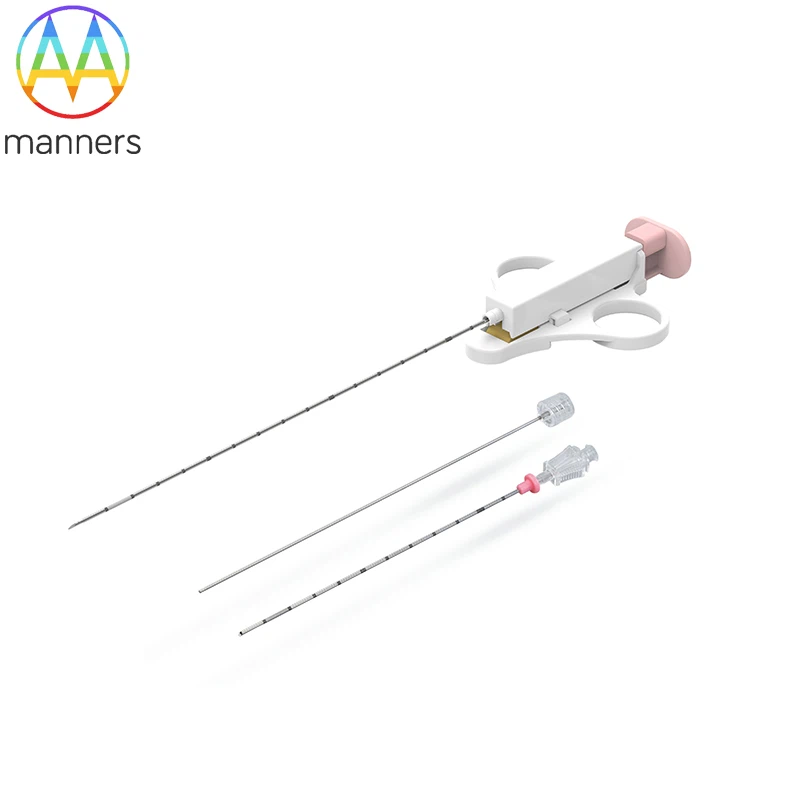
② Biopsy oncology patients must have a definite histological diagnosis for definite diagnosis, pathological staging and treatment. The diagnosis of histopathology requires certain tumor tissue specimens. This method of obtaining tissue specimens from patients through puncture and operation is called biopsy. The methods of biopsy include: needle aspiration biopsy, which is generally operated under local anesthesia. The needle (specially made) is inserted into the suspected swelling and then the tissue is sucked up and sent for pathological examination. Excisional biopsy refers to the removal of the entire tumor for pathological examination to confirm the diagnosis. The excision of the swelling boundary must have some normal tissue. This method is suitable for small tumors. Excision biopsy refers to the large tumor cannot be completely removed, can be used for excision biopsy. It can be used for superficial tumors or deep tumors.
The appropriate procedure must be chosen prior to biopsy to achieve the diagnostic requirements. So, could a biopsy spread? Strict selection of indications, correct selection of biopsy methods, and reasonable operation will not cause cancer spread. As for the safety of breast biopsy, scholars at home and abroad have conducted long-term studies and observations, and reached basically the same conclusion that needle aspiration or excision has no significant effect on prognosis and survival rate.
(2) Non-invasive examination method
Non-invasive examination refers to the examination means without direct trauma in the examination process, including: general X-ray, X-ray, ultrasonic examination, CT examination, magnetic resonance examination radionuclide scanning and imaging examination, gastroscopy, colonoscopy, nasopharyngoscopy, hysteroscopy, etc.
Invasive examination and non-invasive examination play an equally important role in the diagnosis of tumor. The specific examination method needed by a patient should be determined according to the condition of the patient. Our principle is to avoid causing pain and inconvenience to the patient as much as possible, so as to clarify the diagnosis in the fastest, most effective and most economical way.