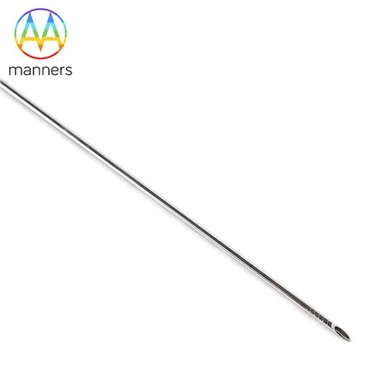
Epidural puncture anesthesia needle operation method
Dec 24, 2021
(1) Lying on the side, hug the knee joint with both hands, and the lower jaw should be close to the chest in a flexed shape.
(2) Select the spinal space between the spinal processes of the 10th thoracic vertebra to the 4th lumbar vertebra according to the requirements of the operation, first perform local anesthesia, and puncture with a spoon-shaped puncture needle. There are two puncture methods: ① puncture the epidural space perpendicular to the spine, called the straight-in puncture method; ② puncture the spine obliquely, called the side-in puncture method.
(3) The level of puncture is mainly judged according to the change of resistance. When encountering the ligamentum flavum, the resistance increases and there is a sense of toughness. At this time, pull out the needle core, connect a syringe with a small amount of air (or saline), and continue to insert the needle carefully. Hollowness", using the negative pressure of the epidural space to draw the air in the syringe into the cavity, and observe the changes in the liquid level at the head of the syringe. If it fluctuates with the changes in negative pressure, it means that it has entered the hard spine. Extramembranous cavity. If there is no negative pressure, continue to insert the needle. If cerebrospinal fluid is found, it means that it has passed through the epidural space and entered the subarachnoid space. The puncture fails and should be abandoned.
(4) If it is indeed proved to be in the epidural space, the anesthetic is injected in batches. Commonly used anesthetics are 2% lidocaine (also called xerocaine) or 2% decaine, plus 0.1% epinephrine 0.1~0.2mL. Lidocaine is generally not more than 500mg per adult for a single dose, and dicaine is not more than 60mg per dose. Continuous epidural anesthesia can be administered in divided doses according to surgical requirements. During the whole process of anesthesia, close attention should be paid to the patient's response and changes in the anesthesia level.
(5) If continuous epidural anesthesia is required, first take a ureteral catheter corresponding to the size of the spoon-shaped needle, test in advance whether it is unobstructed, and measure the length. Put the sloping surface of the spoon-shaped needle up (or down, depending on the operation requirements), insert the ureteral catheter into the epidural space from the needle cavity, pull out the needle, and slowly push the catheter into the epidural space. The catheter can be left in the epidural space for 3 to 5 cm, not too long. Do not take the catheter out of the cavity when pulling out the spoon-shaped needle. Try to inject a small amount of anesthetic about 2mL from the catheter. If there is no resistance, no local bulge, and no liquid spillage, it means that the catheter is still in the outer cavity. Finally, the catheter left outside the body is fixed on the back with tape to prevent it from protruding and bending into an angle to ensure the smoothness of the catheter and intraoperative drug delivery.
If you have any questions, please contact us. Our company can produce various customized needles, medical needles, puncture needles, hypodermic needles, biopsy needles, vaccine needles, injection needles, syringe needles, veterinary needles, pencil point needle, ovum pick up needles, spinal needles, etc. If you need customized needle products, please contact us. We look forward to your inquiry! The quality of the products manufactured in our factory will surely satisfy you!
Please contact us if you need: zhang@sz-manners.com