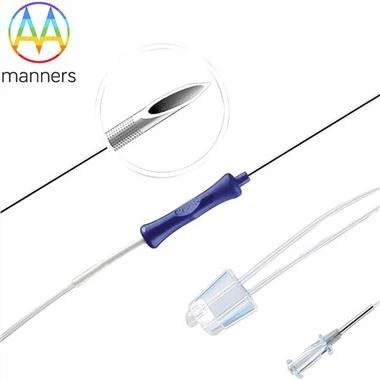
Does fatty liver need liver needle biopsy
Nov 21, 2022
Liver biopsy is the most accurate test to check the extent of liver damage, but there are not many liver biopsy for fatty liver. Many patients with fatty liver think that fatty liver is not necessary for liver biopsy. In fact, if you want a more accurate test, it's best to have a liver biopsy. Many patients with fatty liver only undergo blood biochemical examination or imaging examination, although these are of great significance for the diagnosis of fatty liver, liver biopsy is the gold standard for the diagnosis of fatty liver. 1. Why should fatty liver be examined by liver biopsy? Liver biopsy is short for liver biopsy. It is based on the principle of negative pressure attraction and adopts the rapid puncture method to extract a small amount of liver tissue from the liver, which is then stained with histopathology and immunohistochemistry after treatment. Make a diagnosis of the condition. At the same time, in addition to fatty liver, including hepatitis B, cirrhosis and so on are best to be able to perform liver tissue biopsy. If the metabolic function of liver fat occurs dysfunction, imbalance, resulting in fat accumulation in the liver, if its weight exceeds 5% of the liver weight (wet weight). Or more than 30% of the liver has fat change and diffuse in the whole liver, can be called fatty liver. The diagnostic value of liver biopsy is much higher than that of blood biochemical and imaging examination, which is the only way to confirm the diagnosis of fatty liver and determine steatohepatitis and liver fibrosis. It can also clarify the degree and pathological type of fatty liver, whether there is a combination of steatohepatitis and liver fibrosis symptoms, and can suggest the etiology of fatty liver and understand the situation after recovery. 2. The biopsy grading of fatty liver can be divided into two types: vesicular type and bulla type according to the diameter of liver lactone drops. According to the degree of hepatocyte steatosis under light microscope after HE staining of liver tissue, fatty liver can be divided into mild, moderate and severe. 3. Precautions for liver biopsy Because the operation of liver biopsy is traumatic, it is generally difficult for patients to accept it. In fact, it has been more than 100 years since Paul Ehrlicl in Germany first applied liver biopsy to clinical practice in 1883. With the continuous improvement of puncture instruments and operation methods, the simplification of procedures, the shortening of time, and the improvement of safety performance, liver biopsy has become increasingly popular. Patients usually need local anesthesia, using negative pressure suction puncture technology, under the positioning and guidance of B ultrasound and CT through the skin puncture, this method is convenient and safe, with a high success rate. 4. Contraindications of hepatocentesis Not all patients can undergo hepatocentesis. Patients need to undergo a series of examinations before hepatocentesis, such as PT, platelet count and coagulation, B-ultrasound or CT, etc., to understand the purpose, method and possible complications of hepatocentesis. ? If the blood pressure drops after liver puncture, the leader panic. Rapid pulse, at this time to seek medical attention immediately, can not delay the condition. After hepatocentesis, some patients may have temporary hepatic pain or pain at the site of liver puncture, but the reaction is slight and does not need to be treated. After 24 hours, it can be relieved by itself.