Can be detected a few days after transplantation
Feb 28, 2022
1. Controlled superovulation: The length of the natural menstrual cycle varies from person to person, and there are differences in different cycles of the same patient. It is not easy to arrange the time of IVF egg retrieval. Only one dominant follicle develops in the natural cycle, and only one embryo can be formed after fertilization.
2. Monitoring of follicles: The size of follicles must be monitored by vaginal B-ultrasound, and the E2 value should be checked with blood to adjust the dosage. When the diameter of two to three or more IVF follicles is greater than 1.8cm, and the number of follicles above 1.4cm is equivalent to the E2 value, human chorionic gonadotropin (hCG) can be injected to promote follicle maturation. The eggs were retrieved 34-36 hours after the hCG injection.
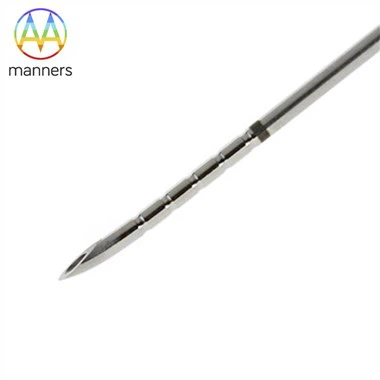
3. Egg retrieval: The commonly used method of IVF egg retrieval is to pass the vaginal B-ultrasound under the guidance of local anesthesia, pass the egg retrieval needle through the vaginal fornix, go directly to the ovary to absorb the egg, and immediately move the egg to the containing embryo under the microscope Place the culture medium in a petri dish at 37°C in an incubator.
4. Sperm retrieval: The time of sperm retrieval is the same day as the day of egg retrieval. Before the test-tube baby takes sperm, wash hands and use masturbation to collect semen. Do not touch the rim and the inside of the cup when you keep it. The extracted semen is processed by upstream method or density gradient centrifugation to obtain sperm with good motility.
5. In vitro fertilization: 4-5 hours after IVF egg retrieval, the treated sperm and eggs are placed in the same petri dish, and after co-cultivation for 18 hours, the fertilization can be observed under a microscope. If the sperm quality is too poor for natural fertilization, forced fertilization by microinjection is necessary.
6. Embryo transfer: IVF fertilized eggs can develop to 8-16-cell stage embryos in vitro for 48-72 hours. At this time, the number of embryos to be transferred is determined according to the patient's age, whether it has been pregnant or not, and the quality of the embryos. The excess embryos can be cryopreserved. Embryo transfer generally does not require anesthesia.
8. Morning urine and blood test on the 14th day after IVF embryo transfer to determine whether or not pregnancy.
If you have any questions, please contact us. Our company can produce various customized needles, medical needles, puncture needles, hypodermic needles, biopsy needles, vaccine needles, injection needles, syringe needles, veterinary needles, pencil point needle, ovum pick up needles, spinal needles, etc. If you need customized needle products, please contact us. We look forward to your inquiry! The quality of the products manufactured in our factory will surely satisfy you!
Please contact us if you need: zhang@sz-manners.com