Attention to thoracentesis needle operator
Dec 15, 2021
When it comes to thoracentesis, many patients always feel scared. It is not as easy to accept a shot on the ass, but pierce into the chest cavity. There are hearts and lungs in the chest cavity. I can't help but feel a little scared. We should understand what patients should pay attention to and how to cooperate well. According to the operating procedures, the danger can be said to be almost non-existent. Therefore, we believe that thoracentesis is safe and there is no need to be afraid.
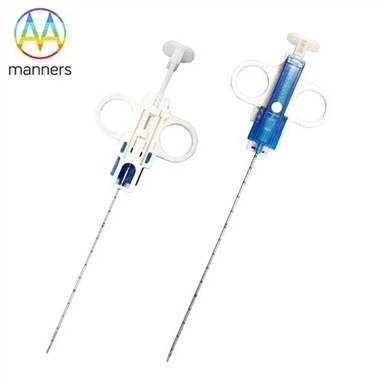
What should the operator pay attention to? Every one of our doctors should have a good grasp of the indications and operating essentials of thoracentesis. Special attention should be paid to the need to insert the needle at the upper edge of the rib, and never at the lower edge of the rib, otherwise it will accidentally hurt the edge. The blood vessels and nerves running along the lower edge of the ribs. Disinfection must be done carefully. The operation must be absolutely sterile, do the work of the patient, avoid anxiety and nervous state of mind, obtain close cooperation with the doctor, and observe the changes of the patient at any time during the operation, such as coughing and pale face. Sweating, palpitations, fainting, etc. Stop the operation if necessary, and immediately rest in bed for rescue.
What should the patient pay attention to? First of all, the patient should be mentally prepared to work closely with the doctor to eliminate the psychological state of fear, anxiety and tension. Second, the patient should not cough and should stay in bed well beforehand. If there is any discomfort, they should explain to the doctor so that the doctor can consider what to pay attention to during the operation, or suspend the operation. Third, after thoracentesis, you should lie still for about two hours.
In the treatment of pneumothorax mentioned in the pulmonary emergency section, if we encounter a patient with pneumothorax, the lung compression is not serious after examination, and breathing does not feel very difficult. After observation, the lungs did not continue. Compressed, that is, the gas in the chest cavity does not increase further. Such patients may not necessarily be treated with puncture, intubation, drainage, and inspection. As long as the needle is punctured with a thicker needle, the gas is removed, and sometimes repeated several times, the lung re-expands, and the purpose of treatment is achieved.
Finally, let me mention lung puncture. Pulmonary puncture is actually a deep puncture of the thoracic cavity. The needle passes through the pleural cavity and through the visceral pleura to penetrate into the lung. Its purpose is also twofold, mainly to perform a biopsy of the lung parenchyma, to aspirate the cavity or the fluid in the bronchial cavity for further examination to confirm the diagnosis, and then to treat certain diseases through lung puncture, such as some cavities with poor drainage The pus is aspirated, and if necessary, drugs are injected to achieve the purpose of treatment. However, the requirements for lung puncture are high. The operation should be more careful, serious and fast, and the time should be shortened as much as possible. The patient should cooperate closely. The breathing should be stable without coughing. Before the puncture, the doctor should receive a detailed examination so that the doctor can correctly locate and improve. The success rate of puncture.
Therefore, as long as the doctors follow the operating steps and operate carefully, the patients will eliminate their fears and cooperate closely with the doctors. Thoracic puncture is very safe, don't be afraid at all.
Please contact us if you need: zhang@sz-manners.com