Wire Pencil Needles Manufacturer On Stainless Steel Metallurgy And Full-Range Drawing Processes (0.25–30mm)
Jul 23, 2026
In the realm of precision medical device manufacturing, the production of Wire Pencil Needles originates in the microcosm of raw material metallurgy. As a professional Wire Pencil Needles Manufacturer, we understand that the performance ceiling of this seemingly simple, elongated instrument is fundamentally dictated by the quality of the stainless-steel wire rod. Spanning diameters from 0.25 mm to 30 mm presents near-exacting demands on material purity, homogeneity, and drawing process control. This article explores our core manufacturing philosophy, from raw material screening to full-spectrum precision wire drawing.
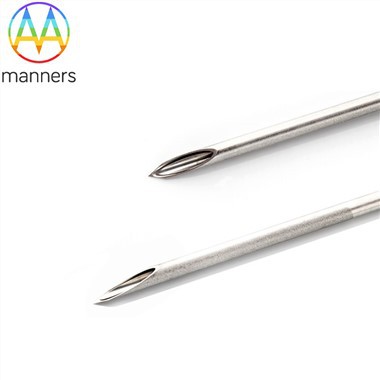
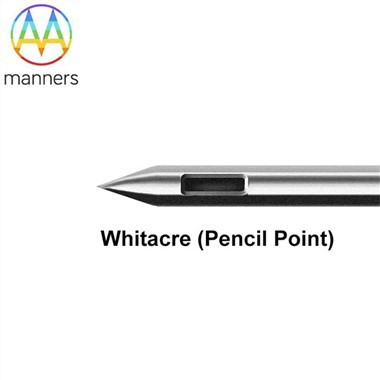
The term Wire Pencil Needles derives from the needle's distinct physical profile-long, straight, and tapered like a pencil-yet its core remains stainless-steel wire rod. We primarily select ASTM-standard 304, 304L, 316, and 316L medical-grade stainless steels. These selections are deliberate, driven by their superior corrosion resistance and biocompatibility. However, hot-rolled wire rods from steel mills are unsuitable for direct production. Encased in oxide scale, burdened by casting stresses, and lacking an optimal microstructure, the rods first undergo peeling and grinding. Using precision mechanical peelers, we remove 0.1 mm to 0.3 mm from the rod's surface, thoroughly eliminating sub-surface blisters, cracks, and scale. This step is critical for micro-diameter needles (e.g., 0.25 mm); any microscopic surface flaw amplifies during subsequent deformation, risking eventual needle fracture.
The core procedure is multi-pass cold drawing. This process incrementally reduces the rod's diameter to the target dimension. For micro-diameter wires (0.25–2 mm), this involves 15 to 25 consecutive drawing passes. In each pass, the wire is pulled through a diamond die with a slightly smaller aperture. Plastic deformation occurs, reducing the cross-section, increasing length, and significantly raising tensile strength. Controlling the pass reduction rate is our proprietary technical expertise. Excessive reduction induces rapid work hardening and breakage; insufficient reduction lowers efficiency and fails to achieve required mechanical properties. We employ computer-controlled drawing benches with nano-grade diamond dies, ensuring deformation stays within the material's limits. Specialized soap emulsions or polymer lubricants minimize friction and shield the wire from breakage during high-speed drawing.
For large-diameter needles (10–30 mm), we adopt a combined cold rolling and drawing process. Sole drawing proves inefficient at large diameters and struggles to ensure roundness. We first reduce the rod via a three-roll cold reducer to near-final size, followed by one to three finishing draws. This method boosts efficiency and refines the grain structure, enhancing strength and toughness. Regardless of diameter, die concentricity is strictly controlled. For 0.25 mm wires, wall thickness tolerance must stay within ±0.002 mm, demanding micron-level die precision. Any ellipticity or eccentricity causes uneven stress during puncture, risking bending or breakage.
Heat treatment is the soul of wire drawing. Cold drawing induces massive internal stress, and progressive work hardening renders the material brittle. To restore plasticity, we perform intermediate annealing. Our continuous bright annealing furnaces operate under protective atmospheres (hydrogen or dissociated ammonia), heating the wire to approximately 1050°C, holding, then slowly cooling. This eliminates stress and recrystallizes the steel. For finished needles, we apply final solution treatment or stress relief to prevent operational deformation. Our thermal engineers calibrate furnace temperature, line speed, and cooling rates to ensure every batch meets medical microstructure standards.
Surface quality is non-negotiable. Drawing inevitably leaves lubricant residues, metallic dust, or micro-scratches. These flaws degrade fatigue resistance and corrosion protection. Hence, we integrate online eddy-current testers and laser gauges, inspecting every meter for diameter consistency and surface defects. Any anomaly triggers immediate rejection. Ultrasonic cleaning and electropolishing pre-treatments further ensure the wire surface is mirror-smooth and contaminant-free before downstream processes.
Traceability is paramount. Each stainless-steel coil carries a unique heat number, documenting its melt history, chemistry, and mechanical properties. During drawing, we enforce a "one batch, one card" system, logging drawing parameters, die IDs, and operator details. This end-to-end traceability-from molten steel to needle tip-enables rapid root-cause analysis of any quality issue. Our relentless focus on raw materials and drawing craftsmanship forms the bedrock of Wire Pencil Needles' excellence, ensuring reliable performance in the most demanding clinical environments.