Why Double Lumen Wins Difficult OPU
Oct 06, 2026
The Hidden Loss in Routine Aspiration
In assisted reproduction laboratories worldwide, the most under-discussed metric is not fertilization rate or blastulation rate-it is first-pass oocyte retrieval efficiency. Clinicians routinely report "empty follicle syndrome," yet a substantial proportion of these cases are not true endocrine empty follicles but rather mechanical misses: the cumulus-oocyte complex (COC) adheres to the follicular wall, lodges in a fold of granulosa tissue, or remains suspended in a viscous pocket that a single negative-pressure sweep fails to capture. Conventional single-lumen OPU needles rely on a one-directional suction vector. Once the needle tip passes through the antrum, fluid is drawn toward the collection tube in a cone-shaped flow field. If the oocyte sits outside that cone-particularly in small (<12 mm) follicles or in patients with polycystic-appearing ovaries and honey-thick follicular fluid-the egg simply stays behind. The operator pulls out, assumes the follicle is empty, and the patient's only viable oocyte of that cycle is left in situ. The psychological cost is immense: a cancelled ICSI, a deferred transfer, a repeat stimulation. Add to this the rising demand for mild-stimulation and natural-cycle IVF, where each follicle carries outsized importance, and the margin for "missed eggs" shrinks to near zero.
How the Aspiration Double Lumen Needle Works
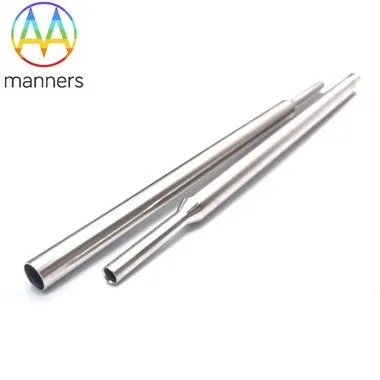
The engineering elegance of the Aspiration Double Lumen Needle lies in its coaxial duality. Within a single stainless-steel cannula, two lumina run parallel from hub to tip: a primary aspiration channel connected to a regulated negative-pressure pump (typically 80–220 mmHg in most lab protocols), and a secondary flush channel delivering pre-warmed, CO₂-equilibrated flushing medium (HTF, G-MOPS+, or lab-specific buffer). The two channels do not merely coexist-they are geometrically offset so that the flush jet is directed slightly tangentially to the follicular wall rather than straight down the aspiration axis. This creates a gentle swirl that dislodges adherent COCs without generating turbulent shear that could damage the zona pellucida. Operationally, the clinician can choose simultaneous mode (flush and suction running together for thick-fluid follicles) or intermittent mode (aspirate first, pause, flush 0.5–2 mL, re-aspirate) for delicate small follicles. The triple-cut bevel tip, laser-honed from medical-grade 304/316L stainless steel, penetrates the vaginal wall with minimal radial tearing, reducing both bleeding and post-procedure discomfort.
Device Family & Specification Nuances
|
Gauge |
Outer Ø (mm) |
Typical Use |
Trade-off |
|---|---|---|---|
|
16G |
~1.65 |
Donor cycles, viscous fluid, high yield |
More tissue trauma |
|
17G |
~1.47 |
General workhorse OPU |
Balanced |
|
18G |
~1.27 |
Mild stim, natural cycle |
Softer shaft, needs steady hand |
|
19G/custom |
~1.07 |
Single-follicle cycles, pediatric-adjacent |
Slower flow |
Beyond gauge, OEM variants differ in echo-mark design (laser-etched rings vs. sputtered titanium coating), lumen polish grade (Ra ≤ 0.2 µm for premium lines), tubing material (silicone-blend vs. PTFE-lined), and luer-lock vs. slip-fit hubs. Some distributors request dual-color hubs (blue = aspiration, red = flush) to eliminate connection errors in high-turnover OR settings.
Practical Setup: A Step-by-Step OR SOP
- Warm everything: flushing medium at 37°C, collection tube in heated block, tubing primed to expel air bubbles.
- Probe loading: secure needle in the vaginal ultrasound guide; confirm the echogenic tip is visible at 7–9 MHz before insertion.
- Doppler sweep: identify peri-follicular vessels; avoid the "red halo."
- Puncture: single confident pass with triple-cut tip; do not "probe" in and out.
- Aspirate: start at 120 mmHg for 2–3 s; watch the collection dish.
- Selective flush: if no COC appears, switch to intermittent flush (1 mL bolus), gentle swirl of ovary if protocol allows, re-aspirate.
- Withdrawal: release suction before retracting to avoid dragging granulosa clumps.
- Label: peel sub-label, affix to cycle record with gauge, side, flush volume.
What Clinics Learn Over 500 Cycles
Data from mid-volume clinics suggest double lumen does not magically lift clinical pregnancy per se; what it lifts is recovery rate in problematic follicles-often by 8–15% in low-response groups. The pitfall is over-flushing: teams that flush every follicle extend procedure time by 4–7 minutes, increase analgesia needs, and dilute medium with blood, complicating embryologist search. The mature approach is indication-based flushing: flush only empty-appearing follicles, <12 mm follicles, and known poor-responders. Senior operators also note that double-lumen needles demand a steadier pump hand-simultaneous flush can mask a kinked line if you are not watching the dish.
Summary
The Aspiration Double Lumen Needle is not a "better single lumen." It is a recovery-insurance instrument for the follicles that single-pass suction abandons.
Outlook
Next-generation systems will integrate pressure-stable peristaltic pumps with closed-loop feedback: the flush volume auto-titrates to follicular diameter read from the ultrasound, and a digital log pairs each oocyte with its needle lot, pressure curve, and flush count-turning OPU from craft into auditable science.