What Is Biopsy? Core Definition And Clinical Diagnostic Value Of Soft Tissue Biopsy
Aug 21, 2026
Pain Points In modern clinical diagnosis, many patients and even grassroots medical staff have ambiguous cognition of the definition and value of biopsy. Most ordinary people simply equate biopsy with surgical excision, mistakenly believing it is a traumatic and unnecessary examination operation, resulting in serious resistance and delayed diagnosis. Meanwhile, some medical institutions over-rely on imaging examinations such as CT and ultrasound, ignoring the essential diagnostic status of biopsy. Imaging can only judge the morphological changes of lesions, but cannot identify tissue benignity and malignancy, easily causing missed diagnosis and misdiagnosis. The industry has long faced the pain point of insufficient popularization of biopsy basic cognition, which restricts the standardized and accurate diagnosis of soft tissue lesions such as tumors and inflammation.
Working Principle Biopsy refers to the core medical diagnostic technology of obtaining partial living tissue samples from human soft tissues through professional medical needles for pathological analysis, which is the gold standard for clinical disease diagnosis. Different from indirect imaging detection, soft tissue biopsy directly acquires lesion tissue cells, observes cell morphology, tissue structure and pathological changes through microscopic examination, and accurately judges lesion properties. Soft tissue biopsy needle relies on precise puncture technology to obtain effective tissue samples without large-scale surgical incision. Combined with the material biocompatibility and structural precision advantages of medical biopsy needles, it realizes minimally invasive acquisition of living tissues, providing accurate pathological basis for disease diagnosis, treatment plan formulation and curative effect monitoring.
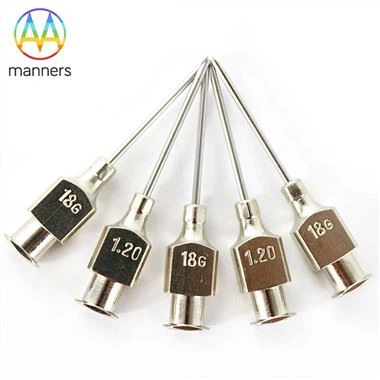
Biopsy Equipment Classification by Material and Performance According to manufacturing materials and application characteristics, soft tissue biopsy needles are divided into three mainstream categories with differentiated clinical positioning. First, stainless steel biopsy needles: the most widely used conventional equipment, with outstanding durability, strong corrosion resistance and excellent biocompatibility, suitable for repeated clinical use and conventional soft tissue sampling, stable performance and low cost. Second, titanium biopsy needles: lightweight high-strength medical equipment, lighter in weight than stainless steel while maintaining equivalent strength and corrosion resistance, reducing hand fatigue of doctors during long-time operation, suitable for precise and long-duration deep soft tissue biopsy. Third, medical polymer plastic biopsy needles: single-use disposable equipment, made of medical-grade polymer materials, avoiding cross-infection risk, low cost and safe and convenient, mainly used for routine screening and outpatient rapid biopsy sampling.
Standard Biopsy Operation and Sampling Guide Standardized operation is the key to ensure effective biopsy sampling and accurate diagnosis. Before operation, conduct precise ultrasound or CT positioning to confirm the location, depth and range of soft tissue lesions, select biopsy needles with matching length and gauge according to lesion depth and tissue density. For superficial soft tissue lesions, adopt short and large-gauge needles to ensure complete sampling; for deep lesions, select long titanium or stainless steel biopsy needles to improve puncture stability. During operation, strictly follow sterile specifications, implement targeted puncture sampling, avoid invalid tissue sampling of normal tissues. After sampling, check the tissue sample integrity to ensure it meets pathological detection standards, and complete wound compression and disinfection to reduce postoperative reaction.
Clinical Practical Experience Mass clinical diagnostic data verifies the irreplaceable value of soft tissue biopsy. Compared with single imaging diagnosis, biopsy improves the accuracy of soft tissue lesion judgment by more than 95%, effectively avoiding misdiagnosis of benign and malignant tumors. In the diagnosis of musculoskeletal disorders, inflammatory lesions and atypical tumors, biopsy can accurately identify pathological types, providing targeted basis for subsequent treatment. Disposable polymer biopsy needles show zero cross-infection rate in outpatient screening, while titanium and stainless steel professional needles ensure high-quality sampling success rate of deep complex lesions. Long-term clinical practice proves that standardized biopsy is the most reliable means of soft tissue disease diagnosis.
Summary and Sublimation Biopsy is a fundamental pathological diagnosis technology centered on living soft tissue sampling, which is the final basis for judging the nature of human lesions. It breaks through the limitation of indirect imaging diagnosis, realizes accurate identification of benign, malignant, inflammatory and degenerative lesions, and fills the gap of clinical precise diagnosis. The diversified material and parameter design of soft tissue biopsy needles provides safe and efficient equipment support for biopsy technology, making minimally invasive, accurate and low-risk lesion sampling a reality, and becoming an indispensable core link in modern clinical diagnosis system.
Future Industry Suggestions Future biopsy industry development will focus on cognition popularization and technological refinement. First, strengthen public science popularization of biopsy definition and value to eliminate patient diagnosis resistance. Second, optimize the material matching system of biopsy needles to realize more precise adaptation of different lesions. Third, promote the combination of intelligent positioning and biopsy sampling to further improve diagnostic accuracy. Fourth, standardize grassroots biopsy operation specifications to realize universal accurate diagnosis of soft tissue diseases.