Unveiling The Full-Link Production Standards Of 15 Gauge 25mm IO Needle Manufacturers
Jul 28, 2026
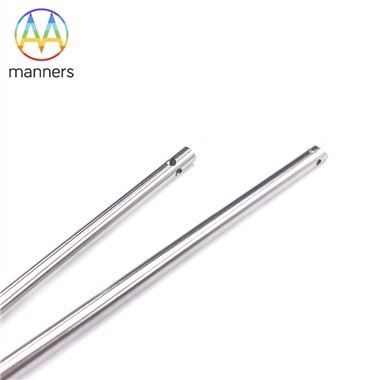
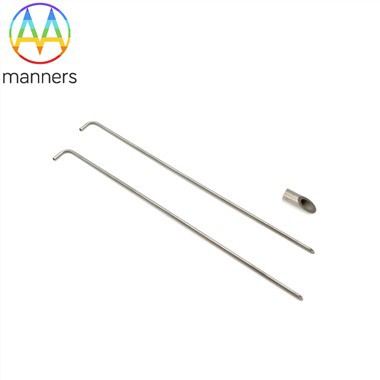
To most, a 15 Gauge 25mm Intraosseous Needle appears as a simple metal tool for emergencies. Yet, for professional medical device manufacturers, it represents a complex systems engineering integrating materials science, precision machining, sterile assurance, and quality traceability. Every minute detail-from raw material inspection to final sterile barrier sealing-dictates clinical safety and success. Today, we unveil the manufacturing process, exploring the full-link production standards behind a qualified IO needle.
It begins with raw material selection. The core is medical-grade stainless steel, typically 304 or 316L austenitic alloys, chosen for corrosion resistance, high tensile strength, and biocompatibility. Manufacturers require Material Test Certificates (MTCs) detailing chemical composition, tensile strength, and intergranular corrosion tests. Incoming wire batches undergo spectroscopic analysis to verify nickel, chromium, and molybdenum content comply with ASTM F899 standards, preventing fractures or rejection due to impurities.
Next is precision tube processing. Wire is drawn through dies to achieve the exact outer diameter (approx. 1.83mm for 15G). This requires meticulous control of lubrication and die wear; micro-scratches can cause breakage under pressure or during sterilization. The needle tip formation is the soul of the process. Unlike standard hypodermic needles, IO tips require geometries like modified diamonds or trapezoidal tri-bevels to penetrate hard cortical bone. Using 5-axis CNC grinders with diamond wheels, technicians achieve micron-level precision to balance sharpness and durability.
Post-machining involves rigorous cleaning and passivation. Ultrasonic baths remove oils and debris, while nitric acid passivation creates a protective chromium oxide layer against corrosion. Critical is the deburring inspection. Residual micro-burrs can embolize during insertion. Thus, 100% visual inspection under high-magnification microscopy or borescopes is mandatory.
Assembly demands equal precision. Hubs, typically molded from medical-grade polypropylene (PP) or polycarbonate (PC), must bond to the cannula via medical adhesives or thermal welding. Joints must withstand pressures up to 300 psi without leakage. Finished devices move to sterile packaging. Standard IO needles utilize Tyvek®-to-dialysis paper blister packs. This porous material permits ethylene oxide (EO) gas penetration for sterilization while maintaining a microbial barrier. Seal integrity undergoes peel and dye penetration tests.
Finally, EO sterilization and aeration are critical. Direct blood/bone contact mandates a Sterility Assurance Level (SAL) of 10^-6. Post-sterilization, products enter controlled aeriation rooms where temperature and humidity accelerate EO off-gassing. Gas chromatography verifies residual EO levels are below safety limits (e.g., <10μg/g) before batch release.
Beyond production, robust ISO 13485 Quality Management Systems are non-negotiable. Traceability (tracking melt and lot numbers), environmental monitoring (particle counts in cleanrooms), and finished device testing (penetration force, flow rate, hub connection strength) require exhaustive documentation. For custom orders-modifying tip angles per 2D drawings or hub colors per 3D samples-engineering teams conduct feasibility assessments, mold modifications, and pilot runs to meet specifications.
In summary, the 15 Gauge 25mm Intraosseous Needle embodies a manufacturer's commitment to material science, process control, and regulatory compliance. This relentless pursuit of full-link excellence ensures reliability when seconds count, providing the foundation for saving lives.