Ultra-Fine Burr-Free Hypotube Micro-Precision Processing
Sep 07, 2026
1. Industry Pain Points
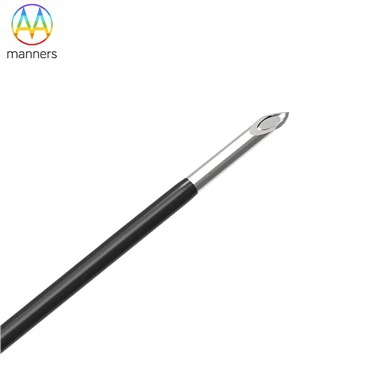
Ultra-fine burr-free hypotubes with a diameter of Ø0.20mm–2mm are core precision components of neurological micro-catheters and ultra-miniaturized peripheral vascular interventional devices, featuring ultra-thin tube walls and 0.012mm ultra-narrow laser kerf structures. The micro-precision processing of ultra-fine hypotubes faces extreme technical challenges. Traditional laser processing is prone to micro-burr residues, edge warping, kerf micro-cracking and tube wall micro-deformation. Ultra-fine tubes have poor structural rigidity and extremely sensitive response to laser heat and gas impact; slight parameter deviation will lead to unqualified burr-free quality and product scrapping. In addition, ultra-fine Nitinol and 316L stainless steel hypotubes for micro-interventional surgery have ultra-high requirements for edge flatness and surface cleanliness. Subtle burr residues will cause micro-jamming of catheter navigation, tiny vascular scratches and postoperative micro-thrombosis, which seriously affect the safety and precision of micro-minimally invasive surgery. The low yield of ultra-fine burr-free hypotubes has long restricted the development of high-precision micro-medical devices.
2. Ultra-Fine Micro-Precision Processing Principle
The core technical principle of ultra-fine burr-free hypotube processing is ultrafast cold micro-vaporization and zero-impact residue cleaning. Different from conventional large-diameter tube processing, ultra-fine micro-tubes cannot bear thermal accumulation and gas impact force. The technology adopts femtosecond ultra-short pulse laser, which completes instantaneous vaporization of cutting edge materials within microseconds, with almost no thermal diffusion and zero heat-affected zone. It fundamentally avoids thermal deformation and thermal residue burrs of ultra-thin tube walls. Cooperated with micro-positive pressure soft gas cleaning technology, it thoroughly removes tiny particles in 0.012mm ultra-narrow kerfs without structural impact and kerf deformation. The whole process realizes micro-level edge flatness and zero-residue quality, completely retaining the ultra-high flexibility, precise trackability and fatigue resistance of ultra-fine laser cut hypotubes, meeting the ultra-precision assembly and clinical micro-intervention requirements of neurological medical devices.
3. Ultra-Fine Precision Equipment Classification
Professional ultra-fine burr-free processing equipment is divided into three micro-precision models for ultra-thin hypotube production. First, femtosecond cold laser micro-cutting equipment, specially for Ø0.20mm–1mm ultra-micro hypotubes, with zero thermal damage and zero burr forming function. Second, micro-positive pressure soft cleaning systems, suitable for Ø1mm–2mm fine hypotubes and ultra-narrow kerf patterned products, realizing residue cleaning without structural impact. Third, microscopic precision detection and calibration equipment, dedicated to ultra-fine tube edge flatness and kerf integrity detection, supporting micron-level quality verification. All equipment abandons traditional thermal processing and high-pressure gas impact modes, adopting full micro-precision control, and fully complies with ISO13485 medical ultra-precision manufacturing standards.
4. Ultra-Fine Standard Operation Guidelines
The standardized ultra-fine burr-free processing strictly follows cold processing and zero-impact precision specifications. Firstly, adopt non-contact suspension positioning to avoid mechanical clamping deformation of ultra-thin tube walls. Secondly, start femtosecond cold laser processing mode, set ultra-low energy pulse parameters to realize instantaneous vaporization of edge materials without thermal accumulation. Thirdly, match micro-positive pressure soft gas cleaning according to kerf width to ensure thorough removal of micro-residues in ultra-narrow gaps. Fourthly, conduct full microscopic scanning inspection after processing to detect micro-burrs, kerf cracks and edge warping one by one. Fifthly, adopt shockproof and dust-free customized packaging for ultra-fine finished products to avoid secondary micro-deformation and particle pollution. Finally, archive all micro-precision processing data to realize full traceability of ultra-high quality standards.
5. Ultra-Fine Processing Practical Experience
Long-term micro-precision processing experience shows that thermal residue and gas impact deformation are the two main failure causes of ultra-fine burr-free hypotubes. Conventional nanosecond laser processing will produce subtle thermal accumulation on ultra-thin tube walls, forming invisible micro-burrs which cannot be removed by conventional cleaning. High-pressure gas cleaning will cause tiny vibration deformation of ultra-fine tubes and kerf micro-cracking. Femtosecond cold processing and micro-positive pressure soft cleaning technology completely solve the above problems, achieving 100% burr-free qualification rate of ultra-fine products. Ultra-precision processed burr-free hypotubes have ultra-smooth and flat edges, no hidden residual stress, and stable superelastic performance, fully meeting the ultra-high safety requirements of neurological micro-interventional surgery.
6. Summary and Sublimation
Ultra-fine burr-free micro-precision processing is a key core technology supporting the development of ultra-miniaturized minimally invasive medical devices. It breaks through the technical bottlenecks of thermal deformation and micro-residue in traditional ultra-fine tube processing, realizes zero-burr, zero-thermal-damage and zero-impact high-quality forming of ultra-thin-walled and ultra-narrow kerf hypotubes, and perfectly retains the ultra-high flexible navigation performance of micro-catheter components. This technology provides micron-level precision and safety guarantee for high-precision neurological and micro-vascular interventional surgery.
7. Ultra-Precision Industry Development Suggestions
With the continuous miniaturization and precision upgrading of interventional medical devices, ultra-fine burr-free hypotubes will become the core components of next-generation micro-medical devices. Manufacturers are recommended to further optimize femtosecond cold processing technology, improve the micro-precision processing level of Ø0.20mm ultra-micro specification hypotubes. Develop intelligent micro-residue precise cleaning technology, solve the micro-defect problem of ultra-narrow kerf complex patterns, and promote the large-scale and high-quality application of ultra-fine burr-free hypotubes in precision micro-medical fields.