Tuohy Epidural Needles: A Comprehensive Analysis From Basic Design To Diversified Clinical Applications
Apr 22, 2026
Tuohy Epidural Needles: A Comprehensive Analysis from Basic Design to Diversified Clinical Applications
Introduction
The Tuohy epidural needle stands as an iconic instrument in modern regional anesthesia and interventional pain management. Since Dr. Edward B. Tuohy pioneered its critical refinements in the 1940s, this specialized hollow needle with a distinctive curved tip has become the global standard tool for epidural catheter placement. Its core design philosophy is to ensure effective puncture while minimizing the risk of accidental damage to deep-seated membranous structures (such as the dura mater). This article aims to provide a comprehensive analysis of the Tuohy needle's fundamental design principles, precision manufacturing processes, and its diversified, advanced applications in anesthesiology, pain medicine, and broader neurointerventional fields.
I. Core Design Features and Physical Principles
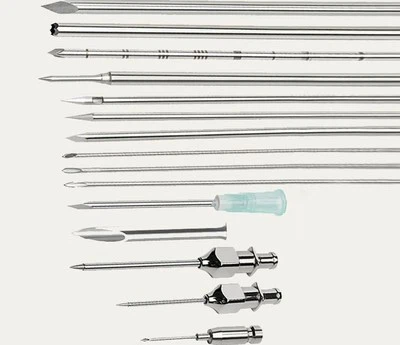
Unique Curved Tip and the "Posterior Eye": The most distinguishing feature of the Tuohy needle is its non-planar, rounded bevel. The distal tip is deliberately bent slightly upwards, creating an opening known as the "posterior eye." The physical principle behind this design is that as the needle penetrates the ligamentum flavum and enters the epidural space, the curved tip and the orientation of the posterior eye tend to guide the subsequently inserted catheter to run parallel to the dural surface rather than perpendicular to it. This effectively reduces the risk of inadvertent dural puncture and subsequent cerebrospinal fluid (CSF) leakage, a primary cause of post-dural puncture headache (PDPH).
Material Selection and Gauge Adaptability: Needle shafts are predominantly constructed from AISI 304/316L medical-grade stainless steel, ensuring high strength, biocompatibility, and corrosion resistance. Needle gauges range from fine 25G to coarse 14G.
Finer Needles (e.g., 25G): Offer minimal trauma but present slightly higher insertion resistance and difficulty in catheter passage.
Coarser Needles (e.g., 17G, 18G): Facilitate rapid insertion and catheter placement, particularly suitable for scenarios requiring quick establishment of analgesic channels, such as labor analgesia.
Manufacturers also provide extra-long needles specifically engineered for patients with challenging anatomies, such as the obese, reflecting the product's clinical adaptability.
II. Precision Manufacturing and Quality Control Systems
A high-quality Tuohy needle is a product of precision engineering, with its manufacturing process governed by rigorous quality control from material certification to final cleaning.
High-Precision Manufacturing: Dimensional tolerances are controlled to within ±0.01 mm. This precision encompasses the uniformity of the needle lumen, the exactitude of the tip curvature, and the integrity of the posterior eye opening. Any microscopic burrs or irregularities can increase tissue trauma or impede catheter insertion.
Surface Treatment Processes:
Electropolishing: This is a critical step to remove all microscopic burrs generated during the machining of both the inner and outer surfaces of the needle. It imparts a mirror-like smoothness, significantly reducing puncture resistance and improving tactile feedback for the operator. Crucially, it minimizes tissue "drag" and the potential risk of thrombus formation.
Multi-stage Ultrasonic Cleaning: Following electropolishing, the needles undergo multiple rounds of ultrasonic cleaning to thoroughly eradicate any residual machining particles, oils, and contaminants, ensuring absolute product sterility and cleanliness.
Full-Traceability Quality Management: Adherence to Good Manufacturing Practice (GMP) is mandatory. Traceability is maintained from the moment raw materials enter the facility (with certified material certificates) through every machining parameter logged in production, to the final sterility testing and packaging integrity checks. This ensures the safety and reliability of every single unit.
III. Diversified Clinical Applications Beyond Traditional Anesthesia
While originally conceived for epidural anesthesia, the precise and controllable nature of the Tuohy needle has dramatically expanded its utility.
The Cornerstone of Regional Anesthesia: In obstetric anesthesia, thoracic surgery, and post-operative analgesia for lower limb major surgeries, the Tuohy needle remains the "gold standard" for establishing continuous epidural analgesia. Its posterior eye design is particularly adept at directing the catheter cephalad or caudad for precise sensory blockade control.
The Foundation of Interventional Pain Management:
Cervical/Lumbar Epidural Steroid Injections: Under image guidance (fluoroscopy or ultrasound), the Tuohy needle is used to access the epidural space at specific pathological levels to deliver anti-inflammatory medications, effectively treating radicular pain and spinal stenosis.
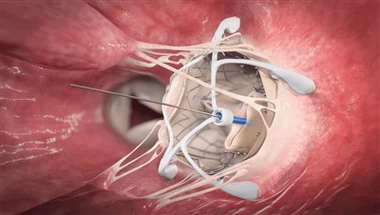
Epiduroscopy: The Tuohy needle serves as the initial access tool to establish a working channel for inserting a thin endoscope. This allows for direct visualization of adhesions, blood vessels, and nerve roots within the epidural space, facilitating targeted lysis of adhesions.
Intrathecal Drug Delivery System Implantation: When implanting pumps for intrathecal analgesia (for cancer pain or severe spasticity), the Tuohy needle is the key instrument for puncturing the dura and precisely placing the catheter into the subarachnoid space.
Diagnosis and Neuromodulation:
Diagnostic Nerve Blocks: Used to anesthetize specific nerve roots or plexuses to identify the source of pain.
Interpleural Analgesia: Following thoracic surgery, a Tuohy needle can be used to place a catheter into the potential space between the parietal and visceral pleura for localized analgesic infusion.
Treatment of PDPH: In cases of CSF leak-induced headaches, the Tuohy needle is used to perform an "epidural blood patch," where autologous blood is injected into the epidural space to seal the dural breach.
Conclusion
The Tuohy epidural needle has evolved from a singular anesthetic tool into a versatile, minimally invasive interventional platform integrating diagnostics, therapeutics, and analgesia. Its enduring vitality stems from its classic design, which aligns perfectly with ergonomic and anatomical principles, and is further enhanced by modern precision manufacturing techniques. As pain medicine and neurointerventional technologies continue to advance-particularly with the integration of ultrasound and fluoroscopic guidance-the Tuohy needle will continue to alleviate patient suffering with greater precision and safety across an even broader clinical spectrum.