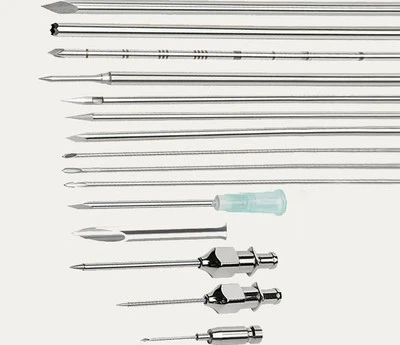
Tuohy Epidural Needle + Manufacturer: Clinical Application Progress And Multidisciplinary Treatment Effect Evaluation
Apr 21, 2026
Tuohy epidural needle + Manufacturer: Clinical Application Progress and Multidisciplinary Treatment Effect Evaluation
The Tuohy epidural needle, as a core tool for epidural anesthesia and pain management, plays a significant role in multiple medical specialties. Its clinical application scope has expanded from traditional obstetric anesthesia to a wide range of fields such as chronic pain management, neurointerventional therapy, and postoperative analgesia. This multi-disciplinary application feature makes the Tuohy epidural needle an important pillar of modern regional anesthesia and pain medicine, providing safe and effective treatment options for various diseases.
Epidural anesthesia is the most classic and fundamental application of the Tuohy needle. Epidural anesthesia is a type of nerve block anesthesia; local anesthetics are injected into the epidural space to anesthetize the spinal nerve roots passing through this space. Epidural anesthesia is used for anesthesia in abdominal, pelvic, and lower limb surgeries, but less so in thoracic surgeries. It can be used to supplement general anesthesia for thoracic, abdominal, and pelvic surgeries, as well as for postoperative analgesia after these surgeries. The usual technique involves placing a catheter in the epidural space. Local anesthetic solutions and adjuvants are administered through the catheter to initiate and maintain anesthesia during the surgery. The curved tip design of the Tuohy needle helps prevent accidental dural puncture, significantly reducing the risk of post-dural puncture headache or cerebrospinal fluid leakage. This safety feature makes the epidural needle particularly valuable in obstetric procedures, as patient comfort and rapid recovery are of utmost importance.
The field of obstetric anesthesia has witnessed significant advancements in the Tuohy needle technique. Epidural anesthesia is widely used for labor and pain management during labor. As maternal medical practices emphasize patient comfort and safety, the demand for epidural guidance systems has been increasing in the obstetric environment. The Tuohy needle is renowned as an ideal obstetric needle, featuring a circular beveled cutting edge, a sharp tip, and a slightly curved end, known as the posterior eye [citation: provided by the user]. Clinical studies have shown that the success rate of epidural anesthesia for labor analgesia exceeds 90%, and patient satisfaction is high. A study investigated the safety and effectiveness of a high-dose, needle-based epidural technique in obstetric anesthesia. This technique differs from the standard catheter-based method as the anesthesia dose is administered through the epidural needle before the insertion of the epidural catheter. Using data-driven informatics and machine learning methods, the research results indicated that the needle-based technique is faster and more dose-effective in reaching the sensory level.
The combined spinal-epidural anesthesia technique is an important application of the Tuohy needle in the field of anesthesia. The combined spinal-epidural technique typically involves positioning the tip of the epidural needle in the epidural space, then inserting a long spinal needle through the epidural needle to puncture the dura mater-synovial membrane and inject intrathecal drugs. After removing the spinal needle and inserting the epidural catheter, this technique combines the advantages of rapid onset of spinal anesthesia and the prolonged effect of epidural anesthesia. It is widely used in obstetric anesthesia and lower limb surgeries. The precise placement of the Tuohy needle and the smooth insertion of the catheter directly affect the anesthesia effect. The needle tip design needs to ensure a good seal with the dura mater to prevent cerebrospinal fluid leakage.
Chronic pain management is a key application of the Tuohy needle in the field of pain medicine. With the increase of chronic pain diseases worldwide, such as low back pain, cancer pain, and postoperative pain, the demand for effective pain management techniques is constantly rising. Epidural injection is a popular treatment option for chronic pain management, which has driven the demand for more accurate and safe epidural procedures. By injecting steroids, local anesthetics, or other drugs through the epidural space, it treats chronic pain diseases such as discogenic pain, radiculopathy, and spinal stenosis. The precise placement and drug delivery of the Tuohy needle directly affect the treatment outcome. The depth marking helps doctors accurately monitor the insertion depth and achieve the best positioning within the epidural space.
Neurointerventional therapy is an important application of the Tuohy needle in the field of neuroscience. The Tuohy needle is also used in arthroscopic treatment of lateral tears around the triangular fibrocartilage complex, for intrathecal drug delivery systems for treating spasticity, dystonia and contracture, for intercostal analgesia, for epidural examinations, for intrathecal saline injection for treating post-dural puncture headache, for lumbar puncture and drainage placement, for electrophysiological testing, and for epidural nerve block in the cervical spine [citation: provided by the user]. These applications demonstrate the multi-functional nature of the Tuohy needle in neurointerventional therapy, providing minimally invasive treatment options for various neurological disorders.
Postoperative analgesia is a key application of the Tuohy needle in perioperative medicine. After the surgery, drugs administered through the epidural route usually provide better pain control than oral or intravenous administration. Patients may receive one or two types of painkillers through the epidural route. Painkillers relieve pain by reducing the pain signals from the surgical site to the brain. They do not affect muscle or activity ability. Fentanyl and morphine are common. Anesthetics numb or dull the sensation in specific parts of the body. They do indeed affect muscle and activity ability. They also lower blood pressure. Lidocaine and bupivacaine are common. Patients may use the epidural route for a few days or several days. After that, patients may take painkillers orally.
The surgical operation protocols are of vital importance for the treatment outcome. The epidural procedure is commonly used for labor, surgical anesthesia, and pain relief in chronic pain management. However, due to the complexity of the procedure and the variability of the patient's anatomical structure, the traditional techniques for locating the epidural space sometimes lead to complications such as accidental dural puncture, bleeding, or insufficient pain relief. The epidural guidance system aims to help guide the needle placement by providing real-time imaging, auditory feedback, and other advanced tools to clinical doctors, thereby addressing these challenges. Therefore, these systems have rapidly gained attention in the global medical environment. Professional manufacturers provide training and technical support to help doctors master the use skills of Tuohy needles, thereby improving the success rate of surgeries.
Safety considerations are at the core of clinical application. The potential consequences of epidural anesthesia are well-known to obstetric anesthesiologists. A fully documented epidural complication, "wet puncture", which leads to headache and possible total spinal anesthesia/block, requires immediate maintenance of the patient's airway and blood pressure. Accidental injection of local anesthetic into the venous space of the epidural space can cause seizures and fatal arrhythmias. Similarly, insufficient epidural block can lead to complications during cesarean section. These complications include emergency general anesthesia, resulting in loss of airway, hypoxemia, hypercapnia, and death. Strict surgical indication management, fine operational techniques, comprehensive intraoperative monitoring, and postoperative management are the key to ensuring surgical safety.
Technological advancements have enhanced the safety and precision of surgeries. The epidural guidance system reduces the error range by providing real-time imaging or feedback, thereby improving the procedure outcomes and enhancing patient satisfaction. The latest advancements in medical imaging technology have led to the development of ultrasound-based and fluorescence-guided epidural guidance systems. These technologies enhance the visibility of the epidural space and facilitate better needle placement. With continuous improvements in imaging resolution, software capabilities, and portable devices, these systems have become more accessible and efficient. The combination of Accuro's bone tissue contrast and AI-supported landmark recognition provides an unprecedented level of accuracy for anesthesiologists when placing nerve blockades.
The future directions for clinical application include expansion of indications, technological integration, personalized treatment, and optimization of therapeutic efficacy. With the deepening understanding of disease mechanisms and technological advancements, the Tuohy needle may be applied in more disease areas; combined with navigation systems, robotic technology, and artificial intelligence, it can improve the accuracy of puncture; customized treatment plans can be developed based on individual patient differences; and through parameter optimization and the application of new technologies, the therapeutic effect and safety can be enhanced.
Overall, the Tuohy epidural needle has demonstrated extensive application value and excellent clinical outcomes in multiple medical specialties, providing safe and effective anesthesia and pain management options for various diseases. With the advancement of technology and the accumulation of experience, the clinical application of the Tuohy epidural needle will become more extensive and in-depth, bringing benefits to more patients. Professional manufacturers, through product innovation and technical support, are driving the development of this field, providing better tools for clinicians and better treatment for patients.