Trauma Control Advantages Of 19G 100mm L-Blunt 4D Cog Threads
Oct 08, 2026
Core Industry Pain Points
Traditional facial thread lift procedures generally face prominent trauma and recovery pain points in clinical application. Most conventional thread needles adopt sharp-tip design, which easily pierces subcutaneous blood vessels, nerves and delicate bud tissues during embedding, resulting in excessive intraoperative bleeding, postoperative bruising, redness and prolonged swelling cycle. Many medium-gauge threads have unbalanced length specifications, failing to adapt to deep facial fascia lifting demands while causing unnecessary superficial tissue damage. In addition, excessive surgical trauma will destroy skin micro-tissues, trigger abnormal collagen loss and oxidative damage, leading to slow wound healing, uneven skin texture after recovery, and even subtle scar hyperplasia. These problems seriously affect customer experience and restrict the popularization of minimally invasive thread lift projects in high-end aesthetic markets.
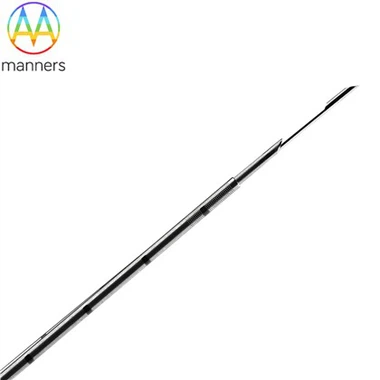
The 19G 100mm PDO Cog 4D L-Blunt Needle adopts professional L-type blunt cannula design and 4D all-around cog structure, forming a unique low-trauma lifting and skin protection mechanism. Different from sharp needles, the blunt needle tip can gently separate subcutaneous tissues without cutting blood vessels and nerve plexus, fundamentally reducing intraoperative tissue damage and bleeding risk. The matched 100mm moderate length precisely covers the deep facial fascia and adipose layer required for mid and lower face lifting, avoiding superficial excessive penetration. Combined with compound multi-molecular hyaluronic acid ingredients and micro-shield protection technology, the product can resist oxidative damage and matrix metalloproteinase erosion to dermal collagen and elastic fibers, protect intact skin bud tissues, maintain normal skin metabolism, and accelerate postoperative wound healing.
According to needle tip type, specification size and functional orientation, facial lifting thread equipment is divided into trauma-prone sharp needle series and low-trauma blunt needle series. Sharp-tip thread needles (18G-22G conventional sharp needles) feature strong penetration but high tissue damage, suitable for thick body skin lifting, not for delicate facial areas. Ordinary short blunt needles (below 80mm) have low trauma but insufficient traction range, only applicable to local fine wrinkle improvement. The 19G 100mm L-type 4D cog blunt thread belongs to high-precision facial exclusive equipment, balancing moderate needle gauge, scientific length and blunt-tip safety. Its 4D three-dimensional cog structure provides stable suspension traction, while the L-type needle body fits facial contour curvature perfectly, realizing low-trauma and high-efficiency integrated lifting. It supports multi-material matching of PDO, PLLA, PCL and WPDO to meet differentiated recovery and lifting demands.
First, preoperative tissue assessment: accurately locate facial deep fascia layer and avoid superficial vascular dense areas according to facial anatomical characteristics, formulate targeted embedding trajectory. Second, standardized needle insertion: adopt parallel subcutaneous blunt separation technique with L-blunt needle, slowly advance the needle body without forced piercing, ensure uniform tissue separation. Third, layered embedding control: fix the 100mm thread body in the deep facial adipose fascia layer, give full play to 4D cog suspension traction, avoid superficial layer implantation to prevent skin bulging and unevenness. Fourth, postoperative micro-protection: cooperate with micro-shield and rhodococcus pluvium functional ingredients to resist oxidation and inflammation, accelerate micro-wound repair; avoid extrusion and kneading within one week to ensure no secondary trauma.
Mass clinical data verification shows that the 19G 100mm L-blunt 4D cog thread reduces facial surgical trauma by more than 60% compared with traditional sharp needle threads. The intraoperative bleeding rate is close to zero, and postoperative bruising and redness basically disappear within 3 days, far faster than the 7-day recovery cycle of conventional threads. The unique blunt separation technology will not damage skin bud tissues and nerve endings, so customers have no numbness and stiff facial expression after recovery. The micro-shield protection system can effectively avoid collagen oxidative loss during trauma repair, making postoperative skin elasticity and smoothness significantly better than ordinary thread lift cases. More than 95% of customers feedback natural postoperative effect and no obvious surgical traces, with extremely high clinical acceptance.
The core advantage of 19G 100mm PDO 4D cog L-blunt thread lies in the perfect balance of low surgical trauma and high-strength lifting efficacy. The blunt needle tip design solves the industry pain point of excessive tissue damage of traditional thread lift, while the 4D three-dimensional cog structure ensures stable facial suspension lifting. Combined with micro-shield anti-oxidation and anti-inflammatory protection technology, it realizes integrated effect of lifting shaping, trauma repair and skin quality improvement, breaking the technical bottleneck that traditional threads cannot balance safety and efficacy.
With the upgrading of minimally invasive aesthetic demand, low-trauma and zero-trace thread lift technology will become the mainstream development trend of the industry. Aesthetic institutions should take 19G 100mm L-blunt 4D cog thread as the core high-end facial lifting project, replace traditional sharp needle thread equipment, and improve project safety and customer experience. Strengthen practitioners' blunt needle embedding technology training, standardize low-trauma operation processes. Popularize the advantages of blunt needle low-trauma lifting in the market, guide high-end consumer cognition, and build differentiated safe minimally invasive aesthetic project advantages.