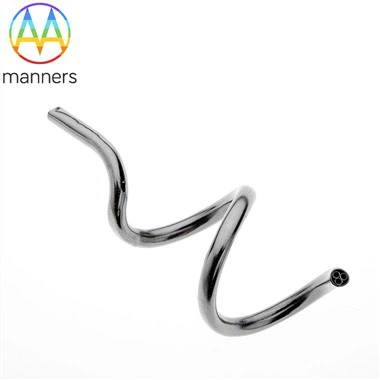
Titanium Machining Parts
Oct 24, 2021
Titanium machining is not only more demanding but also more restrictive than most other metal materials. This is because the metallurgical properties and material properties of titanium alloys can have a serious impact on the cutting action and the material itself. However, if the right tools are selected and used correctly, and the machine and configuration are optimized to the best of the titanium machining requirements, then these requirements can be fully met with satisfactory high performance and flawless results. Many problems encountered in traditional titanium processing are not inevitable, as long as the influence of titanium properties on the processing process is overcome, success can be achieved.
Various properties of titanium make it an attractive part material, but many of these properties also affect its machinability. Titanium has an excellent strength-to-weight ratio and is typically only 60% denser than steel. Titanium has a lower modulus of elasticity than steel, so it is stiffer and flexes better. Titanium is also more resistant to corrosion than stainless steel and has low thermal conductivity. These properties mean that titanium produces higher and more concentrated cutting forces during machining. It is prone to vibrate and cause chattering during cutting; and it is also prone to react with the cutting tool material during cutting, thereby increasing crater wear. In addition, it has poor thermal conductivity. Since the heat is mainly concentrated in the cutting zone, the tool for machining titanium must have high thermal hardness.
Please contact us if you need: zhang@sz-manners.com