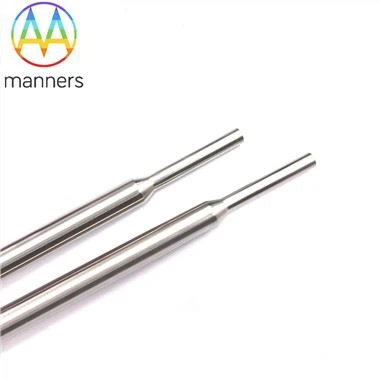
The Tuohy Needle Cannula—Material Mechanics And Clinical Adaptability From 0.25mm To 30mm Diameters
Jul 22, 2026
Within the structural hierarchy of the Tuohy Needle, the cannula stands as the paramount component. Constituting over 80% of the total needle length, it serves as the primary conduit for force transmission, drug delivery, and catheter guidance. Our manufacturing capabilities span diameters from 0.25 mm to 30 mm. This is not merely a matter of scaling dimensions; it involves complex calculations in material mechanics and deep adaptation to diverse clinical scenarios. For manufacturers, understanding the physical behavior of the cannula across this vast dimensional spectrum is the cornerstone of ensuring product safety and efficacy.
The journey of the cannula begins with the drawing of high-precision stainless-steel tubing. Utilizing SUS 304 and SUS 316L coils, we employ multi-pass cold drawing processes to achieve the specified outer diameters. The most critical parameter in this phase is the diameter-to-wall-thickness ratio. For micro-cannulae ranging from 0.25 mm to 1.0 mm-typically deployed in ophthalmic, microsurgical, or pediatric interventions-the primary challenge is structural instability, specifically the risk of buckling or collapse under stress. To mitigate this, we significantly increase the wall thickness ratio, sometimes approaching a 50% solid cross-section. This demands drawing dies with exceptional surface finish and precision, as microscopic imperfections are magnified on such a fine scale. Furthermore, cleaning micro-lumens is notoriously difficult; minute apertures are prone to trapping cleaning agents or metallic debris. Therefore, we implement a hybrid cleaning regimen combining high-pressure spray rinsing with ultrasonication to guarantee absolute luminal cleanliness.
As diameters transition into the conventional range (1.0 mm to 3.0 mm, corresponding to 19G to 14G), typical for epidural anesthesia, the cannula must strike an optimal balance between rigidity and resilience. Excessive stiffness, while beneficial for initial tissue penetration, increases the risk of brittle fracture upon encountering bony resistance. Conversely, insufficient stiffness leads to deflection during insertion, resulting in failed catheter placement. Our solution involves specific solution annealing treatments for 316L material to relieve process-induced stresses, maintaining a yield strength between 450–600 MPa. This range provides sufficient rigidity to pierce the dense ligamentum flavum while allowing for controlled elastic deformation-rather than sudden fracture-if contact with bone occurs. For extended-length cannulae (e.g., >150 mm) required for obese patients, we incorporate subtle reinforcing rib designs or fine-tune alloy compositions to enhance longitudinal flexural rigidity.
For large-diameter cannulae (10 mm to 30 mm), applications extend beyond traditional anesthesia into drainage, biopsy, or orthopedic成形术. The primary challenge here is reconciling weight with strength. Excessively thin walls render the cannula susceptible to bending under the significant leverage forces generated by its own length, while overly thick walls result in prohibitive weight, increasing clinician fatigue and material costs. Our innovation lies in a variable wall thickness design: the tip section features a slightly thinner wall to facilitate initial puncture, the shaft transitions to a thicker wall for structural integrity, and the hub connection area is further reinforced. This gradient thickness distribution, achieved through progressive drawing dies, minimizes overall weight while ensuring mechanical robustness at critical stress points.
The inner surface finish (Ra value) of the cannula is another vital quality metric. For Tuohy Needles, the lumen must accommodate not only fluid flow but, crucially, the smooth passage of a catheter. A rough internal surface increases frictional drag and risks abrading the catheter's outer layer, potentially generating particulate debris. Our electropolishing process achieves an internal roughness (Ra) of ≤0.2 μm, creating a mirror-like finish. This ultra-smooth surface dramatically reduces the coefficient of friction, facilitating seamless catheter advancement and minimizing the risk of kinking or breakage.
Furthermore, straightness is non-negotiable for accurate placement. On our production lines, laser coaxial inspection systems scan each cannula through 360 degrees. Any deviation exceeding 0.05 mm/m results in automatic rejection. For customized requirements, such as pre-bent cannulae, CNC tube-bending machines execute precise formations, utilizing spring-back compensation algorithms to ensure angular accuracy.
Finally, corrosion resistance testing is mandatory prior to release. Cannulae are subjected to salt spray tests or electrochemical impedance spectroscopy using sodium chloride solutions formulated to mimic physiological conditions. Only those specimens exhibiting intact passive layers and zero evidence of pitting corrosion proceed to subsequent stages. This ensures that Tuohy Needles remain rust-free and resist metal ion leaching when exposed to blood, interstitial fluids, or disinfectants in clinical settings, thereby upholding biosecurity.
In summary, the Tuohy Needle cannula is a sophisticated assembly integrating materials science, mechanics, fluid dynamics, and precision manufacturing. From micro-probes measuring 0.25 mm to macro-drainage tubes of 30 mm, each specification embodies our profound understanding of material behavior and our relentless pursuit of manufacturing perfection. We recognize that this seemingly simple tube carries the trust of clinicians and the safety of patients; therefore, we tolerate zero compromise on any micrometer-level detail.