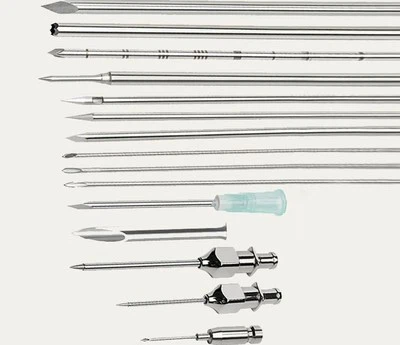
The Shapers Of Clinical Value: How EBUS-TBNA Needle Manufacturers Empower Modern Respiratory Medicine Diagnostics
Apr 27, 2026
The Shapers of Clinical Value: How EBUS-TBNA Needle Manufacturers Empower Modern Respiratory Medicine Diagnostics
In key clinical scenarios such as lung cancer staging and diagnosis of mediastinal lymph node lesions, the EBUS-TBNA technique has become the undisputed first choice. The core physical component that enables the wide application of this technology and profoundly changes the clinical pathway is precisely the high-performance puncture needles provided by professional EBUS-TBNA needle manufacturers. This article will analyze from a clinical perspective how this product specifically empowers and reshapes the value of respiratory interventional diagnosis.
Core Value 1: Achieve precise lung cancer staging to guide individualized treatment
The formulation of lung cancer treatment plans is highly dependent on precise TNM staging, especially the N stage (lymph node metastasis) and the M stage (distant metastasis). Although traditional mediastinoscopy is the gold standard, it involves significant trauma. CT/PET-CT has a relatively high rate of false positives/negatives. The emergence of EBUS-TBNA needles has changed the game.
Using ultrasound bronchoscopy, doctors can clearly visualize the mediastinum (groups 2, 4, 7, 10, etc.) and hilar lymph nodes that are closely attached to the airways. With the EBUS-TBNA needle, these lymph nodes, even those as small as a few millimeters, can be precisely punctured under real-time ultrasound guidance. The manufacturer's optimized needle body flexibility and needle tip imaging technology ensure stable control and clear positioning even at complex airway corners. What is obtained is not only cells, but also high-quality tissue strips suitable for genetic testing. This enables doctors to complete pathological diagnosis, lung cancer classification (adenocarcinoma, squamous cell carcinoma, etc.), and detection of key driver genes (EGFR, ALK, ROS1, etc.) in a single minimally invasive procedure, truly achieving "one puncture, comprehensive diagnosis", providing immediate basis for targeted therapy, immunotherapy, and other precise treatment plans.
Core Value 2: Safe and minimally invasive, expanding diagnostic indications and accessibility for patients
Compared with surgical methods such as mediastinoscopy and thoracotomy biopsy, EBUS-TBNA is a "no-incision" operation performed through natural cavities, and it has significant safety advantages. This is due to the continuous investment by the manufacturers of EBUS-TBNA needles in the safety of the needles: the sharp needle tip reduces the compression and tearing of tissues; the precise needle core design prevents the airway mucosa from blocking the needle path; the overall flexible needle body reduces the risk of damage to the bronchial wall. Therefore, the incidence of complications (such as massive bleeding and pneumothorax) of this technology is extremely low, and it can be completed in an outpatient or day surgery setting, with a fast recovery for patients.
This high level of safety has enabled many patients who were previously unable to withstand surgical biopsy due to old age and poor cardiac and pulmonary function to obtain a diagnosis. At the same time, it is also applicable to the differential diagnosis of various benign and malignant mediastinal diseases such as pulmonary difficult infections (such as tuberculosis, fungi), sarcoidosis, and lymphoma, greatly expanding the diagnostic scope of respiratory intervention.
Core Value 3: Enhance diagnostic efficiency and optimize the allocation of medical resources
From the perspective of the medical system, the efficiency of the EBUS-TBNA needle has led to significant resource optimization.
1. Shorten the diagnostic cycle: The traditional approach from detecting the lesion to obtaining the pathology may involve multiple examinations, multi-disciplinary consultations, and waiting for surgical scheduling. EBUS-TBNA can usually be arranged promptly after the detection of imaging abnormalities, enabling rapid access to pathology and accelerating treatment decisions.
2. Reduce diagnostic surgeries: Many patients thus avoid unnecessary thoracotomies or mediastinoscopy exploration surgeries, saving expensive surgical room resources, anesthesia resources, and hospital beds.
3. High diagnostic rate: In experienced centers, its sensitivity and specificity for diagnosing malignant lymph nodes can exceed 90%. The high diagnostic rate means fewer repeated examinations and less diagnostic uncertainty.
Core Value 4: Facilitating Rapid On-site Assessment and Immediate Decision-making
Some top medical institutions have adopted the ROSE technology. That is, after performing EBUS-TBNA puncture sampling, the samples are immediately stained and then evaluated by the pathologist on-site for a rapid preliminary assessment, informing the operator whether the sample is sufficient and whether there are diagnostic cells. This places extremely high demands on the sample acquisition quality of the EBUS-TBNA needle. The manufacturer aims to provide samples with more intact cell structure and less background blood cell contamination by optimizing the needle tip cutting efficiency and side hole design, thereby supporting the accurate judgment of ROSE and helping the operator determine whether the target tissue has been obtained in a single operation, avoiding the need for repeated punctures due to insufficient samples.
Conclusion
The manufacturers of EBUS-TBNA needles offer much more than just one needle. Through continuous product innovation, they have created a precise, safe and efficient "key" for respiratory interventional physicians. This key has opened the door to precise diagnosis and treatment of lung cancer, expanded the diagnostic possibilities for critically ill patients, and overall improved the efficiency and accuracy of diagnosing respiratory system diseases. They are indispensable behind-the-scenes drivers in the modern respiratory medicine's transition to the era of minimally invasive and precise treatment.