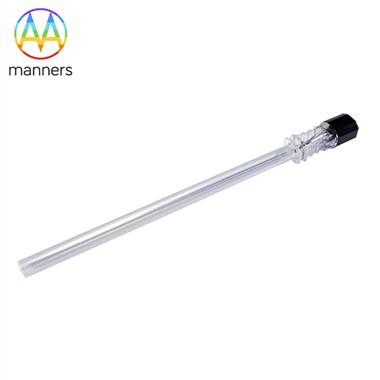
The Precise Transformation Journey Of Needle-Type Tubing Needles From Raw Materials To Finished Products
Jun 11, 2026
https://www.lookmedchina.com/news-everything-you-should-know-about-trocar-needles.html
A qualified needle-like cannula needle undergoes dozens of processes from raw steel to finished product. Each step is crucial to the final puncture performance, durability, and safety. This article takes you into the manufacturing workshop to reveal the precise craftsmanship behind it.
I. Material Inspection and Pre-treatment
Everything begins with carefully selected medical-grade stainless steel billets. After entering the factory, the materials need to undergo chemical composition analysis and mechanical property tests to ensure they meet ASTM or ISO standards. Subsequently, the billets are cut into blanks of the predetermined length and undergo annealing treatment to eliminate internal stress and improve processing ductility.
II. Needle Core Forming: Sharpening the Edge
The needle core is the essence of the cannula needle, and its tip geometry determines the ease of insertion and the size of the trauma. The manufacturing process typically employs multi-axis CNC lathes, combined with diamond grinding wheels for precise grinding. The program controls the grinding angle, feed speed, and coolant flow to form a symmetrical, sharp, and burr-free needle tip. Common types of needle tips include:
- Conical tip: Suitable for soft tissue puncture, with low resistance.
- Triangular or quadrangular conical tip: Strong penetration ability, suitable for dense fascia.
- Knife-edge tip: Combines both cutting and separation functions.
After the grinding process is completed, the needle core needs to be inspected under a microscope to ensure that the cutting edge is free from chipping or fraying. Some products will also undergo electrolytic polishing to remove microscopic burrs and form a passivation layer, thereby enhancing corrosion resistance.
III. Tubing Production: The Battle between Thin Wall and Strength
The cannula is usually made of seamless stainless steel tubing. The wall thickness is reduced through cold drawing or spinning processes while maintaining uniform roundness and straightness. The thinner the wall thickness, the larger the inner diameter, which is more conducive to the passage of instruments, but the strength will decrease. An excellent design will strive for the thinnest possible wall thickness while ensuring safety. Both ends of the cannula need to be chamfered. One end should have a smooth transition to facilitate puncture, and the other end should be machined with threads or a snap-fit structure for the purpose of fixing the sealing device.
IV. Assembly and Sealing Test
Insert the ground-up needle core into the tube, ensuring a tight fit between them - too loose will result in blood or gas leakage, while too tight will increase the resistance to removal. After assembly, conduct an airtightness test: insert the tube needle into a silicone block simulating the abdominal wall, and introduce a certain pressure of gas. Observe if there is any leakage. Only qualified products can proceed to the next process.
V. Surface Treatment and Cleaning
To reduce tissue adhesion and friction, the surface of the cannula may undergo a hydrophilic coating treatment, such as coating with polyvinylpyrrolidone (PVP). After the coating dries, the entire component is sent to the ultrasonic cleaning line, where it undergoes multi-slot cleaning, rinsing, and drying to completely remove oil and particles.
VI. Quality Inspection: Multi-level Control
Quality control is carried out throughout the process, and the key inspection points include:
- Dimensional inspection: Use a projector or a three-coordinate measuring machine to check the length of the needle core, the outer diameter, inner diameter, and wall thickness of the sleeve.
- Sharpness test: Use a dedicated instrument to measure the force required for piercing the synthetic membrane, ensuring it meets the standards.
- Fatigue test: Simulate multiple punctures and withdrawals to verify the durability of the components.
- Sterile packaging: The final product is sealed in a clean room and sterilized using ethylene oxide or irradiation to ensure sterility upon leaving the factory.
VII. Traceability Management
Each needle-like catheter needle is equipped with a unique batch number and serial number, and all production data from raw materials to finished products are recorded. In case of any quality issues, the source can be traced quickly and the relevant batches can be recalled.
It is precisely this spirit of striving for excellence that has led to the creation of the clinically reliable needle-like cannula needles. Behind every sharp puncturing tool lies a solemn commitment to life.