The Metallurgical Logic For Vascular Access Infusion Needle Manufacturers
Jul 31, 2026
https://www.mayoclinic.org/tests-procedures/breast-biopsy/about/pac-20384812
Introduction: Why Stainless Steel Remains the Gold Standard
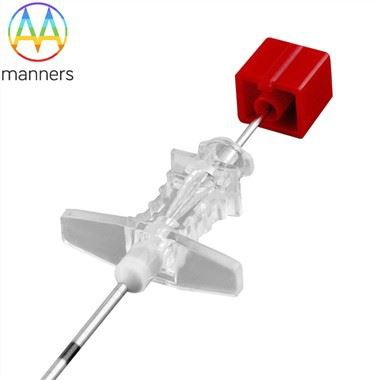
While polymers, nitinol, and ceramics have niche applications, Stainless Steel remains the dominant material for Vascular Access Infusion Needle manufacturing due to its unparalleled balance of strength, machinability, corrosion resistance, and cost-effectiveness. For a Vascular Access Infusion Needle Manufacturer, deep knowledge of metallurgy and the ability to tailor material properties to specific product requirements-such as the high-flow 11 Gauge needle versus the delicate 15G pediatric needle-is fundamental to performance and safety.
Selecting Medical-Grade Stainless Steel
Not all stainless steels are suitable. Manufacturing requires compliance with ASTM F899, ISO 9626, or GB 18457 standards. While 304 stainless steel (18% Cr, 8% Ni) offers good general corrosion resistance, 316L stainless steel is the superior choice for IO needles. The "L" denotes low carbon content (<0.03%), and the addition of 2-3% Molybdenum significantly enhances pitting and crevice corrosion resistance in chloride-rich environments like human plasma. This is critical for Ultra-Sharp Trocar Tip Needles, as the passive layer formed during Electropolishing prevents ion leaching and minimizes the risk of sensitization or inflammation during potential short-term indwelling periods.
Mechanical Properties and Performance Correlation
The mechanics of bone penetration dictate strict material requirements. An 11 Gauge 4 Inch Length needle encounters immense axial pressure and torque during tibial insertion. If yield strength is insufficient, the shaft buckles, causing misdirection. Conversely, excessive hardness without toughness leads to brittle fracture-a catastrophic failure mode. Therefore, Vascular Access Infusion Needle Manufacturers employ precise vacuum heat treatment cycles (quenching and tempering) to achieve optimal hardness (typically HV 450-600). This range balances edge retention with ductility to absorb impact energy. Material purity is equally vital; strict control of sulfur and phosphorus prevents non-metallic inclusions that act as fatigue crack initiation sites.
Biocompatibility and Surface Modification
Beyond mechanics, biocompatibility per ISO 10993 (cytotoxicity, sensitization, hemolysis) is mandatory. While stainless steel is inherently biocompatible, surface state matters. Electropolishing serves as a critical surface modification step. It removes the chromium-depleted layer and embedded impurities, enriching the surface with chromium oxide. This passive film drastically reduces nickel ion release-a common allergen. Forward-thinking manufacturers are exploring advanced coatings, such as Diamond-Like Carbon (DLC). DLC offers ultra-low friction coefficients and extreme hardness, further reducing insertion force and providing a total barrier against metal ion release. However, cost and process complexity currently limit widespread adoption in disposable devices like IO needles.
Supply Chain Reliability and Future Horizons
A leading Vascular Access Infusion Needle Manufacturer secures supply chains rigorously. Companies like Manners maintain strategic partnerships with top-tier specialty steel mills, ensuring consistent chemistry, dimensional accuracy, and mechanical properties across batches. This reliability is crucial for Custom Size orders where material variability can ruin yields. Looking ahead, material science promises innovations like bioabsorbable magnesium alloys for temporary implants and high-nitrogen nickel-free stainless steels to eliminate nickel allergy risks. Regardless of future shifts, the core principle remains: the Vascular Access Infusion Needle Manufacturer must harness cutting-edge materials science to transform raw metal into a reliable clinical instrument. Today, and for the foreseeable future, high-quality stainless steel remains the irreplaceable foundation of this life-saving technology.