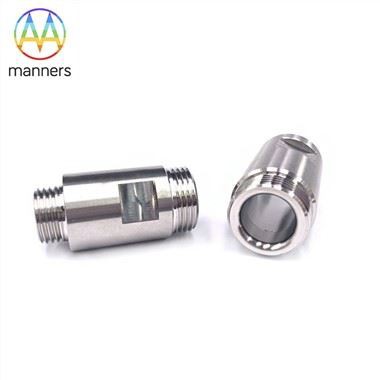
The Medical Polymer Revolution: How PEEK And PPS Are Redefining The Performance Boundaries Of Endoscope Distal Tips
May 01, 2026
The Medical Polymer Revolution: How PEEK and PPS Are Redefining the Performance Boundaries of Endoscope Distal Tips
In the precise world of endoscopy, no component is more directly exposed to human tissue than the distal tip. This seemingly simple "cap" actually fulfills multiple critical roles: protecting the delicate internal optical components, guiding smooth instrument passage, and ensuring atraumatic contact with tissue. For decades, metals were the material of choice for this part-but the rise of high‑performance medical polymers, especially PEEK (polyetheretherketone) and PPS (polyphenylene sulfide), is completely rewriting the material selection logic in this field. They are not cheap substitutes for metal; rather, their unique combination of properties enables new possibilities for solving clinical pain points and achieving superior designs. This article explores the materials science core of PEEK and PPS, reveals why they have become the gold standard for distal tips in modern premium endoscopes, and discusses how they are driving endoscope design toward safer, more durable, and more complex solutions.
I. Performance Matrix: PEEK vs. PPS – A Clash of the Titans
PEEK and PPS are both crown jewels among specialty engineering plastics. For endoscope distal tips, they exhibit similar yet complementary property profiles.
表格
| Property | PEEK (Polyetheretherketone) | PPS (Polyphenylene Sulfide) | Core Value for Distal Tips |
|---|---|---|---|
| Biocompatibility | Excellent. Meets stringent standards including ISO 10993 and USP Class VI; proven in long‑term implants with minimal tissue reaction. | Good. Also biocompatible; widely used in short‑term implants and fluid‑contact medical devices. | Ensures absolute safety during prolonged or repeated contact with mucosa and tissue; non‑toxic, non‑sensitizing. |
| Chemical Resistance | Outstanding. Resists nearly all common solvents, acids, alkalis, and disinfectants (e.g., glutaraldehyde, peracetic acid). | Very good. Strong resistance to a wide range of chemicals, oils, fuels, and solvents; second only to PEEK. | Withstands repeated chemical cleaning and high‑level disinfection (e.g., Cidex immersion) without swelling, cracking, or performance degradation. |
| High‑Temperature & Sterilization Resistance | Superior. Tg ≈ 143°C, melting point ≈ 343°C. Withstands hundreds of autoclave cycles at 134°C or more demanding dry heat sterilization. | Good. Tg ≈ 85–95°C, melting point ≈ 285°C. Resists repeated autoclaving; continuous‑use temperature up to 220°C. | Supports the strictest reprocessing sterilization protocols, enabling safe reuse-essential for reusable endoscopes. |
| Mechanical Strength & Stiffness | High strength and rigidity. Near‑metallic strength and stiffness combined with toughness; excellent creep resistance. | High rigidity and hardness. Retains outstanding stiffness and dimensional stability at elevated temperatures, but slightly more brittle than PEEK. | Provides sufficient structural integrity to protect internal components, withstands impact and compression during use, and maintains precise geometry. |
| Coefficient of Friction & Wear Resistance | Low friction, self‑lubricating, wear‑resistant. Natural lubricity reduces tissue friction; excellent wear performance. | Low friction, wear‑resistant. Smooth surface and good abrasion resistance, but self‑lubricity is slightly lower than PEEK. | Key to atraumatic passage. A smooth, low‑friction surface reduces insertion force and avoids damaging delicate mucosa. |
| Dimensional Stability | Exceptional. Extremely low moisture absorption and thermal expansion; dimensions nearly unchanged under humidity and temperature fluctuations. | Exceptional. Near‑zero moisture absorption, low mold shrinkage, extremely high dimensional accuracy. | Ensures consistent micron‑level (±5 μm) precision fit with metal housings after repeated sterilization and use, preventing loosening or leakage. |
| Light Transmission / Radiopacity | Naturally amber, translucent to opaque. Radiolucent. | Naturally opaque (usually white or beige). Radiolucent. | If an optical window is integrated, PEEK's translucency may be considered; both are radiolucent and do not interfere with imaging. |
| Processability | Demanding. Requires high‑temperature processing (≈380–400°C); strict equipment and process control required. | Moderate. Lower processing temperature than PEEK (≈300–330°C); good flowability, easy to fill thin walls. | Influences manufacturing cost and achievable structural complexity. Precision turning is mainstream and challenges the material's thermal stability. |
| Cost | Very high. Raw material and processing costs significantly higher than PPS and general engineering plastics. | High. Less expensive than PEEK but far costlier than ABS, PC, etc. | Key factor in product pricing and material selection; typically used in premium devices requiring extreme performance. |
II. Why Polymers Outperform Metals: The Core Advantages of PEEK/PPS
Unmatched biocompatibility and atraumatic performanceUnlike metals, PEEK and PPS are biologically inert, non‑corrosive, and non‑allergenic. Their low‑friction surfaces glide gently through tissue, significantly reducing trauma and patient discomfort-an advantage metals cannot match.
Superior sterilization stabilityPEEK and PPS endure repeated autoclaving, chemical soaking, and high‑level disinfection without cracking, yellowing, brittleness, or significant performance loss-something ordinary plastics like PC or ABS cannot achieve.
Perfect thermal matching with metal housingsEndoscopes undergo temperature cycling during sterilization (high heat) and use (body temperature). The coefficients of thermal expansion of PEEK and PPS closely match those of common metal housings (stainless steel, titanium). This prevents excessive thermal stress, cracking, or gaps that could cause fluid ingress-critical for maintaining micron‑level interference fits or threaded connections.
Design freedom and functional integrationPolymers enable complex geometries via precision machining: internal flow channels, specific chamfers for instrument passages, and integrated transparent optical windows (with transparent‑grade PEEK). This optimizes fluid dynamics (reducing bubbles), improves instrument passage, and enhances optical functionality.
Radiolucency and electrical insulationBoth materials are radiolucent, producing no artifacts under X‑ray and enabling fluoroscopic guidance. They are also excellent electrical insulators-essential for distal tips with electrosurgical capabilities (e.g., EMR/ESD), ensuring precise current delivery and preventing stray discharge.
III. Machining Challenges: From Pellets to Micron‑Scale Precision
Possessing top‑tier material properties is only the first step. Machining them into precision parts with ±5 μm tolerances is another major challenge. Traditional injection molding struggles to consistently achieve such dimensional accuracy and optical‑grade surface quality, while high mold costs make it unsuitable for low‑volume, high‑mix customized production. As a result, 5‑axis Swiss‑type CNC precision turning has become the mainstream process.
Stability under high‑temperature machining: Turning PEEK and PPS generates significant heat. Cutting speed, feed rate, and cooling must be precisely controlled to avoid thermal softening, deformation, or degradation, while preventing thermal stress cracking from inadequate cooling. Machine thermal stability is critical.
Adapting to material behavior: PEEK's toughness can cause tool deflection ("springback"), affecting dimensional accuracy; PPS's brittleness may lead to edge chipping in fine features. Tool geometry (rake angle, relief angle), coatings (e.g., diamond), and cutting parameters must be tailored accordingly.
Achieving ultra‑smooth surfaces: "Burr‑free, ultra‑smooth" surfaces require extremely sharp tools, optimized toolpaths, and potential post‑polishing (e.g., micro‑blasting, vibratory finishing). Even minor vibration or tool wear leaves visible surface defects.
Micron‑level dimensional control: Swiss‑type lathes, known for exceptional rigidity and synchronous machining, are ideal for slender parts. Through precision servo control, thermal compensation, and in‑process measurement feedback, tolerances of ±5 μm or tighter can be achieved, ensuring a "selective‑fit" perfect match with the corresponding metal housing.
IV. Future Trends: Composites and Functionalized Surfaces
Material evolution continues. Future distal tip materials may develop in the following directions:
Reinforced composites: Adding carbon fiber, glass fiber, or ceramic particles to PEEK or PPS matrices can further enhance rigidity, wear resistance, or thermal conductivity for extreme applications (e.g., arthroscopes requiring superior scratch resistance).
Functionalized surface modification: Plasma treatment, graft polymerization, or coatings can permanently bond hydrophilic layers to PEEK/PPS surfaces for ultra‑low friction, or embed antimicrobial ions (e.g., silver, copper) for active antibacterial properties.
Bioabsorbable polymers: For certain disposable or short‑term indwelling devices, biodegradable polymers (e.g., PLA, PGA, and copolymers) may become options, though trade‑offs between mechanical performance, degradation rate, and sterilization compatibility must be balanced.
Conclusion
The use of PEEK and PPS in endoscope distal tips exemplifies how materials science precisely addresses clinical needs. With exceptional biocompatibility, unrivaled sterilization resistance, outstanding dimensional stability, and strong mechanical performance, they have successfully replaced metals, enabling safer, more durable, atraumatic designs. Meanwhile, 5‑axis precision turning unlocks the full potential of these high‑performance polymers at the micron scale.
For manufacturers, deeply understanding the "behavior" of these two materials and mastering the processes to machine them to extreme precision represents core competitiveness. For endoscope OEMs, choosing a PEEK or PPS distal tip means selecting not just a component, but a commitment to patient safety, device reliability, and surgical efficiency. In this way, this small "cap" becomes a vital bridge connecting cutting‑edge materials science and the advancement of minimally invasive surgery.