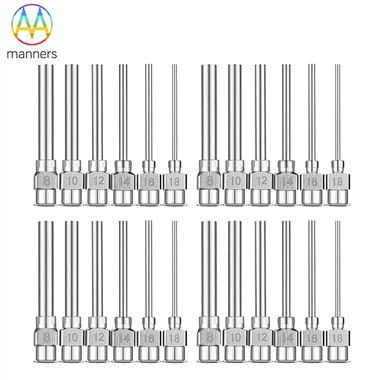
The Customization Wave In Infusion Needles: How 2D/3D Drawings Drive R&D Revolutions
Jul 30, 2026
Within the medical device industry, "customization" is hardly novel. Yet, for ostensibly standardized products like Infusion Needles, the surge in bespoke demand is fundamentally reshaping manufacturer R&D paradigms. Historically, hospitals and distributors passively accepted standard specifications (e.g., fixed 15G lengths). Today, however, advancements in 3D printing, CAD/CAM technologies, and precision machining empower clinicians to translate specific procedural requirements into precise engineering parameters via 2D schematics or 3D digital models-a burgeoning trend redefining the sector.
Clinical necessity primarily fuels this customization drive. For instance, standard 2.5 cm needles may fail to reach the marrow cavity in obese patients, necessitating longer variants. Conversely, pediatric applications demand shorter, finer gauges to avert epiphyseal plate injury. Diverse insertion techniques also spawn distinct needle tip geometries. While conventional bevel tips tend to slip on cortical bone, Trocar points offer superior directional stability. Through 2D/3D drawings, clinicians transform nuanced tactile feedback into quantifiable specs-wall thickness, lumen diameter, tip angle-relayed directly to manufacturers.
For manufacturers, fulfilling custom orders rigorously tests R&D prowess. Foremost is robust reverse engineering capability. Upon receiving a competitor's sample or rough sketch, engineers must deploy Vision Measuring Machines (VMM) and Coordinate Measuring Machines (CMM) to perform comprehensive dimensional scans, reconstructing precise 3D models. Subsequently, rapid tooling responsiveness is critical. Customization often implies non-standardization, potentially requiring modifications to tube drawing dies, grinding jigs, or injection molds. Elite manufacturers operate in-house tooling workshops equipped with High-Speed Machining (HSM) centers and Electrical Discharge Machining (EDM) units, enabling swift mold alterations. Furthermore, a stringent design verification protocol is indispensable. No modification proceeds based on intuition alone; Finite Element Analysis (FEA) simulates stress distribution under load, while Computational Fluid Dynamics (CFD) models marrow fluid dynamics, ensuring design integrity and functionality remain uncompromised.
In practical customization scenarios, manufacturers offer multidimensional services:
- Structural Tailoring: Adjusting cannula length (spanning 10mm–100mm+), redesigning handle ergonomics (integrating anti-slip textures or optimized grip angles), or engineering adjustable depth stops.
- Process Optimization: Altering tip grind angles (e.g., shifting from 15° to 30°), or applying specialized surface treatments (nitriding for hardness, PTFE coatings for friction reduction).
- Packaging Adaptation: Designing shock-resistant transit packaging per logistical needs, printing multilingual labels per regional regulations, or providing full OEM branding services aligned with client strategies.
Crucially, customization entails thresholds. Prior to contract execution, manufacturers must delineate Minimum Order Quantities (MOQs), mold ownership, and Intellectual Property (IP) rights. Significant structural innovations might necessitate renewed biocompatibility testing or clinical investigations, substantially impacting timelines and costs. Consequently, selecting an experienced, communicative manufacturer proves vital. Beyond mere production, they serve as consultants, offering Design for Manufacturability (DFM) insights to actualize optimal clinical outcomes cost-effectively. Future customization workflows will leverage digital twin technology, enabling virtual collaboration between surgeons and engineers for design validation, drastically compressing R&D cycles.