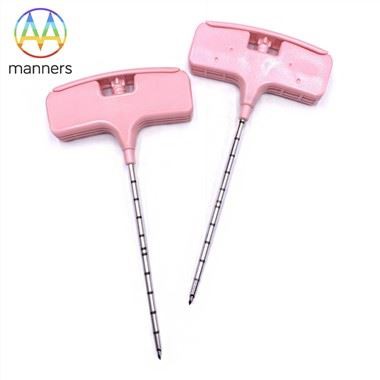
The Core Value Of Trocar Needles In Minimally Invasive Surgery
May 23, 2026
Since the first laparoscopic cholecystectomy in 1987, trocar needles have become a cornerstone tool of minimally invasive surgery. As a professional trocar needle manufacturer, we deeply understand the evolution and innovation of this technology in clinical practice. From a clinical application perspective, this article comprehensively elaborates on the key role of trocar needles in various minimally invasive surgeries, as well as how manufacturers support clinical needs through product innovation.
Laparoscopic Surgery: A Driver of the Minimally Invasive Revolution
Trocar needles perform dual roles as channel creators and maintainers in laparoscopic surgery. Modern laparoscopic surgery has expanded from initial cholecystectomy to nearly all fields of abdominal surgery.
Technological Evolution
1st‑generation: Reusable metal trocars requiring forceful puncture
2nd‑generation: Disposable plastic trocars with safety protection mechanisms
3rd‑generation: Visual trocars enabling real‑time observation of puncture procedures
4th‑generation: Smart trocars integrated with sensors and feedback systems
Expanded Clinical Applications
- General Surgery: Cholecystectomy, appendectomy, hernia repair, gastrectomy
- Gastrointestinal Surgery: Colorectal resection, gastric bypass, splenectomy
- Hepatobiliary Surgery: Hepatectomy, pancreatic surgery, biliary tract surgery
- Endocrine Surgery: Adrenalectomy, thyroid surgery (transoral, transaxillary)
Technological Innovations
- Manufacturers have developed specialised products tailored to laparoscopic needs:
- Blunt‑tipped trocars: Reduce risks of vascular injury, especially for obese patients
- Bendable trocars: Nitinol cannulas adapted to complex angles
- Single‑port laparoscopic trocars: Multi‑channel single‑port design for scar‑free surgery
- Robot‑specific trocars: Optimised for the da Vinci robotic surgical system
- Studies show that puncture‑related complications in laparoscopic surgery using modern trocars have decreased from the early 2–3 % to below 0.5 %.
Endoscopic Surgery: Breakthroughs in Natural‑Orifice Transluminal Endoscopic Surgery (NOTES)
Natural‑Orifice Transluminal Endoscopic Surgery (NOTES) establishes working channels via trocars to enable skin‑incision‑free procedures.
Technical Features
- Transgastric approach: Gastric wall puncture under gastroscopy to access the abdominal cavity
- Transvaginal approach: Widely used in gynaecological surgery with minimal trauma
- Transcolonic approach: Applied for pelvic surgery
- Hybrid techniques: Combined with percutaneous puncture for greater operational freedom
Clinical Value
- No visible scars: Truly scar‑free surgery with excellent cosmetic outcomes
- Mild postoperative pain: Significantly reduced pain due to the absence of abdominal wall incisions
- Rapid recovery: Hospital stay shortened by more than 50 %
- Low infection risk: Avoidance of abdominal cavity contamination by skin bacteria
Product Innovations
- Flexible trocars: Bendable to adapt to endoscopic channels
- Self‑closing trocars: Automatic closure of puncture sites after instrument removal
- Multi‑channel trocars: Multiple instruments accommodated through a single puncture site
Arthroscopic Surgery: Minimally Invasive Tools for Sports Medicine
Trocars create working channels in arthroscopic surgery for minimally invasive treatment of intra‑articular lesions.
Technical Applications
- Knee Arthroscopy: Meniscus repair, cruciate ligament reconstruction, cartilage repair
- Shoulder Arthroscopy: Rotator cuff repair, Bankart repair, acromioplasty
- Ankle Arthroscopy: Talar cartilage injury treatment, ankle arthrodesis
- Wrist Arthroscopy: TFCC repair, carpal tunnel release
Technical Essentials
- Precise puncture: Avoidance of damage to articular cartilage and vital structures
- Fluid management: Continuous perfusion to maintain joint distension and clear visualisation
- Multi‑channel establishment: Typically 3–4 trocars for observational and operational channels
Product Innovations
- Blunt obturators: Reduce risks of cartilage injury
- Side‑ported cannulas: Improve fluid circulation for sustained clear visualisation
- Convertible trocars: Converted to working cannulas post‑puncture
Drainage Therapy: Key Tools for Minimally Invasive Intervention
Trocars establish precise channels for various drainage therapies.
Clinical Applications
- Thoracic Drainage: Pneumothorax, haemothorax, pleural effusion
- Abdominal Drainage: Abdominal abscesses, pancreatic pseudocysts
- Pelvic Drainage: Pelvic abscesses, haematomas
- Abscess Drainage: Hepatic abscesses, renal abscesses, intra‑abdominal abscesses
Technical Advantages
- Precise positioning: Accurate puncture under ultrasound or CT guidance
- Minimal trauma: 90 % less invasive compared with open laparotomy
- Reusability: Multiple drainage procedures via a single channel
- Extended treatment: Irrigation and drug administration through the same channel post‑drainage
Technological Innovations
- One‑step drainage kits: Integrated puncture and catheterisation design
- Curved‑adjustable drainage catheters: Adapted to complex abscess cavity morphologies
- Negative‑pressure drainage systems: Sustained negative pressure to promote drainage and healing
Biopsy Diagnosis: Channels for Obtaining Precise Pathological Specimens
Trocars provide safe access for tissue biopsy.
Technical Types
- Core‑needle biopsy: 14–18 G Tru‑Cut needles for tissue strip acquisition
- Vacuum‑assisted biopsy: 8–11 G cannulas for continuous multi‑sample collection
- Coaxial biopsy systems: Outer cannulas establishing stable channels for repeated sampling via inner needles
Clinical Applications
- Liver Biopsy: Diffuse liver disease, space‑occupying lesions
- Renal Biopsy: Nephropathy diagnosis, transplanted kidney monitoring
- Prostate Biopsy: Transperineal or transrectal approaches
- Breast Biopsy: Biopsy of calcifications and masses
Technological Innovations
- Ultrasound‑visible trocars: Special coatings to enhance ultrasonic echo
- MRI‑compatible trocars: Non‑magnetic materials for MRI‑guided procedures
- Cryobiopsy trocars: Haemostasis via cryotherapy during biopsy
Minimally Invasive Gynaecological Surgery: Guardians of Women's Health
Trocars are widely applied in minimally invasive gynaecological procedures.
Surgical Types
- Uterine Myomectomy: Laparoscopic or transvaginal approaches
- Ovarian Cystectomy: Preservation of healthy ovarian tissue
- Hysterectomy: Total laparoscopic hysterectomy
- Endometriosis Surgery: Lesion resection, adhesiolysis
- Infertility Surgery: Tuboplasty, ovarian drilling
Technical Features
- Transumbilical single‑port surgery: Hidden incisions at the umbilicus with excellent cosmetic results
- Natural‑orifice transvaginal surgery: No abdominal incisions
- Microlaparoscopy: 2–3 mm trocars for even less trauma
Product Innovations
- Micro‑trocars: 2–3 mm diameter for microlaparoscopy
- Transvaginal‑specific trocars: Optimised designs adapted to vaginal anatomy
- Single‑port multi‑channel trocars: Multiple instruments inserted through one incision
Robotic Surgery: New Heights of Precision Surgery
Robotic surgical systems such as da Vinci impose new requirements on trocars.
Technical Requirements
- Secure fixation: Prevention of trocar displacement during robotic manipulation
- Stable sealing: Adaptation to complex movements of robotic instruments
- Rapid conversion: Facilitated instrument exchange
- Tactile feedback: Force transmission via trocars for certain systems
Product Innovations
- Robot‑specific trocars: Optimised designs for robotic instruments
- Smart trocars: Integrated sensors monitoring puncture force and position
- Steerable trocars: Angle adjustment under robotic control
Complication Prevention and Control: Continuous Improvement in Safety
Despite mature trocar technology, complications require ongoing attention.
Common Complications
- Vascular injury: Incidence 0.1–0.5 %, the most severe complication
- Visceral injury: Incidence 0.1–0.3 %, bowel injury most prevalent
- Port‑site hernia: Incidence 1–3 %, correlated with trocar diameter
- Infection: Incidence 0.5–1 %, associated with aseptic techniques
Prevention Strategies
- Preoperative assessment: Imaging evaluation of abdominal wall thickness and vascular pathways
- Technical optimisation: Open‑access insertion, visual trocars, blunt dissection
- Instrument improvement: Safety mechanisms, blunt‑tipped designs
- Postoperative management: Standardised port‑site suturing to prevent herniation
Future Outlook: The Era of Smart Surgery
Trocar technology is evolving toward intelligence and precision.
Robot‑Assisted Puncture
- Robotic arms stabilising needles to minimise respiratory‑induced movement
- Preoperative planning of optimal puncture pathways
- Force‑feedback systems to avoid over‑puncture
Artificial Intelligence Applications
- Automatic pathway planning: Optimal puncture route calculation based on CT data
- Real‑time position tracking: Electromagnetic or optical navigation systems
- Complication early warning: Injury risk prediction based on operational parameters
Integrated Therapy
- Radiofrequency ablation trocars: Direct tumour ablation post‑puncture
- Cryotherapy trocars: Cryotherapy administered via puncture channels
- Drug‑eluting trocars: Cannula‑loaded drugs for local sustained‑release therapy
- As trocar needle manufacturers, we are not merely instrument suppliers but partners in clinical solution delivery. Through in‑depth understanding of clinical needs and continuous innovation in product design, we strive to provide surgeons with safer, more efficient and more precise minimally invasive surgical tools. In the era of precision surgery, trocar technology will continue to play an irreplaceable role.