Tentacles Into The Microcosm: Unlocking The Central Role Of Endoscopic Biopsy Needles In Modern Precision Medicine
May 03, 2026
Keywords: Endoscopic Biopsy Needle; Manufacturer
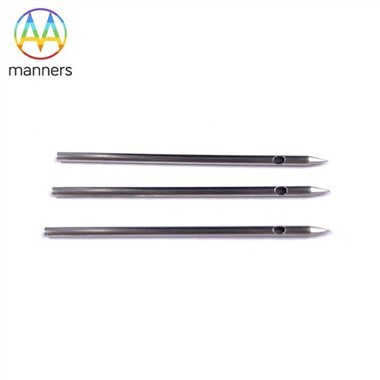
In the precision revolution of modern medical diagnosis, obtaining diseased tissue for pathological analysis is the gold standard for confirming diseases. The endoscopic biopsy needle is the critical instrument that achieves this goal, advancing diagnosis from macroscopic imaging to the microscopic cellular level. Like a highly intelligent "tentacle" probing the body's natural cavities or tiny incisions, it precisely captures target tissue under direct visualization or image guidance, providing irreplaceable decision-making evidence for physicians. For a professional endoscopic biopsy needle manufacturer, its product is far more than a simple puncture tool-it is a terminal of a precision diagnostic system integrating mechanics, materials science, and ergonomics.
Endoscopic Biopsy Needle: Definition, Evolution, and Core Value
An endoscopic biopsy needle is an instrument specifically designed to pass through the working channel of endoscopes (e.g., gastroscopes, colonoscopes, bronchoscopes, cystoscopes) to collect tissue samples from target sites. Its invention has transformed many biopsies that once required open surgery into minimally invasive procedures performed in outpatient settings, significantly reducing patient trauma, pain, and medical costs.
Essentially different from ordinary injection needles or venous puncture needles, the core function of a biopsy needle is to cut and retrieve strip or block tissue samples-not merely to establish a fluid pathway. Its tip features a specially shaped biopsy window, enabling coordinated "extend–capture–cut–retract" motions controlled by the handle during procedures. R&D efforts by professional manufacturers focus on optimizing the reliability, sample yield, and sample quality of this complete sequence of actions.
Core Advantages: A Histopathological Bridge in the Minimally Invasive Era
Precision Targeting: "Sniping" Under Direct VisualizationGuided by real-time endoscopic imaging, physicians can accurately direct the biopsy needle to visible abnormal mucosa, polyps, ulcers, or neoplasms. Manufacturers enhance this precision by optimizing the needle's rigidity/flexibility balance, tip visibility (e.g., laser-engraved graduations, color bands), and tactile control, eliminating "blind puncture."
Sample Quality Determines Diagnostic EfficacyThe goal of biopsy is not just "pricking"-it is to obtain sufficient, intact tissue free from excessive compression or thermal damage that is diagnostically valuable. In superior biopsy needle designs, the size, shape, edge sharpness of the biopsy window, and cutting mechanism (e.g., lateral cutting, needle-type capture) directly influence pathologists' ability to make definitive benign/malignant judgments, grade/stage diseases, and perform molecular testing. Close collaboration between manufacturers and clinicians is critical to this optimization.
Wide Range of Clinical ApplicationsIts use spans multiple systemic cavities throughout the body:
Digestive Tract: Diagnoses inflammation, intestinal metaplasia, dysplasia, early cancer, etc., in the esophagus, stomach, colon, and rectum.
Respiratory Tract: Biopsies of lung and mediastinal lymph nodes via bronchoscopy are the cornerstone of lung cancer diagnosis and staging.
Biliary and Pancreatic Systems: Ultrasound endoscopic (EUS)-guided puncture biopsies of pancreatic masses and bile duct strictures are vital for pancreatic cancer diagnosis.
Urinary Tract: Sampling for suspicious lesions in the bladder and prostate.
Other Applications: Used in nasopharyngoscopy, arthroscopy, and more.
Manufacturers' Challenges and Innovation Directions
Faced with complex and evolving clinical needs, leading manufacturers continuously advance technological innovations:
Refined Specifications: Offering a complete size matrix from 19G (thicker, higher tissue yield) to 25G (ultra-fine, suitable for high-risk sites such as transbronchial needle aspiration) tailored to different organs (e.g., soft gastric wall vs. dense pancreas) and lesions (e.g., superficial mucosa vs. deep submucosal tumors). Needle lengths must perfectly match the working channel lengths of various endoscopes (1 meter to several meters).
Extreme Pursuit of Handleability: Evolving from simple "push–pull" handles to ergonomic ones with locking functions, single-hand operation, and clear tactile feedback. The linkage between handle force/travel and tip cutting motion must be precise and consistent, ensuring uniform physician feedback and improving procedural certainty and efficiency.
Balancing "Integrity" and "Passability": Biopsy needles typically consist of a stainless steel cannula, inner stylet, outer protective sheath, and handle. Manufacturers must integrate these components within an extremely limited diameter (usually 1–2 mm) while ensuring smooth, kink-free advancement over long distances and reliable sample retrieval.
Enhanced Surface Engineering: Premium products feature hydrophilic coatings to reduce friction during advancement through narrow working channels. These coatings lubricate on contact with water, enabling smoother insertion, reducing physician effort, improving device passability, and enhancing patient comfort.
Conclusion: Value Leap from "Retrieving" to "Retrieving Well"
The endoscopic biopsy needle is thus a foundational tool in modern interventional diagnostics. The value of an outstanding endoscopic biopsy needle manufacturer lies not only in "making a needle" but also in deeply understanding the endoscopic anatomical environment, pathological requirements of different diseases, and pain points of endoscopists. Through precision design and manufacturing, they translate physicians' diagnostic intent into high-quality, representative tissue specimens.
In the era of precision medicine, diagnosis is the precursor. A reliable biopsy needle is the "key" that unlocks the door to precise diagnosis-bridging the "uncertainty" of endoscopic imaging and the "irrefutable evidence" of pathological reports, guiding clear treatment directions for countless patients with minimal trauma.