Technology‑Driven Growth And Regional Disparities in A Billion‑Dollar Market
May 12, 2026
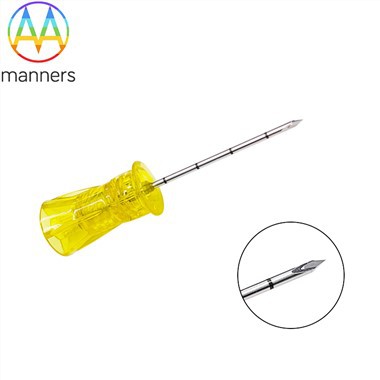
As a core tool for diagnosing breast diseases, breast biopsy needles are experiencing a period of rapid growth alongside the global popularization of breast cancer screening and technological innovation. According to market research data, the global breast biopsy needle market reached a significant scale in 2025 and is projected to maintain steady growth through 2031. This growth is primarily driven by the rising incidence of breast cancer, increased government focus on breast cancer prevention programs, and extensive investment by market participants in new product development.
Global Market Landscape and Key Players
The breast biopsy needle market exhibits a moderately concentrated structure, with a small number of leading companies holding the majority market share. Major global manufacturers include international enterprises such as Mammotome, Hologic, C.R Bard, BD, Stryker, Galini SRL, and Medtronic. These companies have established solid market positions through continuous technological innovation and stringent quality control. Key domestic Chinese producers include Beijing Demait, Shanghai Xiuneng, and Zhejiang Jiecheng, which have built competitiveness in niche market segments by leveraging technological innovation and cost advantages.
Regional Market Distribution Characteristics
North America is the world's largest market for breast biopsy devices, accounting for over 50% of the global share, supported by advanced medical infrastructure and high screening rates in the region. Europe follows closely with a share exceeding 25%; healthcare systems across many European countries prioritize minimally invasive diagnostics to reduce surgical burdens and optimize resource utilization. The Asia‑Pacific region is rapidly emerging as the fastest‑growing market, capturing 22.40% of the global share in 2025, driven by expanded diagnostic capabilities and rising awareness of early detection. Large urban centers and private hospital networks continue to expand imaging and biopsy services, improving procedural accessibility.
Product Type Segmentation
Breast biopsy devices are categorized by type into biopsy needles, biopsy tables, guidance systems, localization wires, and others. As the core component, biopsy needles are further divided by technology into core‑needle biopsy and surgical biopsy. Vacuum‑Assisted Breast Biopsy (VABB) has become the mainstream technology due to its ability to procure larger, more intact tissue samples. Compared with conventional core‑needle biopsy, VABB delivers higher sample volume and greater diagnostic accuracy.
Market Driver Analysis
The continuous rise in global breast cancer incidence is the primary growth driver. Per World Health Organization data, breast cancer is the most prevalent malignant tumor among women worldwide. Simultaneously, government‑led breast cancer screening programs have significantly boosted demand for early detection. In terms of technological innovation, manufacturers continuously optimize needle designs, developing finer gauges to minimize tissue trauma and enhance patient comfort. The 2025 updates to the CSCO Breast Cancer Guidelines and NCCN Breast Cancer Guidelines further emphasize the central role of genetic testing in breast cancer treatment, fueling demand for high‑quality biopsy samples.
Competitive Strategies and Development Trends
Leading companies consolidate their market positions through a range of strategies. In February 2025, Hologic announced CE marking for its Affirm Contrast Biopsy Software, enabling contrast‑enhanced mammography‑guided targeting and tissue acquisition on its Selenia Dimensions and 3Dimensions mammography systems for breast biopsy procedures. In January 2026, BD obtained FDA 510(k) clearance for the EnCor EnCompass Breast Biopsy and Tissue Removal System, a new multimodal breast biopsy platform. In March 2026, Mammotome secured FDA approval for the Mammotome Prima MR Dual Vacuum‑Assisted Breast Biopsy System, the first MR‑guided breast biopsy solution.