Technological Revolution: From Brute Force To Finesse — How RF Transseptal Needles Are Rewriting The Rules Of Cardiac Intervention?
Apr 17, 2026
Technological Revolution: From "Brute Force" to "Finesse" - How RF Transseptal Needles Are Rewriting the Rules of Cardiac Intervention?
Interrogative Unveiling:
When a physician needs to access the left atrium to perform a procedure, they face a "wall" within the heart known as the "interatrial septum." The traditional method involved using a mechanical needle to "forcefully pierce" through it, a process fraught with high risk and technical difficulty. Is there a safer, more precise way to "penetrate the wall"? The answer is yes. This is the technological revolution brought about by the Radiofrequency (RF) Transseptal Needle.
Historical Context:
The history of Transseptal Puncture (TSP) dates back to the middle of the last century, initially developed to create a pathway for balloon valvuloplasty in mitral stenosis. For decades, physicians relied on purely mechanical Brockenbrough needles-sharp metal needles that depended entirely on the axial mechanical force applied by the operator to "push open" or "puncture" the septum. This technique had a steep learning curve and relied heavily on the surgeon's "hand feel" and experience. In complex anatomical scenarios, such as a thickened, fibrotic, or aneurysmal septum, mechanical puncture was like "feeling an elephant in the dark," often leading to severe complications such as puncture failure, cardiac perforation, and cardiac tamponade. The limitations of this "brute force" era created an urgent demand for a smarter, more controllable puncture method.
Definition and Standards:
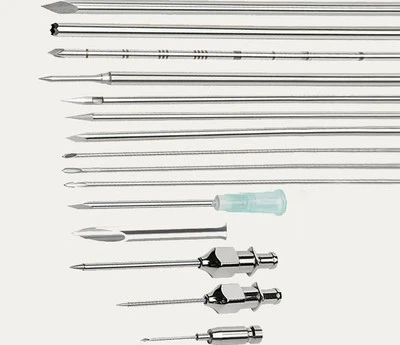
The RF Transseptal Needle is a high-end interventional consumable that combines radiofrequency energy with a puncture device. Its core principle does not rely on mechanical force; instead, it utilizes the needle tip electrode to release high-frequency alternating current. This causes ionic agitation at the contact point with the myocardial tissue, generating a controlled thermal effect (typically 60–90°C) that vaporizes cells and denatures proteins, creating a minute and precise perforation. Unlike the "cutting" or "prying open" action of mechanical needles, RF puncture "thermally ablates" a channel.
The manufacturing standards for this product are extremely stringent:
The needle body is typically machined from medical-grade stainless steel using ultra-precision Swiss lathes (e.g., Citizen Cincom R04) to ensure micron-level dimensional accuracy.
The needle tip is designed as a rounded "atraumatic tip," allowing it to safely abut the septum for precise localization before energy is released.
The entire production process must occur in a Class 10,000 cleanroom, followed by electropolishing and ultrasonic cleaning.
The final product must comply with the ISO 13485 Medical Device Quality Management System and ISO 9001:2015 standards to ensure biocompatibility and sterility assurance.
Clinical Applications:
This technological innovation has fundamentally changed the starting point for left atrial interventional procedures. In Atrial Fibrillation (AFib) ablation, physicians require a stable and safe access point into the left atrium to maneuver the ablation catheter. RF needles effortlessly manage thick, tough, or aneurysmal septums, reducing puncture time from several minutes (or longer) with traditional methods to approximately 10 seconds. This dramatically improves procedural efficiency and success rates.
In Percutaneous Left Atrial Appendage Closure (LAAC), delivery sheaths must traverse the septum. The precise, controlled perforation provided by RF puncture establishes a safe foundation for the passage of large-caliber sheaths. Furthermore, RF transseptal needles have become the preferred tool for complex cases in Mitral Balloon Valvuloplasty, Transcatheter Mitral Valve Repair/Replacement (TMVR), Left Ventricular Assist Device (LVAD) implantation, and certain congenital heart disease interventions. This technology lowers the learning curve for operators, reduces fluoroscopy time, and-most importantly-transforms a high-risk maneuver into a predictable, standardized step, safeguarding the "safety between heartbeats" for patients.