Technological Innovation: R&D Iteration And Future Industry Trends Of Radiofrequency Transseptal Puncture Needle Manufacturers
May 09, 2026
As high-end precision devices for cardiac intervention, radiofrequency transseptal puncture needles see their technological iteration speed directly shape the development progress of cardiac interventional surgery. Leading global manufacturers always regard technological innovation as their core development strategy. Focusing on three major directions-precision manufacturing, radiofrequency energy control, and atraumatic design-they continuously drive product R&D and iteration, while guiding industry technological trends and facilitating the upgrading of cardiac interventional procedures toward higher precision, greater safety, and minimal invasiveness.
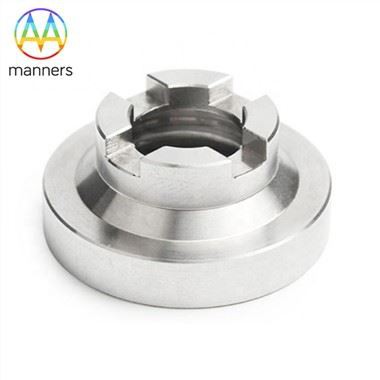
Innovation in core processing technology lays the foundation for product iteration. Top manufacturers continuously upgrade precision manufacturing equipment and optimize the processing parameters of Citizen Cincom R04 CNC machining technology. This improves the machining accuracy of micro-components, realizes ultra-precision forming of core structures such as the shaft and tip of radiofrequency puncture needles, further narrows dimensional tolerances, and enhances compatibility between the product and interventional surgical instruments.
Meanwhile, manufacturers keep innovating surface treatment technologies. On the basis of electrolytic polishing and ultrasonic cleaning, they develop new biocompatible coating processes, which further reduce the risk of tissue adhesion on the needle shaft, improve intraoperative manipulation smoothness, strengthen protection on cardiac tissues, and achieve leaps in product performance through process upgrading.
Radiofrequency energy control technology represents the breakthrough point of product core competitiveness. Manufacturers continuously optimize the radiofrequency energy release module to deliver more precise and controllable pulsed energy output. For atrial septal tissues of varying thickness and lesion severity, the system intelligently adjusts energy intensity to guarantee puncture efficacy while minimizing thermal damage to surrounding tissues.
For complex clinical cases, energy-adjustable radiofrequency puncture needles are developed to adapt to diversified surgical requirements, further improving procedural safety and success rate-this will remain the core direction of product technological R&D in the future.
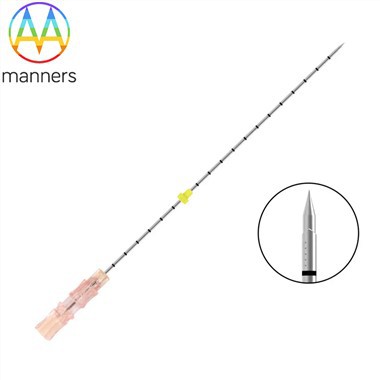
Atraumatic and intelligent design constitutes a major trend of product innovation. Centering on clinical safety demands, manufacturers continuously optimize the rounded atraumatic needle tip structure to further enhance positioning accuracy and reduce the risk of intraoperative tissue injury.
In parallel with digital medical technology, they explore the development of visualized radiofrequency transseptal puncture needles integrated with imaging positioning and real-time monitoring functions. This enables physicians to accurately track the needle tip intraoperatively, achieves fully visualized operation, further lowers surgical difficulty and reduces radiation exposure, and promotes the intelligent and atraumatic upgrading of transseptal puncture procedures.
In addition, manufacturers focus on full-process product optimization, simplifying assembly processes, raising sterile packaging standards, and improving the product traceability system to achieve controllable quality across the entire workflow from production to clinical application.
They also strengthen industry–university–research collaboration, cooperating with clinical specialists and research institutions in the field of cardiac intervention to accurately identify clinical pain points and technological development directions. This makes product R&D more aligned with real clinical needs and accelerates the industrialization and transformation of innovative technologies.
In the future, with the widespread penetration of precision medicine and minimally invasive medical concepts, the requirements for the safety, accuracy and intelligence of cardiac interventional devices will continue to rise. Only by consistently committing to technological innovation and breaking through industrial technical bottlenecks can radiofrequency transseptal puncture needle manufacturers develop high-end products that better fit clinical demands, secure advantages in global market competition, and drive high-quality development of the entire cardiac interventional consumables industry.