Teaching Key Points And Common Pitfalls Of The 6 Cm Tuohy Needle In Residency Standardized Training
Jun 22, 2026
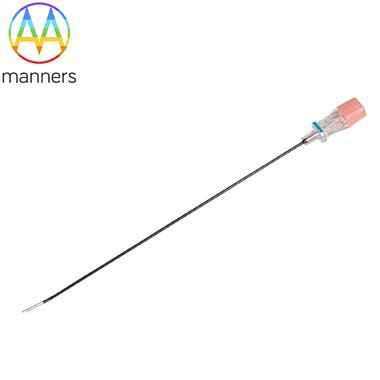
In the context of Anesthesiology Residency Standardized Training and nursing education, the 6 cm Tuohy epidural needle is frequently selected as the introductory tool for teaching lumbar epidural access. Compared to longer, heavier variants, its short shaft allows trainees to more readily appreciate the progressive resistance changes through the three ligamentous layers (supraspinous → interspinous → ligamentum flavum). Furthermore, with the needle shaft largely remaining within the visual field of the hand, it is ideal for cultivating the core clinical skill of "perceiving the loss of resistance (LOR) via fingertip tactile feedback."
I. Core Teaching Modules
1. Anatomical Landmarking
- Identification: Teach trainees to identify the L4 spinous process using the intercristal line (Tuffier's line).
- Selection: Select the L3-4 or L2-3 interspace.
- Approach: Administer local anesthetic wheals for the paramedian approach (approximately 1 cm lateral to the midline) to pre-tunnel the trajectory.
2. Needle Handling and Biomechanics
- Anchoring: One hand stabilizes the needle hub, anchored against the patient's back to prevent slippage.
- Force Application: Emphasize wrist motion rather than whole-arm movement.
- Micro-Adjustments: Instruct trainees to decelerate to millimeter-level微调 upon encountering the leathery resistance of the ligamentum flavum.
3. Interpretation of Loss of Resistance (LOR)
- Medium Selection: Explain the pros and cons of Saline vs. Air.
- Recommendation:Saline is preferred for beginners as it mimics true negative pressure and avoids subcutaneous emphysema.
- Troubleshooting:
- False Negative: Needle tip apposed to bone or ligament; failure to fully enter the space.
- False Positive: Needle tip caught in a ligamentum flavum cleft or fibrous tissue.
4. Catheter Placement Technique
- Guidance: Demonstrate threading the catheter 3–5 cm cephalad through the curved exit of the Tuohy needle.
- Safety Rule: Never force the catheter. If resistance is met, rotate the needle slightly or withdraw 1–2 mm.
- Neurological Warning: Persistent paresthesia warrants immediate withdrawal and re-puncturing.
5. Complication Prevention
- Test Dose: Mandatory administration of a test dose (e.g., Lidocaine with Epinephrine) to rule out intravascular or intrathecal placement.
- Aspiration: Strict adherence to the "Aspirate before Inject" policy.
- Recognition: Rapid identification of Total Spinal Anesthesia (hypotension, bradycardia, apnea).
II. Simulation-Based Training
Utilize lumbar puncture simulators equipped with the 6 cm Tuohy needle. High-fidelity manikins feature simulated ligamentum flavum and epidural negative pressure chambers, providing realistic haptic feedback.
Assessment Metrics:
- Aseptic Technique: Gloving, draping, and handling.
- Accuracy: Correct landmark identification.
- LOR Proficiency: Correct judgment of the epidural space.
- Catheter Handling: Smooth insertion without resistance.
- Protocol Adherence: Proper execution of test dosing.
III. Common Pitfalls for Novices
|
Pitfall |
Consequence |
Correction |
|---|---|---|
|
Excessive Speed |
Failure to sense the "pop" of the flavum. |
Slow down; use millimeter increments. |
|
Air LOR Abuse |
Subcutaneous emphysema; confusing tactile feedback. |
Use saline for learning. |
|
Forced Catheterization |
Catheter kinking, knotting, or dural perforation. |
Rotate or withdraw; never force. |
|
Improper Withdrawal |
Pulling the needle out while leaving the catheter, or vice versa, causing displacement. |
Sync fixation: Hold the catheter at the skin while removing the needle. |
IV. Conclusion: The Training Pathway
The consensus teaching progression is to establish foundational tactile skills using the 6 cm short Tuohy needle in simulation models. Once proficiency is achieved, trainees transition to longer needles for obese patients and eventually to dynamic ultrasound-guided techniques. Mastering the 6 cm needle is the gateway to safe regional anesthesia practice.