Sterilization And Safety Management Of Nerve Block Injection Systems
Aug 28, 2026
Pain Points The whole-process sterile safety of nerve block anesthesia depends on the coordination of needle sterilization quality and standardized drug dilution operation. At present, some medical institutions have irregular instrument storage and incomplete sterilization verification, resulting in residual bacteria on the surface of individual needles. Non-standard manual dilution operation without sterile protection easily causes lidocaine contamination, leading to postoperative puncture site infection and inflammatory reactions. In addition, unqualified electropolishing and post-processing of individual needles leave micro-burrs, which cause tissue scratching and nerve damage during puncture. The lack of whole-process safety management system for needles and anesthetic preparation leads to hidden safety hazards in clinical nerve block operations, affecting patient prognosis and medical safety assessment.
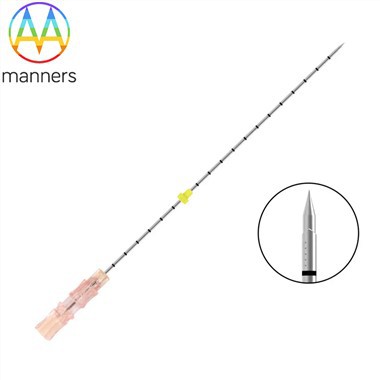
Core Principle Medical nerve block needles realize full-process sterile safety control through standardized precision processing and terminal sterilization treatment. Medical stainless steel base materials avoid chemical precipitation, and multiple processes such as fine grinding, laser polishing and electropolishing remove surface impurities and burrs to ensure smooth and non-irritating needle surface. Professional terminal sterilization eliminates all microbial residues on the needle body, and sealed sterile packaging isolates external pollution during storage and transportation. Cooperated with standardized sterile manual dilution of lidocaine, it forms a closed-loop sterile injection system. The sterile and safe performance of needles ensures that manually diluted anesthetics of different concentrations will not cause secondary pollution during injection, and smooth needle body avoids mechanical tissue damage, realizing dual safety of anesthesia efficacy and wound recovery.
Device Classification According to sterilization grade and safety standard, nerve block needles are divided into conventional sterile grade and enhanced sterile grade products. Conventional sterile grade needles cover 8G–26G full gauges, suitable for routine outpatient and inpatient nerve block anesthesia, matching conventional 0.8%–1.7% lidocaine dilution schemes. Enhanced sterile grade needles undergo secondary precision cleaning and enhanced sterilization treatment, with lower microbial residue limit, suitable for high-risk groups such as immunocompromised patients, pregnant women and children, and matching low-concentration mild anesthetic schemes. Customized needles implement enhanced sterile standards according to clinical needs, and support personalized sterile packaging customization.
Operational Guidelines Establish a whole-process safety management system of needle inspection – sterile dilution – standardized injection – waste disposal. Before operation, check the packaging integrity, sterilization validity period and needle surface smoothness, and discard expired and damaged products immediately. Complete lidocaine proportional dilution in a sterile operating environment with sterile syringes and consumables to avoid drug contamination. Select sterile needles of corresponding specifications according to target concentration and puncture scenario, and operate gently during puncture and injection to prevent needle damage and tissue scratching. After operation, classify and dispose of disposable needles uniformly to avoid secondary pollution and cross-infection.
Real-World Experience Nosocomial infection monitoring data shows that standardized sterile needle matching with sterile dilution operation can reduce postoperative puncture infection rate to nearly zero. Most postoperative local redness, swelling and exudation complications are caused by unsterile operation and unqualified needle processing. Medical institutions that implement whole-process safety management have completely eliminated iatrogenic infection risks in nerve block operations. Enhanced sterile needles show excellent safety advantages in high-risk patient groups, and the matching low-concentration lidocaine dilution scheme effectively reduces drug adverse reactions while ensuring anesthesia efficacy, significantly improving patient treatment safety and comfort.
Conclusion Strict sterilization processing and standardized safety management are indispensable core links of nerve block needle clinical application. High-quality sterile needles provide a safe carrier for manual lidocaine dilution and injection, avoiding mechanical damage and biological pollution risks. The closed-loop sterile operation system formed by instrument safety and standardized drug preparation effectively guarantees the whole-process safety of nerve block anesthesia, which is an important foundation for the standardized and high-quality development of clinical regional anesthesia.
Outlook & Suggestions Manufacturers should continuously upgrade sterilization technology and packaging standards to improve the sterile safety level of finished needles. Medical institutions should incorporate needle safety inspection and sterile dilution operation into daily quality management and regular assessment. Strengthen clinical safety training for operators to standardize whole-process operation specifications. Further optimize the safety matching scheme of enhanced sterile needles and special patient groups to reduce the incidence of clinical adverse events.