Specialization And Scenario-Based Design: Product Segmentation And Clinical Adaptation Of Bone Marrow Biopsy Needles
May 25, 2026
Bone marrow biopsy cannot be performed with a uniform standard. Differences in patient age, body build, puncture sites and clinical settings generate diverse demands for medical devices. Leading manufacturers continuously advance specialized and scenario-based product segmentation, evolving general-purpose instruments into targeted precision solutions for specific clinical needs.
1. Specialized Design for Different Patient Groups
1.1 Pediatric-specific Biopsy Needles
Children, especially infants and newborns, feature tiny bones, shallow medullary cavities and poor cooperation, imposing stringent requirements on puncture devices. Key specialized designs are listed as follows:
- Smaller gauge: Needles of 18G or even finer specifications (e.g. ION18015, 18G, length 3.58cm) minimize trauma and bleeding risks.
- Shorter dimension: Short models of 65mm and 70mm are tailored for pediatric body shapes to prevent excessive puncture depth.
- Sharp tip and smooth advancement: Reduced puncture resistance enables rapid insertion, shortens operation duration and alleviates pediatric pain.
- Matching 3D-printed guiding plate: Customized puncture guides based on patient imaging data achieve individualized accurate access, lifting the puncture success rate of difficult preterm infant cases from 55% to 89%.
1.2 Standard Adult Models and Extended Needles for Obese Patients
Standard lengths of 100mm and 120mm are applicable for ordinary adults. For obese patients with thick subcutaneous fat layers, standard needles may fail to reach the periosteum. Extended needles of 150mm or longer are adopted to guarantee successful puncture.
2. Site-specific Structural Design
2.1 Iliac Puncture Needles (Mainstream Type)
Posterior and anterior superior iliac spines rank as the most commonly used and safest puncture sites. Needles developed for iliac access dominate the market, striking a balanced performance in penetration force, specimen yield and operational convenience.
2.2 Sternal Puncture Needles
The sternum contains abundant superficial bone marrow, yet vital underlying organs bring relatively high procedural risks. Sternal needles are designed shorter and equipped with adjustable depth limiters to avoid mediastinal vascular injury caused by over-penetration. Such operations shall only be conducted by experienced physicians under strict clinical indications.
2.3 Needles for Other Specific Sites
Puncture on long bones such as tibia and vertebral biopsy requires instruments with customized angles and rigidity, belonging to highly specialized product categories.
3. Performance Optimization for Diverse Clinical Scenarios
3.1 Routine Diagnosis and Follow-up
Integrated dual-function biopsy needles serve as the optimal choice for high efficiency. They simplify instrument preparation and shorten operating time. A single puncture obtains both smear slides and tissue specimens, satisfying diagnostic demands for most outpatient and inpatient hematology cases.
3.2 Emergency and Critical Care Settings
Time is critical in emergency treatment. Disposable pre-packaged full biopsy kits deliver prominent practical value. Containing biopsy needles, syringes, anesthetic needles, disinfection swabs, specimen containers and dressings, the kits are ready for immediate use without extra assembly. They cut preparation time by over 50% and completely eliminate cross-infection risks brought by reusable devices, perfectly fitting fast-paced emergency departments and ICUs.
3.3 Image-guided Puncture
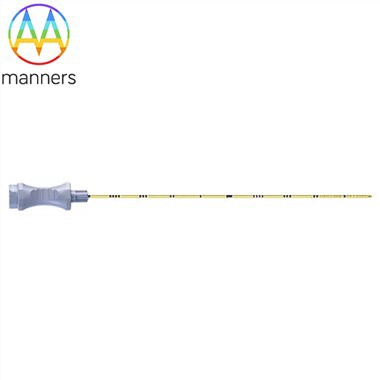
Bone marrow biopsy guided by CT, ultrasound or X-ray fluoroscopy, commonly adopted for hard-to-locate lesions and obese patients, requires high imaging compatibility. Needle bodies are made of non-magnetic or low-artifact materials. Ergonomic handles facilitate manipulation in narrow spaces, and clear scale markings enable accurate depth judgment under imaging monitoring.
4. Comparison Between Disposable and Reusable Needles
It acts as a fundamental dimension for product selection.
- Disposable biopsy needles: They have become the mainstream trend and recommended option in clinical guidelines. Core advantages include thorough elimination of cross-infection and risks arising from incomplete cleaning and sterilization, making them ideal for infectious disease patients with HIV or hepatitis and immunocompromised individuals. New intact needles maintain optimal sharpness to raise operation success rates, and also reduce labor and resource costs of hospital sterilization departments.
- Reusable biopsy needles: Their market share has declined sharply. The only merit lies in low initial procurement cost. Repeated use causes tip wear and coating peeling, degrading puncture performance, while accompanied infection hazards and high subsequent maintenance costs restrict its application scope greatly under current medical standards prioritizing patient safety and operational efficiency.
5. Specialized Material and Process Adaptation
- Tip geometry: Besides conventional bevel tips, dual-diamond and triangular tips deliver stronger initial penetration against dense bone tissues.
- Specimen retention technology: Designs including TSK Trap-System and Argon tapered cannula securely preserve fragile marrow tissue cores during needle withdrawal, ensuring sufficient and intact diagnostic samples.
- Ergonomic handle design: Anti-slip and labor-saving handles conform to hand contours, relieving physician fatigue during prolonged manipulation and hard bone penetration, and improving operational stability and comfort.
Conclusion
The specialization and scenario-based evolution of bone marrow biopsy needles reflect the inevitable upgrade of medical devices from general tools to customized solutions. Tailored instruments meet clinical challenges involving infants, special-build adults, time-sensitive emergency treatment and image-assisted diagnosis. Refined product segmentation ensures safe, effective and patient-friendly marrow examinations, serving as a practical embodiment of precision medical concepts in medical device development.