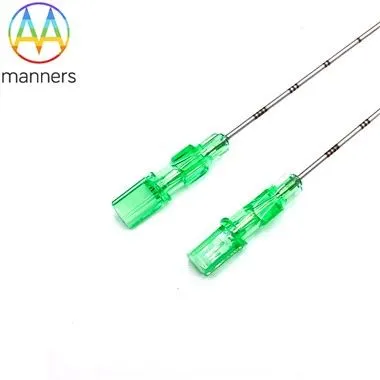
Special Process Validation & Particulate Control By H₂O₂ Transfer Needle Manufacturer
Jul 10, 2026
H₂O₂ Transfer Needles are extracorporeal chemical transfer devices. Although non‑implantable, their contact with high‑concentration oxidizers and integration with precision injector valves means surface cleanliness, corrosion resistance, and particulate levels directly impact equipment longevity and sterilization cycle success. Consequently, special process validation is non‑negotiable.
Electropolishing (EP) Validation
Per ASTM B912 and ISO 13485 requirements (IQ/OQ/PQ):
IQ: Rectifier calibration, bath chemistry verification (phosphoric‑sulfuric blend), temperature control (±2 °C), rack/fixture conductivity confirmation.
OQ: Determination of current density‑time windows achieving target Ra (< 0.2 μm) without over‑etching or hydrogen embrittlement (risk is low for SS304 but monitored).
PQ: Three consecutive lots tested for Ra, visual appearance (no orange peel/dark spots), and Ferroxyl test compliance (free iron removal). Parameter changes (new bath, new racks) trigger re‑validation.
Passivation Validation
Citric acid passivation (ASTM A967/A380) removes free iron and promotes Cr₂O₃ film formation. Verification via copper sulfate droplet test (no instantaneous pink coloration) or short‑duration salt spray. Note: Post‑EP nitric acid passivation requires evaluation for micro‑etching effects on the polished surface-many facilities opt for dilute citric acid at ambient temperature for shorter durations.
Ultrasonic Cleaning & Particulate Control
Multi‑tank process: alkaline degreasing → DI water rinse → final rinse (resistivity ≥ 1 MΩ·cm or higher). Ultrasonic frequencies often toggle between 28/40 kHz to eliminate cavitation shadows. Critical: final rinse water undergoes particulate counting or filter membrane capture/weighing (referencing ISO 16232/VDA 19 methods). Acceptance criteria typically limit particles > 25 μm to a very low count (e.g., < few particles/needle). Particulates entering the injector valve can cause micro‑jamming and metering inaccuracies.
Laser Welding Validation (if applicable)
Backside melting (BTW), penetration depth, and absence of cracks verified via metallography; helium leak testing or bubble emission testing confirms hermeticity.
Identification & Traceability
Each needle/batch bears a laser‑marked or printed lot number traceable to: heat number → EP parameters → cleaning batch → inspector. Post‑Market Surveillance (PMS) tracks complaints (leakage, loose mating, fill alarms linked to needle performance) to trigger CAPA.
An H₂O₂ Transfer Needle Manufacturer capable of presenting complete special process validation dossiers and demonstrating particulate control meets the quality standards expected of OEM‑grade compatible consumables.